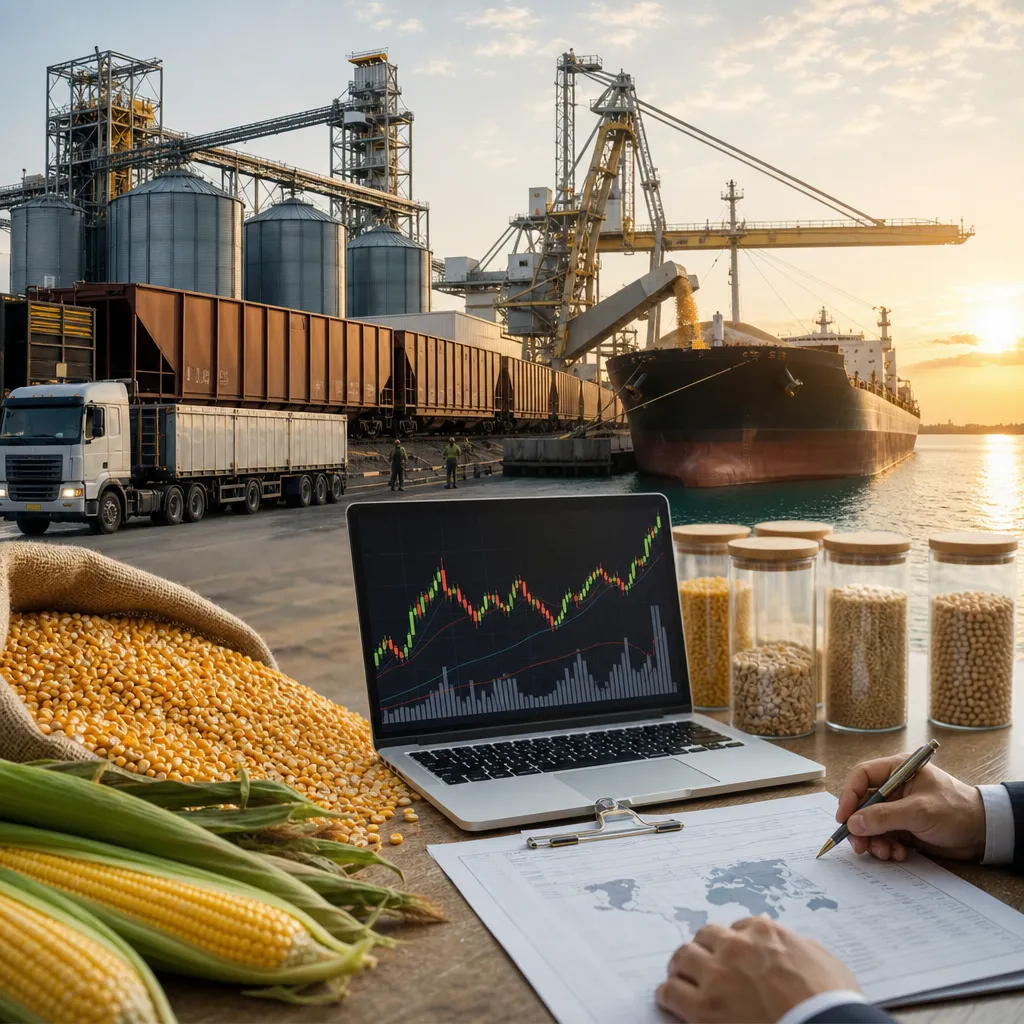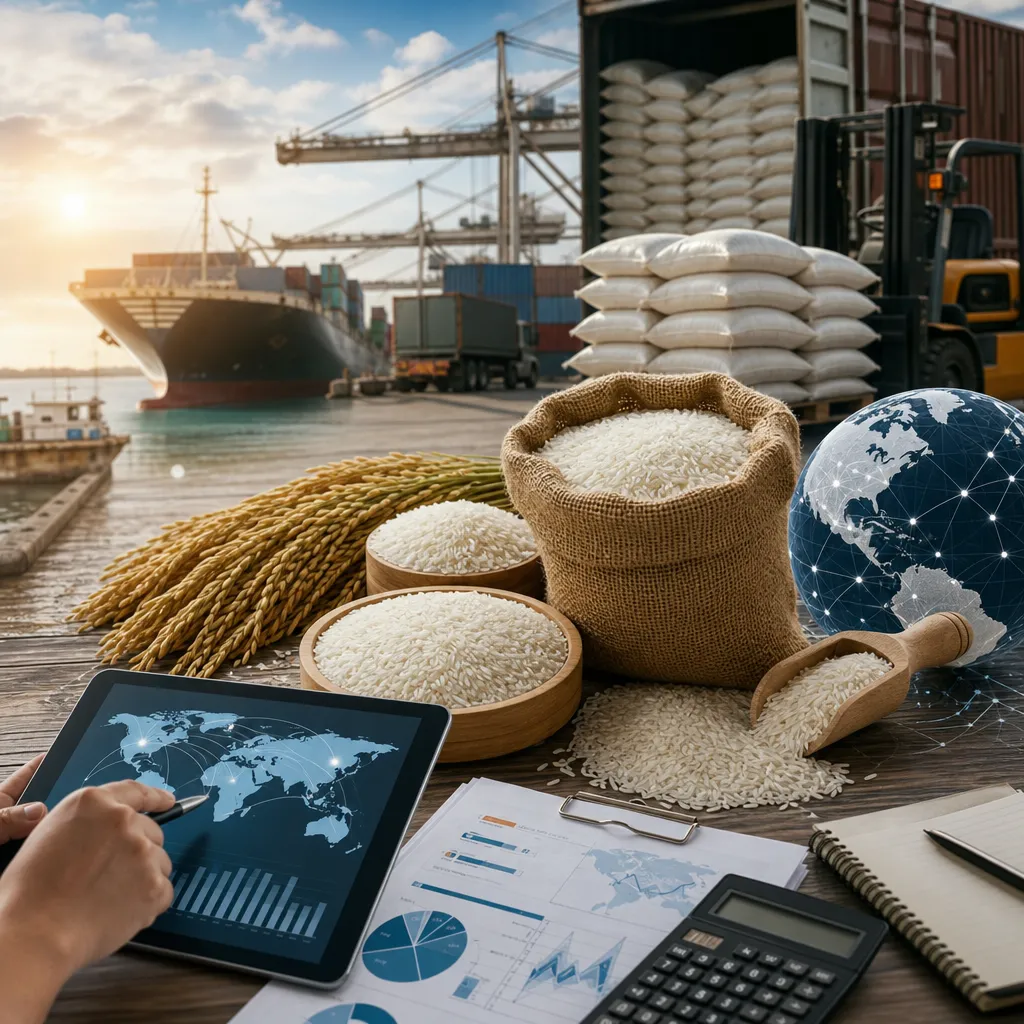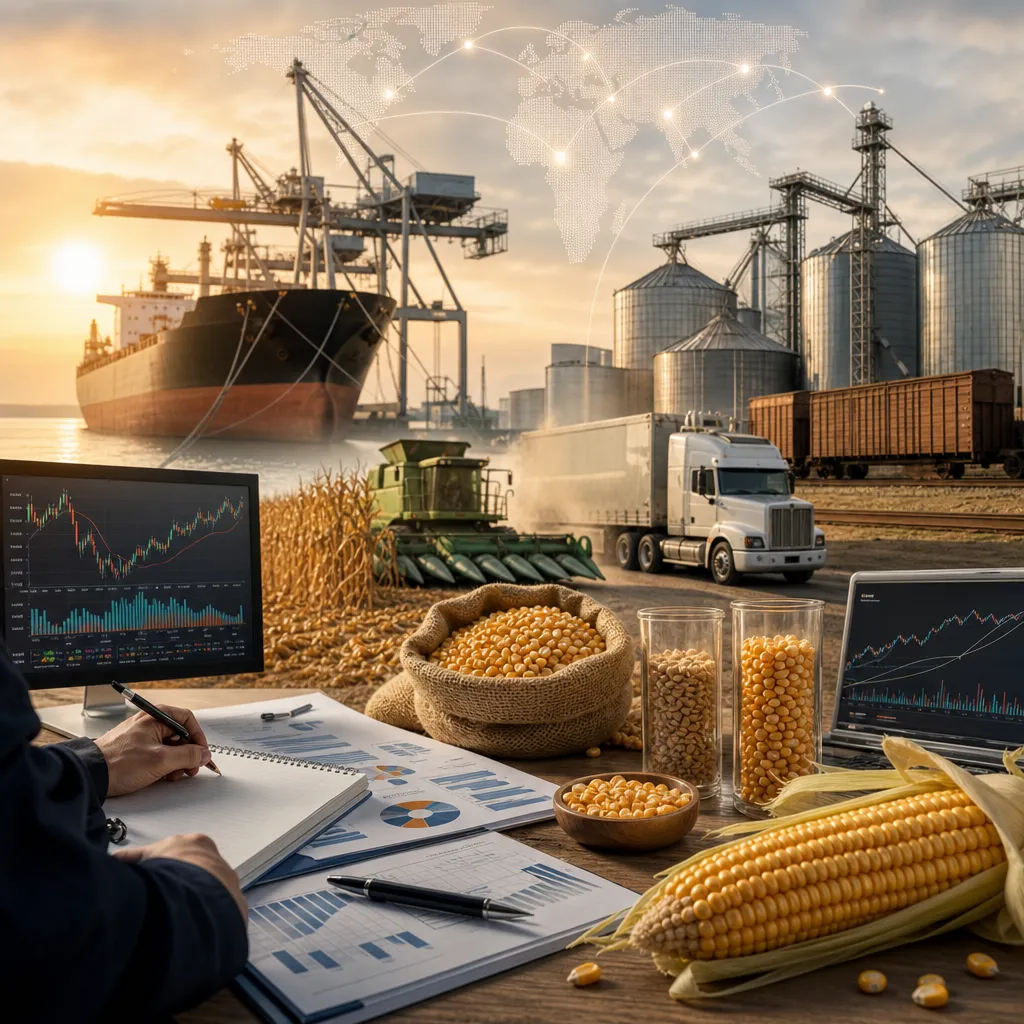
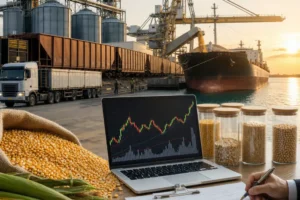
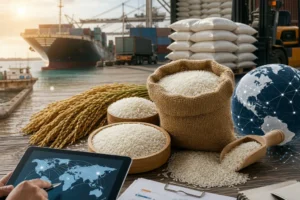
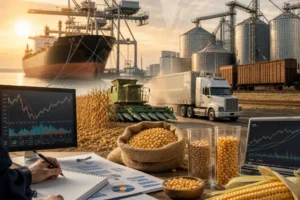
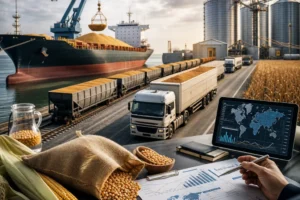
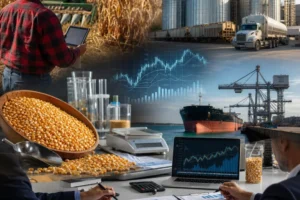
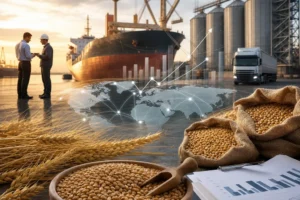
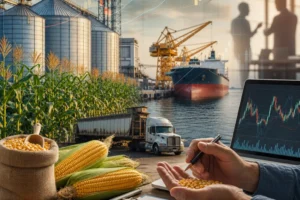
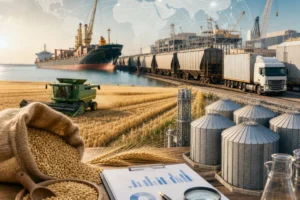
Grain trading begins with one important distinction: the grain market has both a financial side and a physical side. You can trade wheat, corn, soybeans, rice, barley, oats, rye, sorghum, canola, rapeseed, or sunflower seed through futures and options on regulated exchanges, or you can buy and sell actual grain through elevators, cooperatives, merchants, processors, exporters, and feed companies. Beginners should first learn how prices are formed, where bids are quoted, and how local cash values differ from exchange futures. If you understand futures, basis, grades, logistics, and the main public reports, you already understand most of the practical structure of grain trading.
What grain trading means in practice
Grain trading is the buying and selling of grain at different points in the supply chain. In the physical market, a farmer may sell corn to a local elevator, a feed mill may buy wheat from a merchant, or an exporter may assemble soybeans for shipment through a port. In the financial market, a trader may buy or sell futures or options based on expected changes in price.
These are related markets, but they are not the same. A futures contract is a standardized exchange-traded instrument. A physical grain contract is a real commercial deal involving quality, delivery location, freight, and payment terms.
Beginners often assume a price shown online is the price for actual grain everywhere. That is not correct. A futures quote is an exchange benchmark. The cash price paid at a local elevator or offered by a processor depends on local supply and demand, basis, transport cost, storage pressure, and grain quality.
| Market type | What is traded | Where it happens | Typical users |
|---|---|---|---|
| Futures market | Standardized contracts for future delivery months | Regulated exchanges such as CME Group | Hedgers, speculators, brokers, funds, commercial firms |
| Options market | Rights to buy or sell futures at a strike price | Regulated exchanges through brokerage accounts | Farmers, merchandisers, processors, traders |
| Cash or physical market | Actual grain | Elevators, cooperatives, mills, feed plants, ports, warehouses, private contracts | Farmers, merchants, exporters, processors, importers |
| OTC contracting | Privately negotiated commercial agreements | Direct commercial relationships or brokers | Commercial buyers and sellers |
How grain prices are quoted and where to check them
Grain prices are usually discussed in two layers: futures prices and cash prices.
Futures prices are quoted by exchange contract, delivery month, unit, and currency. For major U.S. grain contracts, beginners often watch CME Group benchmarks for corn, wheat, and soybeans. These are widely used by hedgers and analysts because they provide a central reference price. Brokerage platforms, exchange websites, financial terminals, and market-data vendors usually display these quotes.
Cash prices are local bids for actual grain. These are the prices a farmer or physical seller usually cares about most. They are commonly posted by local elevators, cooperatives, merchants, processors, mills, and ethanol or feed plants. In practice, people check these values on elevator websites, cooperative bid pages, grain buyer apps, local market reports, or direct phone/email quotes from buyers.
A local bid is often expressed as futures plus or minus basis. Basis is the difference between the local cash price and the relevant futures contract. Basis can strengthen or weaken depending on nearby demand, transport bottlenecks, export pace, harvest pressure, and available storage.
If you want current prices, do not rely on a generic “grain price today” figure without checking the contract month, exchange, location, quality, and currency. A wheat futures price at an exchange is not the same as a port bid, and neither is necessarily the same as a farmgate bid.
Where beginners usually check prices
- Exchange websites: for benchmark futures contract information and contract specifications.
- Futures brokers and trading platforms: for live or delayed futures and options market data.
- Local elevators and cooperatives: for nearby cash bids, basis, and delivery terms.
- Government market reporting systems: for regional cash reports, export values, and market summaries where available.
- Commercial data services: for charting, basis history, spreads, and cross-market analytics.
How the physical grain market works
Physical grain trading is built around movement, quality, and timing. A seller may be a farmer, collector, merchant, or storage operator. A buyer may be an elevator, cooperative, flour mill, maltster, crusher, feed manufacturer, ethanol plant, exporter, or importer. The transaction can be local and simple or international and highly structured.
A normal physical grain deal includes:
- crop and quantity,
- grade or quality specifications,
- delivery window,
- delivery point,
- pricing method,
- freight responsibility,
- inspection terms,
- payment timing.
For local farm marketing, grain is often delivered to an elevator or cooperative. The buyer tests moisture, foreign material, test weight, damage, or protein depending on the crop. The final price may be adjusted for quality discounts, drying charges, shrink, and storage fees if the grain is not sold immediately.
For larger commercial trade, merchants assemble grain from interior origins and move it by truck, rail, barge, or vessel to processors or export terminals. At that level, logistics matter as much as the headline price. A good futures market view can still lose money if freight, demurrage, quality claims, or timing go wrong.
Common physical selling channels
- Local grain elevators
- Agricultural cooperatives
- Independent grain merchants
- Processors such as mills, crushers, maltsters, or feed plants
- Export houses and port terminals
- Warehouse receipt systems where available
- Direct farm-to-end-user contracts
How futures and options work for beginners
Futures are standardized contracts traded on regulated exchanges. Each contract represents a defined quantity and quality standard for a specific commodity and delivery month. Traders access them through a futures broker and a margin account, not through a local grain elevator.
When you trade a futures contract, you do not usually intend to load trucks with grain. Most participants offset their positions before delivery. The contract is mainly used for price risk management or speculation on price movement.
Options give the buyer the right, but not the obligation, to buy or sell a futures contract at a stated strike price before expiry. Commercial users may buy options to create a price floor or ceiling while keeping some upside flexibility. Speculators may use options to express a directional view with defined premium cost, although the risk profile is still complex.
Important beginner concepts include:
- Margin: money posted to support a futures position. This is not a down payment on physical grain.
- Leverage: small moves in the grain price can produce large gains or losses relative to margin posted.
- Expiration and delivery: futures have delivery rules, but many traders close or roll positions before first notice or expiry.
- Basis risk: a hedge may reduce futures price risk but not eliminate local cash price risk.
| Tool | Main use | Where accessed | Main risk |
|---|---|---|---|
| Cash sale | Sell physical grain now or for later delivery | Elevator, cooperative, merchant, processor | Missing later price rallies; counterparty and quality disputes |
| Futures hedge | Reduce exposure to price moves | Regulated exchange via futures broker | Margin calls; basis mismatch |
| Options hedge | Create a floor or ceiling with flexibility | Regulated exchange via futures broker | Premium cost; time decay; complex pricing |
| Forward cash contract | Lock a future delivery cash price | Buyer and seller directly or through elevator/co-op | Production shortfall; delivery obligation |
How beginners can start trading or marketing grain
The first step is to decide whether you want to deal in physical grain, financial contracts, or both. The process is different.
If you want to sell or buy physical grain
- Identify the crop, quantity, and quality you have or need.
- Collect local bids or offers from elevators, cooperatives, merchants, or processors.
- Check delivery location, delivery period, basis, quality schedule, and freight terms.
- Confirm how grain will be weighed, sampled, inspected, and paid for.
- Understand storage, drying, shrink, or handling deductions before committing.
- Check counterparty reliability and contract terms, especially for deferred delivery.
If you want to trade futures or options
- Open an account with a regulated futures broker that offers agricultural contracts.
- Read the contract specifications for the crop you want to trade.
- Learn the tick size, contract size, delivery months, trading hours, and margin rules.
- Use a broker platform or approved market-data platform to follow prices and place orders.
- Start by understanding hedging or simulated trading before using leverage with real money.
- Know in advance how you will manage risk, including stop levels, option premium limits, or hedge ratios.
For beginners, the most common mistake is treating futures like physical grain ownership. Buying corn futures is not the same as owning corn in a warehouse. Futures are a financial exposure; storage grain is an inventory exposure.
Reports, websites, data, and tools that matter
Grain markets move on supply, demand, weather, and trade flows. Reliable data usually comes from public agencies, exchanges, and commercial market-data providers.
For U.S. and global grain analysis, USDA is one of the most important sources. Traders follow WASDE for global and U.S. balance sheets, Crop Progress for planting and condition updates, and Export Sales for demand signals. These reports are widely used because they shape expectations for production, ending stocks, and exports.
CME Group provides contract specifications and exchange-related information for agricultural futures and options. This is where beginners should verify what a contract actually represents, which delivery months exist, and how price movement is quoted.
CFTC publishes Commitments of Traders data, which shows how different trader categories are positioned in futures and options markets. This does not tell you what will happen next, but it helps you understand market structure and crowd positioning.
Outside the U.S., FAO, national agriculture ministries, national statistical agencies, customs authorities, and exchange operators can help track production, trade, and consumption. Importers and exporters also closely watch port lineups, vessel activity, and freight markets, but these are often accessed through commercial services rather than public dashboards.
| Source or tool | What it provides | Who uses it |
|---|---|---|
| USDA WASDE | Supply, demand, stocks, and trade estimates | Farmers, merchants, analysts, futures traders |
| USDA Crop Progress | Planting, emergence, crop condition, harvest pace | Weather-focused traders and market analysts |
| USDA Export Sales | Weekly export commitments and shipments | Exporters, traders, demand analysts |
| CME Group contract information | Contract specs, months, pricing conventions | Hedgers, brokers, retail and professional traders |
| CFTC Commitments of Traders | Positioning by market participant category | Analysts, traders, researchers |
What really moves grain markets
Beginners should not focus only on chart patterns. Grain prices are heavily driven by physical fundamentals.
The biggest market drivers usually include:
- Weather: rain, drought, heat, frost, and harvest delays can affect yield and quality.
- Acreage and yield: more planted area or better yields can increase supply.
- Stocks: low ending stocks often make markets more sensitive to surprises.
- Exports and imports: large buying programs or policy restrictions can shift trade flows.
- Currency: exchange rates can make an exporter more or less competitive.
- Energy and biofuels: corn, soybean oil, and canola can be linked to ethanol or biodiesel demand.
- Freight and logistics: rail issues, river levels, congestion, and port performance affect local basis and export capacity.
- Government policy: tariffs, quotas, sanctions, and support programs can alter incentives and destination demand.
Different crops respond to different factors. Milling wheat may react strongly to protein and export competition. Corn may respond heavily to feed, ethanol, and weather. Soybeans often react to crush margins, export demand, and South American crop prospects. Canola and rapeseed also respond to vegetable oil markets and biofuel policy.
Storage, quality, and logistics for real-world grain trading
Physical grain trading does not end when grain is harvested or bought. Storage and logistics can create value or destroy it.
Grain may be stored on farm, at a commercial elevator, in a cooperative system, or in a licensed warehouse. Storage gives timing flexibility, but it also creates cost and risk. The owner must consider shrink, moisture migration, infestation, spoilage, financing cost, and insurance where relevant. In many markets, the commercial question is simple: does the expected price improvement cover storage and carry costs?
Quality matters because not all grain is interchangeable. Wheat may be priced by protein, moisture, and falling number. Corn may be discounted for moisture and damage. Soybeans may be affected by moisture, foreign material, and oil or protein characteristics depending on the buyer. A futures benchmark may track a standard deliverable grade, while the physical buyer may pay a premium or apply discounts for actual quality.
Logistics also matter. A strong price at a distant port does not help much if truck availability is poor, rail freight is expensive, or the nearest buyer is oversupplied. That is why many commercial traders focus less on the headline futures move and more on basis, freight spreads, and execution risk.
Common beginner mistakes
- Confusing futures prices with local cash bids.
- Ignoring basis and freight.
- Trading leveraged futures without understanding margin calls.
- Using exchange contracts without reading contract specifications.
- Overlooking grain quality and grade discounts.
- Locking in deferred delivery contracts without considering production risk.
- Following social media commentary instead of official reports and verified market data.
- Assuming storage always improves returns.
Where can I check grain prices as a beginner?
Check futures prices on exchange-related or broker market-data platforms, and check physical cash bids on local elevator, cooperative, processor, or merchant bid sheets. For actual selling decisions, local cash bids are usually more important than a headline futures quote.
What is the difference between futures and cash grain?
Futures are standardized financial contracts traded on a regulated exchange. Cash grain is actual physical grain sold to a buyer at a specific location with specific quality and delivery terms. The two are connected through basis, but they are not the same market.
Do I need a broker to trade grain?
You need a futures broker to trade grain futures or options on an exchange. You do not need a futures broker to sell physical grain to an elevator, cooperative, merchant, or processor, although a cash broker may be used in some commercial markets.
Where do farmers usually sell grain?
Most farmers sell through local elevators, cooperatives, feed mills, processors, ethanol plants, crushers, or direct contracts with merchants and end users. The exact channel depends on crop type, region, transport access, and local competition among buyers.
What reports matter most in grain trading?
For many markets, USDA WASDE, Crop Progress, and Export Sales are core reports. Futures traders also watch CFTC Commitments of Traders. Outside the U.S., national agriculture ministries, statistical agencies, and customs or trade databases can be equally important.
Can beginners use futures to hedge grain?
Yes, but only after understanding basis, margin, contract size, and delivery months. A hedge can reduce price risk, but it does not remove local basis risk, and margin calls can still occur even when the physical position is protected.
Is storing grain always a good strategy?
No. Storage only makes economic sense if the expected improvement in price or basis exceeds storage, quality, financing, and handling costs. Poor storage conditions can also damage grain and reduce value.
What unit should I watch when comparing prices?
Always check the unit and currency. Grain may be quoted in bushels, metric tons, or other local units, and comparisons can be misleading if contract month, grade, moisture basis, or delivery location are different.
Sources
- USDA World Agricultural Supply and Demand Estimates
- CME Group Agricultural Products and Contract Specifications
- U.S. Commodity Futures Trading Commission Commitments of Traders