








Grain markets are characterized by intricate relationships between factors such as supply, demand, and price fluctuations. Understanding how different grain market spreads operate allows traders, producers, and investors to navigate volatile conditions and capitalize on relative value opportunities. This article delves into the essential concepts of grain market spreads, examines the main types used in the industry, and explores practical strategies for managing risk and optimizing returns.
Fundamentals of Grain Market Spreads
At its core, a market spread represents the price difference between two related contracts, commodities, or delivery points. In the grain sector, spreads often arise from variations in delivery dates (calendar spreads), physical locations (location spreads), or between different grain types (intercommodity spreads). By focusing on relative performance rather than outright price movements, traders can mitigate directional exposure and exploit minor inefficiencies in the marketplace.
Role of Futures and Basis
Futures contracts are the primary vehicles for establishing and trading spreads. The basis—the difference between the local cash price and the futures price—is a key metric for producers and end-users. It reflects local supply and logistics factors and can indicate whether it’s more profitable to sell on the cash market or hedge in futures. A narrowing basis suggests improving local conditions or stronger demand, whereas a widening basis often signals surplus supply or logistical bottlenecks.
Volatility and Liquidity Considerations
Spread transactions generally exhibit lower volatility and require less liquidity compared to outright futures positions. Because the margin requirements for offsets (long one leg, short another) are typically lower, traders can deploy capital more efficiently. However, reduced volatility also means smaller potential profits, so precise timing and strong market analysis are critical for success.
Primary Types of Spreads
Grain market participants employ several spread types to match their market outlooks or operational needs. Each type involves unique dynamics and risk profiles, demanding specialized skills and market intelligence.
- Calendar Spreads: These involve taking opposing positions in futures contracts with different maturities. For example, a trader might buy December corn futures while simultaneously selling March corn futures. Calendar spreads capture seasonal patterns, storage costs, and variations in harvest expectations.
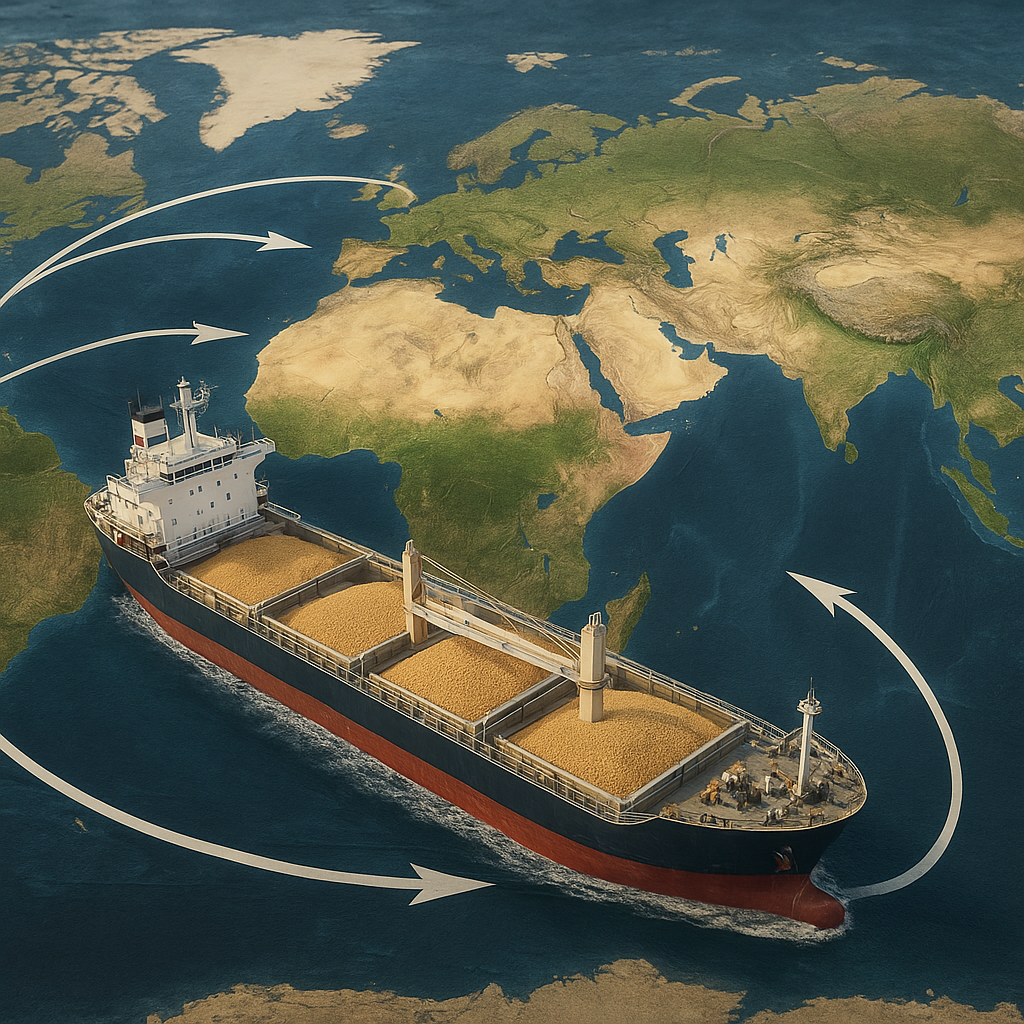
- Location Spreads: Also known as inter-delivery spreads, these exploit price differences between delivery points. A common example is the Chicago Gulf basis versus the domestic Illinois river basis. Geographic arbitrage opportunities arise when transportation costs or regional supply imbalances shift.
- Intercommodity Spreads: These compare prices between related grains, such as corn versus wheat, or wheat versus soybeans. Intercommodity spreads help farmers and crushers decide which crop to plant or process based on relative profitability.
- Quality Spreads: Differences in protein content, moisture levels, or other quality attributes can be monetized through quality spreads. Buyers and sellers negotiate premiums or discounts relative to standard contract specifications.
Strategies for Spread Trading
Effective spread trading blends technical analysis, fundamental insight, and disciplined execution. Below are key strategies utilized by market participants.
Seasonal Pattern Analysis
Grain prices often follow predictable seasonal cycles driven by planting, growing, and harvest periods. A seasonal spread strategy takes advantage of these recurring patterns. Traders examine historical price data to identify typical periods of strengthening or weakening in specific calendar spreads. By aligning positions with seasonal tendencies, they enhance the probability of favorable outcomes.
Fundamental Drivers
Weather events, crop reports, export sales, and government policy updates heavily influence spread values. For example, unexpected drought conditions in key growing regions might spur a widening of near-term spreads as immediate supply tightens. Conversely, forecasts of favorable harvest weather can lead to narrowing spreads. Savvy traders monitor satellite imagery, USDA publications, and global shipping data to gauge real-time supply and demand shifts.
Arbitrage and Price Convergence
Arbitrage opportunities arise when mispricings appear between related contracts. A classic example is cash-and-carry arbitrage: an arbitrager buys the physical commodity on the spot market, stores it, and sells the corresponding futures contract when the futures price significantly exceeds the sum of the cash price plus storage and financing costs. As the delivery date approaches, the spread should converge toward the cost-of-carry equilibrium.
Risk Management and Market Dynamics
While spread trading typically carries less outright directional exposure, it still entails unique risks. Proper risk management ensures that adverse market movements or sudden shifts in correlation do not erode capital.
Margin and Position Sizing
Exchanges offer reduced margin requirements for spread positions compared to outright futures, but this advantage can backfire if positions are oversized. Traders must calculate potential worst-case scenarios and maintain sufficient working capital to withstand margin calls. Conservative position sizing allows room for markets to fluctuate without forcing premature exits.
Correlation Breakdown
Spreads rely on stable relationships between contracts. However, unexpected geopolitical events, policy changes, or structural shifts in demand can cause correlations to break down. A once-reliable April/July corn spread might suddenly invert or widen far beyond historical norms. To mitigate this, traders routinely stress-test portfolios and set clearly defined stop-loss triggers.
Hedging versus Speculation
Producers and commercial firms primarily use spreads for hedging risk, locking in margins between crop sales and procurement, or between processing inputs and outputs. Speculators, on the other hand, seek to profit from anticipated spread movements by leveraging technical indicators and quantitative models. Regardless of intent, both camps must stay informed of fundamental shifts, such as changes in global demand or emerging consumption trends in feed, ethanol, and food sectors.
Advanced Analytical Tools
Modern spread traders leverage sophisticated analytics to refine entry and exit points.
- Statistical Models: Mean reversion models detect when a spread deviates from its long-term average, signaling potential trades. Standard deviation bands can define overbought or oversold levels.
- Machine Learning Techniques: Algorithms can process massive datasets—weather patterns, shipping manifests, hedge fund positions—to forecast spread behavior with enhanced accuracy. Feature selection helps isolate the most predictive variables.
- Real-time Monitoring: Tick-by-tick data feeds, combined with customizable alerts, ensure traders are immediately aware of sudden spread widening or narrowing. Rapid execution platforms reduce slippage in fast-moving conditions.
Conclusion of Core Concepts
Grain market spreads offer a versatile framework for navigating price uncertainties and capitalizing on relative value opportunities. Mastery of futures mechanics, basis dynamics, and correlation structures lays the groundwork for effective spread trading. Whether deploying calendar, location, or intercommodity spreads, successful participants blend robust fundamental research with disciplined risk controls. In a constantly evolving agricultural landscape, the ability to interpret shifting supply chains, policy developments, and seasonal rhythms remains the key to unlocking sustainable profits.