


Accurate grain demand forecasting plays a pivotal role in stabilizing global food supplies, guiding investment strategies and informing policy decisions. Farmers, traders and policymakers rely on robust predictions to balance supply and demand, minimize waste and optimize profits. This article explores the intricate market dynamics, key determinants of consumption patterns and advanced methodologies that empower stakeholders to anticipate grain requirements with greater precision.
Understanding Grain Market Dynamics
The grain market encompasses a diverse array of commodities, including wheat, corn, rice and barley. Each commodity is subject to unique production cycles, regional consumption habits and trade policies. A comprehensive grasp of the volatility inherent in these markets is essential for forecasting efforts.
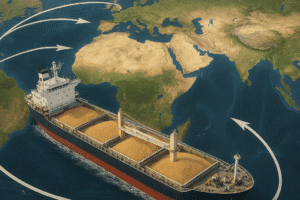
Global Production Fluctuations
- Regional yield variations due to changing weather patterns and climatic events
- Technological advancements in seed genetics and agricultural practices
- Government subsidies, export bans and trade tariffs that alter international flows
Consumption Trends and Market Balance
Demand for grain is driven by human consumption, livestock feed and industrial uses such as biofuel production. Tracking these trends requires ongoing monitoring of:
- Population growth rates and urbanization patterns
- Dietary shifts, including increased per-capita meat consumption
- Policy incentives for renewable energy that boost bioethanol production
Key Factors Influencing Grain Demand
Successful forecasting demands a clear identification of the variables that exert the greatest influence on consumption and trade. The following factors are often interlinked, creating a complex web of cause and effect:
Macroeconomic Indicators
- Economic growth in emerging markets driving higher consumption
- Exchange rates impacting import costs and export competitiveness
- Inflation and interest rates shaping consumer purchasing power
Demographic Shifts
Population demographics shape dietary demand. Key aspects include:
- Urban versus rural population distribution
- Ageing populations and evolving nutritional requirements
- Population growth hotspots that require large-scale grain imports
Supply Chain Resilience
Disruptions in logistics, storage capacity and processing infrastructure can cause sudden demand spikes or slumps. Critical considerations are:
- Transportation bottlenecks in ports, railways and highways
- Storage losses due to pests, spoilage or inadequate facilities
- Political instability affecting supply corridors
Forecasting Methodologies and Tools
Over the decades, forecasting techniques have evolved from simple trend extrapolations to sophisticated predictive analytics models. Selecting the appropriate approach often involves balancing accuracy with complexity and data availability.
Time Series Analysis
- Moving averages and exponential smoothing to highlight underlying patterns
- ARIMA (Auto-Regressive Integrated Moving Average) models for seasonality adjustments
- Limitations: may struggle with sudden structural breaks or extreme events
Econometric and Causal Models
These models incorporate causal relationships between grain demand and its drivers:
- Regression analyses that correlate consumption with GDP, population and price indices
- Vector autoregressive (VAR) models capturing interactions among multiple variables
- Challenges include ensuring data quality and avoiding multicollinearity among predictors
Machine Learning and AI-Based Methods
Harnessing large datasets, machine learning offers dynamic forecasting capabilities:
- Decision trees and random forests for handling non-linear relationships
- Neural networks that learn complex patterns from historical data
- Ensemble approaches that combine multiple models to improve accuracy
Scenario Analysis and Monte Carlo Simulations
Developing a range of possible outcomes helps stakeholders prepare for uncertainty:
- Monte Carlo simulations to assess the impact of variable fluctuations
- What-if scenarios exploring policy changes, extreme weather events or market shocks
- Useful for strategic planning and risk management
Implementing a Robust Demand Forecasting System
Beyond selecting the right model, building an effective forecasting framework requires attention to data governance, stakeholder engagement and continuous improvement.
Data Collection and Management
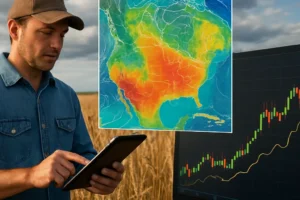
- Integrating sources: satellite imagery, market reports, trade statistics and weather data
- Ensuring data integrity through validation, cleaning and normalization processes
- Utilizing cloud-based platforms for real-time analytics and collaboration
Stakeholder Collaboration
Accurate forecasts emerge from collaboration between agronomists, economists and supply chain managers:
- Regular workshops to align assumptions and share insights
- Feedback loops that refine models based on observed market outcomes
- Transparent reporting formats to support informed decision-making
Performance Monitoring and Model Recalibration
A continuous cycle of monitoring ensures forecasts remain relevant:
- Key performance indicators (KPIs) such as forecast error rates and hit ratios
- Automated alerts for deviations beyond predefined thresholds
- Routine recalibration after major market events or structural shifts
Emerging Technologies and Future Directions
Innovations promise to further enhance forecasting precision:
- Internet of Things (IoT) sensors providing real-time field-level yield data
- Blockchain-enabled transparency in supply chains, improving traceability
- Advanced genomics and phenomics informing yield potential and risk assessments
Final Considerations for Grain Demand Forecasting
Achieving high forecast reliability demands a holistic approach that integrates rigorous data analysis with domain expertise. By staying attuned to evolving market forces, leveraging cutting-edge technologies and fostering cross-functional collaboration, stakeholders can navigate uncertainty and support global food security. The continuous refinement of forecasting systems ensures they remain powerful tools in anticipating grain requirements and guiding strategic actions in an ever-changing agro-economic landscape.