
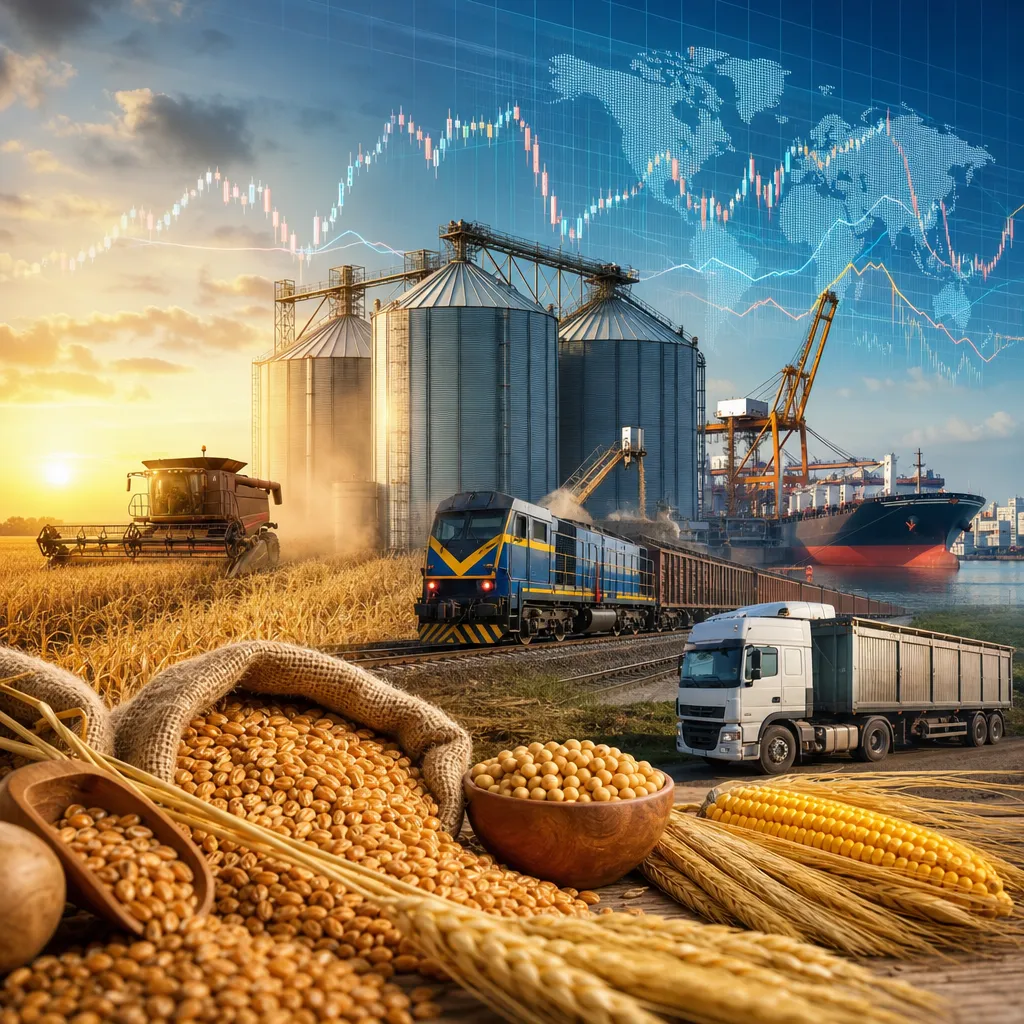
Temperature is one of the most important drivers of grain prices because it directly affects yield, crop timing, grain quality, storage risk, transport efficiency, and final demand. In practice, the market reacts not to temperature alone, but to temperature relative to crop stage, soil moisture, night temperatures, wind, and the size of existing stocks. A warm week in early spring can support planting and pressure prices, while the same warmth during pollination or grain fill can sharply raise weather risk premiums. To understand price moves correctly, readers need to separate exchange futures prices from local cash grain bids and compare weather data with crop reports, basis, and logistics conditions.
Temperature matters across wheat, corn, soybeans, rice, barley, oats, rye, sorghum, canola, rapeseed, and sunflower seed, but its effect is not uniform. Crops respond differently depending on whether heat arrives during emergence, vegetative growth, flowering, grain fill, harvest, or storage. Markets also price temperature differently depending on region: the U.S. Corn Belt, the Black Sea, Western Europe, Canada, Australia, India, Brazil, and Argentina each have different seasonal risks and export importance. That is why temperature-driven price analysis works best when it combines weather maps, futures markets, local cash bids, official crop reports, and freight realities.
How temperature affects grain prices
Temperature influences grain prices through supply first, but also through quality and logistics. If weather threatens production, futures markets often react quickly because traders try to price anticipated changes in yield or harvested area before official statistics are updated. Physical cash markets may react more slowly or more sharply depending on local elevator space, processor demand, export programs, and transport conditions.
Heat stress is especially important during reproductive stages. For corn, pollination and grain fill are key periods. For wheat, heading and grain fill are sensitive. For soybeans, flowering and pod fill matter. Excessive heat can reduce kernel set, shrink seed size, accelerate maturity, and lower overall yield. High nighttime temperatures can also reduce yield potential because crops respire more and convert less energy into grain.
Cold also moves prices. Frost can damage emerging plants, kill winter wheat in poorly protected fields, delay planting, or hurt harvest quality if maturity is interrupted. In spring grains and oilseeds, a late frost can force replanting or reduce stand counts. In tropical and subtropical regions, abnormal coolness can slow crop development and delay export availability.
| Temperature event | Typical market effect | Why it matters |
|---|---|---|
| Early-season warmth | Can pressure prices if planting and emergence improve | Faster fieldwork may support acreage and stand establishment |
| Heat during pollination or flowering | Often supports futures prices | Yield risk rises at the most sensitive growth stage |
| Warm and dry harvest weather | Can pressure nearby cash basis in surplus areas | Harvest advances quickly and supplies hit elevators at once |
| Frost or freeze event | Can support prices sharply if crops are vulnerable | Potential for stand loss, quality damage, or yield reduction |
| Hot storage conditions | Can widen quality discounts in physical markets | Spoilage, insects, moisture migration, and grade loss become more likely |
Why futures and local cash prices react differently
One of the most common mistakes is assuming that a move in Chicago or another exchange automatically equals the price paid at a local grain elevator. It does not. Exchange futures are benchmark prices for standardized contracts. Local cash grain prices reflect the futures market plus or minus basis, which is the local adjustment for freight, handling, quality, local supply, storage pressure, and buyer demand.
For U.S. grains, many participants use CME Group futures as the reference market for corn, soybeans, wheat, soybean meal, and soybean oil. In Europe, Euronext contracts are widely watched for milling wheat, corn, and rapeseed. In Canada, canola participants watch ICE futures. These exchange prices are visible on exchange websites, broker platforms, and market-data services, but they are not local farmgate bids.
Farmers and physical buyers usually check local bids through grain elevators, cooperatives, processors, ethanol plants, feed mills, flour mills, exporters, or merchants. Some publish bids on their websites or mobile apps. Others quote by phone, email, or direct contract negotiation. In export regions, the relevant cash signal may be a port bid rather than an inland elevator bid. Temperature affects futures through expected broader supply changes, while cash markets may react to immediate local bottlenecks such as slow rail service, barge constraints, or a harvest surge.
| Market type | Where it exists | What temperature affects most | Who uses it |
|---|---|---|---|
| Futures market | Regulated exchanges such as CME Group, Euronext, ICE | Expected regional or global production risk | Hedgers, funds, merchants, processors, speculators |
| Cash elevator bid | Elevators, cooperatives, local merchants, processors | Immediate harvest flow, storage pressure, local demand | Farmers, feed users, local buyers |
| Export physical market | FOB ports, export terminals, merchant contracts | Shipment timing, quality availability, freight competitiveness | Exporters, importers, trading houses |
| OTC physical contract | Direct negotiation between seller and buyer | Specific lot quality and delivery timing | Farmers, merchants, mills, crushers, feed manufacturers |
Where to check temperature-related grain market information
Good analysis starts with reliable sources. For grain prices and weather-sensitive market reports, the most useful public sources are usually official agencies and exchanges. USDA provides major U.S. crop and grain reports, while CME Group provides contract specifications and exchange data for benchmark futures. The CFTC publishes Commitments of Traders, which helps readers see how managed money and commercial users are positioned in futures and options markets.
For weather itself, market participants usually combine national meteorological agencies, private weather services, satellite products, and agricultural weather monitors. The value is not just the forecast high temperature, but accumulated heat units, overnight lows, rainfall interaction, and the match between temperature and crop stage.
Useful sources and how they are used include:
- USDA WASDE: broad global supply and demand balance sheets used to judge whether temperature damage is large enough to change ending stocks.
- USDA Crop Progress: weekly condition ratings and planting or harvest pace, helpful for measuring whether hot or cold weather is materially changing crop development.
- USDA Export Sales: shows whether price changes are affecting foreign demand.
- CME Group: futures contract details, months, delivery points, and reference prices.
- CFTC Commitments of Traders: reveals broad speculative and commercial positioning that can amplify weather-driven price swings.
- FAO and national agriculture ministries: wider global context, especially for importers and exporters outside the U.S.
Readers who need local physical pricing should check elevator bid sheets, cooperative tender sheets, processor bids, or merchant offers in their region. These are often more useful for a seller than a headline futures quote because they incorporate basis, quality rules, and delivery terms.
How temperature feeds into grain trading and hedging
In futures markets, traders buy or sell contracts through a regulated broker connected to an exchange. This is financial trading, not usually a direct purchase of truckloads of grain. A corn or wheat futures hedge is used to reduce price risk, while a cash grain contract handles actual physical movement, quality, and payment. Some large firms operate in both markets, but the functions are different.
Farmers may hedge expected production when high temperatures threaten volatility. For example, if weather risk raises futures prices, a producer may choose to hedge part of production with futures or options while keeping flexibility on local basis. A feed mill or processor may hedge input needs if heat threatens supplies and rising replacement costs. Merchants may use futures to offset physical inventory exposure.
Options are often used when participants want price protection with more flexibility than a straight futures hedge. Buying a put can help a grain seller protect against lower prices while retaining some upside if weather later turns more bullish. Buying a call can help a grain buyer protect against upside price risk. However, options involve premium cost, and futures involve margin calls. Neither removes basis risk, credit risk in a physical contract, or quality risk in stored grain.
Weather-driven trading is risky because forecasts change fast. A hot forecast can lift prices in the morning and lose significance by the next model run if rain appears. That is why professional users compare weather maps with soil moisture, crop stage, official conditions, and open interest rather than trading headlines alone.
Physical grain trade: where temperature shows up in real transactions
In the physical market, temperature affects much more than yield expectations. It can change test weight, protein, oil content, falling number, moisture, damage, and storability. Buyers do not purchase “grain in general”; they buy grain to specification. That means a weather event can raise benchmark futures while some physical lots still face discounts because quality deteriorated.
A typical physical grain sale may involve a farmer, collector, elevator, cooperative, merchant, processor, or exporter. The contract normally specifies crop, quantity, delivery window, quality standard, delivery point, basis or flat price, and payment terms. In export channels, contracts may also involve inspection, vessel loading terms, and Incoterms. In inland trade, freight allocation and unloading standards matter.
Hot harvest conditions can create a supply rush. Elevators may widen discounts for moisture or damaged grain, shorten receiving hours, or adjust basis if storage fills rapidly. Very high temperatures in storage can raise aeration costs and spoilage risk, which affects carry decisions. A merchant holding grain too long in poor conditions may lose grade and receive less at resale.
Storage, quality, and logistics under temperature stress
Temperature does not stop mattering once grain is harvested. Warm grain is harder to store safely, especially when moisture is elevated. Heat increases biological activity, insect pressure, and the risk of moisture migration inside bins. This can turn a pricing question into a quality-loss problem, especially for corn, wheat, barley, rice, oats, and oilseeds stored through warm periods.
Storage decisions should therefore be linked to both market carry and physical condition. A higher futures carry does not automatically justify storage if the grain may lose weight, quality, or grade. Producers and merchants normally need to compare expected carrying returns against aeration, electricity, shrink, labor, inventory financing, and possible discount risk. Commercial warehouses, on-farm bins, and elevator storage all handle this differently.
Logistics also respond to temperature extremes. Low river levels during hot, dry conditions can disrupt barge drafts. Rail efficiency may fall in some regions under heat restrictions. High temperatures can also affect road movement, loading pace, and working hours. In export chains, these factors can tighten nearby basis even when futures are focused on broader crop prospects.
Practical framework for analyzing temperature and grain prices
A useful process is to look at temperature in sequence rather than in isolation.
- Identify the crop and growth stage. Heat in vegetative corn is not the same as heat in pollinating corn. Warm weather at wheat harvest is not the same as warm weather during heading.
- Check moisture at the same time. Heat with good subsoil moisture may be manageable. Heat with drought is much more threatening.
- Compare the weather event with stocks and trade flows. Tight stocks make prices more sensitive to stress. Large inventories can mute the response.
- Separate benchmark futures from local basis. If you are selling grain physically, call or check bids from the actual location where the grain will be delivered.
- Watch official reports. Crop condition, acreage, yield revisions, and export pace help confirm whether the temperature event is changing the balance sheet.
- Check quality signals. Discounts at elevators, protein spreads, test-weight penalties, or moisture deductions may matter more than the board move.
This approach helps farmers, traders, and buyers avoid overreacting to a weather headline that has little commercial significance in their own area or crop stage.
Common mistakes when using temperature to judge grain prices
- Treating any heat as bullish. Timing matters more than the word “hot.”
- Ignoring local basis. A futures rally may not improve a local bid if harvest pressure or freight problems are severe.
- Watching only daytime highs. Night temperatures can be just as important for crop stress.
- Confusing futures trading with physical buying or selling. A broker account trades financial contracts; it does not replace an elevator, merchant, or warehouse relationship.
- Ignoring quality. Weather can support headline prices while specific grain lots receive discounts.
- Reacting before checking reports. Crop Progress, WASDE, and export data often show whether the weather story is large enough to matter beyond a short-term trade.
Where can I check grain prices affected by temperature?
Check benchmark futures on exchange-related market data, especially CME Group for many U.S. grains. Then check local cash bids from elevators, cooperatives, processors, feed mills, or exporters because that is where physical sellers usually see the true price available in their area.
Does high temperature always make grain prices rise?
No. Heat can be bearish if it speeds planting, accelerates harvest, improves drydown, or brings large supplies to market quickly. It is most supportive when it threatens yield or quality during sensitive crop stages and when stocks are already tight.
Where does trading on temperature usually take place?
Financial trading usually takes place through regulated futures and options markets accessed via a licensed broker. Physical grain trading takes place through elevators, cooperatives, merchants, processors, exporters, mills, and negotiated cash contracts.
Why is my local wheat or corn bid different from the futures market?
Your local bid includes basis, which reflects freight, handling, local supply and demand, storage pressure, and quality. Futures are a standardized exchange benchmark, not a guaranteed local purchase price.
How do farmers hedge temperature-related price risk?
They may use futures, options, forward cash contracts, hedge-to-arrive contracts, or basis contracts depending on their buyer relationships and risk tolerance. The exact method depends on whether the main risk is futures price movement, local basis, or production uncertainty.
Can temperature affect stored grain prices after harvest?
Yes. High storage temperatures can damage quality, increase insect activity, and raise aeration needs. That can lead to discounts or make storage less profitable even if futures carry appears attractive.
Which reports should I watch when a heat wave hits grain markets?
USDA Crop Progress is important for condition changes and field pace, WASDE for balance sheet implications, Export Sales for demand response, and CFTC positioning data for understanding whether speculative flows may exaggerate price moves.
Sources
- USDA World Agricultural Supply and Demand Estimates
- CME Group contract specifications and market information
- U.S. Commodity Futures Trading Commission Commitments of Traders