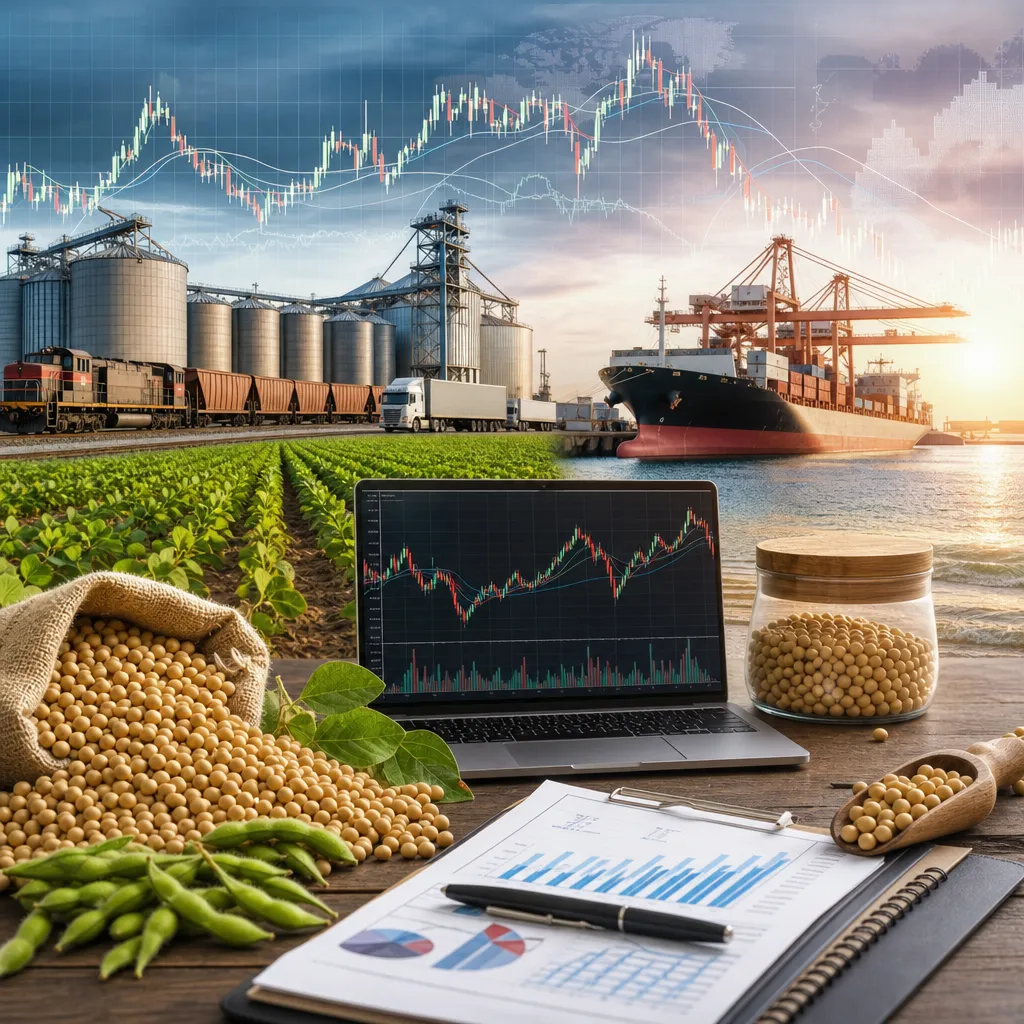



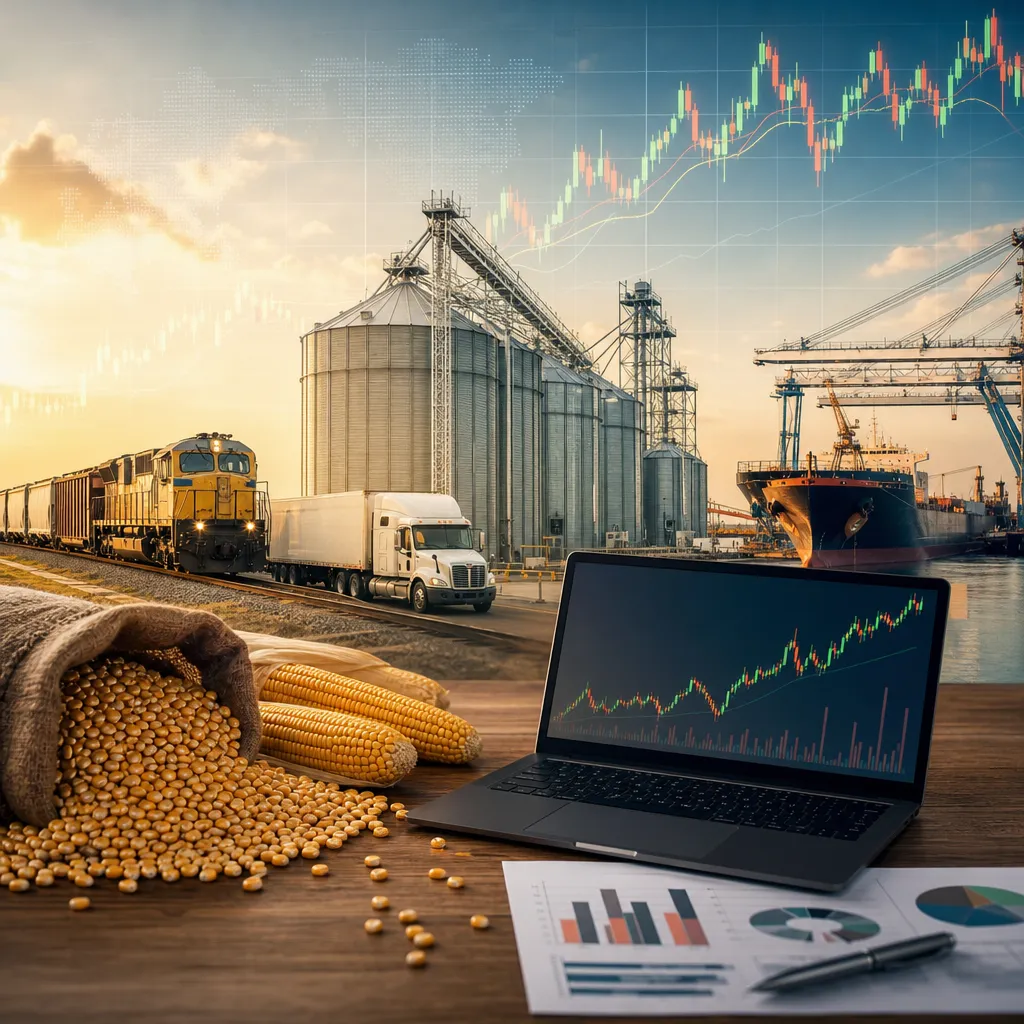
Corn futures prices are the benchmark exchange prices used to value corn risk, hedge physical grain, and speculate on the direction of the market. For most global participants, the key reference is the corn futures contract traded on CME Group’s Chicago Board of Trade, but that is not the same as the cash price a farmer receives at a local elevator or the delivered price a feed mill pays. Futures show a standardized market price for a specific contract month, while physical corn is priced through local bids, basis, freight, quality, and delivery terms. To use corn futures prices properly, readers need to know where the quote comes from, how it is traded, and how it connects to the real grain market.
If you want the current market, check the relevant CME corn contract month and then compare it with local cash bids from elevators, cooperatives, grain merchants, processors, or official market reporting services. If you want to hedge or trade, that normally happens through a regulated futures brokerage account, not by calling a grain elevator. If you want to buy or sell actual corn, the transaction is usually handled through the physical grain trade, where delivery point, moisture, grade, and logistics matter as much as the benchmark futures price.
What corn futures prices are
A corn futures price is the exchange-traded price for a standardized contract to buy or sell corn for a specific future delivery month. The main benchmark is CBOT Corn futures on CME Group. Each contract has standardized terms set by the exchange, including contract size, delivery specifications, and listed months.
These prices are used in several different ways:
- Farmers use them to hedge expected production.
- Feed mills, ethanol plants, and processors use them to hedge input costs.
- Grain merchants and exporters use them to manage purchase and sales risk.
- Speculators and funds trade them for price exposure without intending to handle physical corn.
- Analysts use them as a transparent benchmark for the broader corn market.
The exchange quote is not a farmgate price. A local buyer will usually quote a cash bid, which is commonly calculated as futures plus or minus a basis. Basis reflects local supply and demand, transportation costs, storage pressure, processor demand, and regional logistics.
Where corn futures prices are quoted and checked
The primary public source for benchmark corn futures prices is CME Group. Financial market data platforms, broker trading systems, agricultural data services, and many market news providers also display corn futures quotes, often with delayed or real-time data depending on the service level.
In practice, readers normally check prices in four places:
- CME Group for the official exchange-listed corn futures contracts and contract specifications.
- Futures brokers and trading platforms for executable prices if the user has a trading account.
- Elevators, cooperatives, merchants, ethanol plants, and feed mills for local cash bids.
- Government or official market reporting systems for regional cash market summaries where available.
Farmers rarely make pricing decisions from futures alone. They typically compare the futures board with local bids posted by grain buyers in their delivery area. Many elevators and grain companies publish bids online or through mobile tools, but the practical value of those bids depends on location, grade, moisture, and delivery window.
| Price source | What it shows | Who uses it | Main limitation |
|---|---|---|---|
| CME corn futures | Benchmark exchange price by contract month | Traders, hedgers, analysts | Not the same as local cash corn |
| Local elevator bid | Cash price at a specific delivery point | Farmers, local sellers | Highly location- and quality-dependent |
| Processor or feed mill bid | Direct-use bid for a plant or buyer | Commercial sellers, producers | May include strict quality and delivery terms |
| Official market reports | Regional cash summaries and trends | Analysts, merchants, producers | Often summary data, not executable bids |
How corn futures trading works
Corn futures trading takes place on a regulated futures exchange, typically through a futures commission merchant or broker. A trader opens a futures account, deposits margin, and uses a broker platform to buy or sell contracts. This is financial trading. It does not mean trucks of corn arrive automatically when you buy a contract.
Key mechanics include:
- Contract month: Futures are listed for specific delivery periods, so the price depends on whether the market is looking at nearby or deferred supply.
- Margin: Traders post collateral to hold a position. This creates leverage, which magnifies both gains and losses.
- Mark-to-market: Positions are repriced daily, and losses may require additional funds.
- Expiry and delivery: Most financial traders offset positions before delivery. Commercial firms may use contracts more closely in line with physical exposure.
Anyone considering trading should distinguish between hedging and speculation. A farmer selling futures against expected production is managing price risk on physical corn. A fund buying futures with no underlying corn exposure is taking directional market risk. Both use the same exchange, but their purpose is different.
Costs vary by broker and service level, and the user should check commissions, exchange fees, market data fees, margin policy, and trading permissions directly with the broker. None of these should be assumed to be standard across providers.
Futures prices versus cash corn prices
The most common misunderstanding is assuming the corn futures quote equals the local cash price. It does not. Cash pricing depends on basis, which is the difference between the local bid and the relevant futures contract.
For example, an elevator might quote corn as a certain amount under or over a futures month. That basis changes with local conditions such as harvest pressure, rail availability, river conditions, processor demand, export competition, and storage tightness.
Cash corn can also differ because of:
- Moisture discounts or drying charges
- Test weight and grade factors
- Aflatoxin or other quality issues where relevant
- Freight to the delivery point
- Immediate delivery versus forward delivery timing
- Payment terms and contract conditions
| Market | How price is formed | Where it is accessed | Typical user |
|---|---|---|---|
| Futures market | Exchange trading in standardized contracts | CME via broker platforms and market data services | Hedgers, traders, funds |
| Cash elevator market | Local bid based on futures plus or minus basis | Elevators, cooperatives, merchants | Farmers, local grain sellers |
| Processor market | Plant demand, freight, quality, and basis | Ethanol plants, feed mills, starch users | Commercial sellers, merchants |
| Export market | FOB or port pricing linked to futures and logistics | Exporters, merchants, port facilities | Traders, exporters, importers |
Who uses corn futures prices in the physical grain trade
In the real-world grain chain, corn futures prices are embedded in contracts even when no one is trading a futures account directly. Grain elevators, cooperatives, and merchants often build cash bids from the board price and a local basis. Processors may set procurement bids the same way. Exporters may hedge sales exposure using futures while negotiating physical terms separately.
Typical physical market participants include:
- Farmers selling at harvest, storing unpriced grain, or forward contracting.
- Country elevators and cooperatives aggregating grain and managing basis and storage.
- Grain merchants buying, hedging, transporting, and reselling corn.
- Processors such as ethanol plants, feed manufacturers, and food ingredient users.
- Exporters moving corn to port and trading against international demand.
- Warehouses and storage operators holding grain under commercial terms.
Actual corn sales typically involve contract details that go beyond price: delivery period, location, accepted grades, moisture limits, scale and inspection procedures, title transfer, and payment timing. A physical contract is a commercial grain transaction, not just a market quote.
Main drivers of corn futures prices
Corn futures prices respond to expected supply and demand, not just current inventory in one local market. Traders watch weather and yield prospects, but also balance sheet indicators, energy markets, biofuel demand, exports, currency moves, and substitution with other feed grains.
Important drivers include:
- Acreage and planting pace: More or fewer planted acres affect expected production.
- Weather during pollination and grain fill: Yield risk can change quickly.
- USDA balance sheet updates: Production, ending stocks, and use revisions can shift price expectations.
- Export demand: Large importers, currency shifts, and competing exporters can move the market.
- Ethanol and feed demand: Corn use in fuel and livestock sectors matters significantly.
- Logistics: River levels, rail service, port congestion, and harvest movement influence nearby basis and sometimes futures spreads.
Forecasting should be treated as scenario analysis rather than certainty. A supportive weather pattern, weaker exports, or larger-than-expected stocks can all change the outlook. The most practical approach is to monitor the reports that move expectations rather than relying on a single target price.
Where to find reliable corn market reports and data
For public and authoritative information, the most important sources are USDA and CME Group, with CFTC useful for position data. These sources do not replace local commercial bids, but they are the core references for analysis.
- USDA WASDE: Global and US supply-demand balance sheets. Used to assess production, use, and ending stocks.
- USDA Crop Progress: Weekly updates on planting, crop condition, and harvest pace in the United States.
- USDA Grain Transportation or related logistics reporting: Useful for understanding freight and movement conditions where relevant.
- USDA Export Sales: Tracks reported export commitments and shipments.
- CFTC Commitments of Traders: Shows positioning by major classes of futures market participants.
- CME contract pages: Contract specifications, delivery terms, and futures market reference data.
Commercial data vendors and agricultural software can combine futures, options, weather, basis, freight, and farm marketing records into one platform. These are widely used by merchants, analysts, and larger farming operations, but the exact features and costs depend on the provider.
How farmers, buyers, and traders use corn futures prices in practice
A farmer deciding whether to sell corn today will usually start with local cash bids, then compare those bids with the board and basis history. If the futures market looks attractive but basis is weak, the farmer may choose a hedge-to-arrive or similar pricing structure where available, or hedge futures separately and wait on basis. The exact contract type depends on the buyer and local market norms.
A feed mill or processor may use futures to protect against rising prices while continuing to source physical corn from nearby suppliers. A grain merchant may buy corn from elevators, sell it to a processor or exporter, and hedge the price risk in futures until the physical deal is completed.
Basic practical steps differ by objective:
- To check benchmark prices, look at CME corn futures by contract month.
- To know your actual sale price, check local cash bids from elevators, cooperatives, processors, or merchants in your area.
- To trade futures, open a regulated futures brokerage account and review margin, fees, and risk disclosures.
- To sell physical corn, negotiate a cash, forward, or storage-related contract with a grain buyer and confirm delivery and quality terms.
- To hedge, match the futures month and quantity as closely as practical to your physical exposure, while recognizing basis risk remains.
The main risks are leverage in futures, unfavorable basis movement, production shortfalls on forward sales, quality disputes, and logistics problems at delivery time.
Common limitations and mistakes
Using corn futures prices well requires understanding what they do not show. A board quote does not tell you your drying cost, local basis, barge freight, rail congestion, moisture discount, or whether a nearby plant is short-bought.
Common mistakes include:
- Confusing futures with a local cash bid.
- Watching the wrong contract month.
- Ignoring basis risk when hedging.
- Using leveraged futures without understanding margin calls.
- Forward selling physical corn without considering production risk.
- Comparing online quotes from delayed data with live commercial bids.
- Focusing only on national reports while missing local logistics and quality issues.
For most commercial users, the best approach is to combine exchange data, official reports, and real-world local bids rather than relying on only one source.
Where can I check current corn futures prices?
The benchmark source is CME Group, which lists CBOT corn futures contract months and specifications. Many brokers, financial data terminals, agricultural market services, and news providers also display these prices, but some feeds may be delayed.
Where do farmers usually check the price they can actually receive?
Farmers normally check local elevator bids, cooperative bids, processor bids, or grain merchant bids in their delivery area. Those cash bids reflect futures plus or minus basis and may change with quality, moisture, and delivery timing.
Can I buy physical corn by purchasing a corn futures contract?
Usually no, at least not in the practical commercial sense most buyers mean. Futures are standardized financial contracts traded on exchange, while actual corn procurement is normally handled through elevators, merchants, processors, or exporters under separate physical contract terms.
What is basis in corn pricing?
Basis is the difference between the local cash price and the relevant futures price. It reflects local supply and demand, freight, storage conditions, buyer competition, and regional logistics.
How do I trade corn futures?
You normally need a futures brokerage account with a regulated intermediary that offers access to the relevant exchange. Trading is done on the broker’s platform, and the user should review margin requirements, commissions, exchange fees, and risk disclosures before placing trades.
Which reports matter most for corn futures prices?
USDA WASDE, USDA Crop Progress, USDA Export Sales, and CFTC Commitments of Traders are among the most widely followed reports. CME Group contract information is also essential for understanding the tradable instrument itself.
Why can local corn prices rise while futures fall?
This often happens when basis strengthens because of local demand, transport disruption, storage shortages, or regional supply tightness. Futures reflect the broader exchange market, while cash bids also reflect local physical conditions.
Do corn futures prices include storage and freight?
No. Futures are benchmark exchange prices for standardized contracts. Physical grain transactions may add or subtract costs related to storage, freight, handling, drying, and quality adjustments depending on the contract.
Sources
- CME Group
- United States Department of Agriculture
- U.S. Commodity Futures Trading Commission