

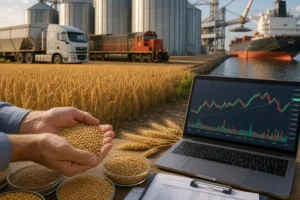
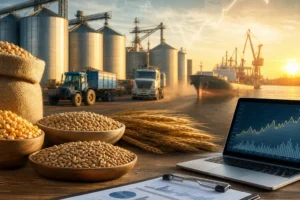
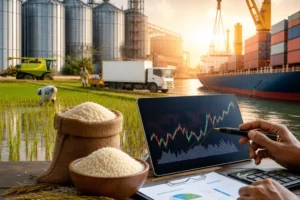

Grain prices usually fall when the market believes supply is becoming more comfortable relative to demand. That can happen because production is rising, weather risk is fading, exports are slowing, buyers are well covered, or outside markets such as currencies, energy, and freight are making grain less competitive. In practice, the price decline may show up first in futures markets on an exchange, then in local cash bids at elevators, cooperatives, processors, and export terminals, but the two are not the same thing. To understand why prices are falling, a farmer, trader, buyer, or analyst has to look at both the paper market and the physical grain market.
What usually pushes grain prices lower
Grain prices fall when sellers become more willing to sell or buyers become less urgent to buy. The most common cause is a shift in supply and demand expectations.
For wheat, corn, soybeans, rice, barley, oats, rye, sorghum, canola, rapeseed, and sunflower seed, the market often reacts to the same broad drivers:
- Larger crops: Better yields, bigger planted area, or improved weather reduce scarcity.
- Higher stocks: When carryout or ending stocks rise, buyers feel less pressure.
- Weak exports: If importing countries buy less, or buy from cheaper origins, prices soften.
- Slower domestic demand: Feed, milling, crushing, or biofuel demand may weaken.
- Harvest pressure: Prices often come under pressure when a large crop is physically moving.
- Stronger local currency: Grain from that origin may become less competitive in export markets.
- Lower energy prices: This can reduce biofuel demand incentives and soften freight-linked support.
- Fund liquidation: Investment funds can sell futures aggressively, accelerating a price drop.
| Factor | Typical effect on grain prices | Why it matters |
|---|---|---|
| Improving weather | Bearish | Reduces yield risk and increases confidence in supply. |
| Larger acreage or yield | Bearish | Adds production and often increases ending stocks. |
| Weak export demand | Bearish | Leaves more grain in the domestic market. |
| Heavy farmer selling at harvest | Bearish in cash markets | Increases immediate physical supply to local buyers. |
| Fund selling in futures | Bearish in exchange markets | Can push futures lower even before physical trade fully adjusts. |
| High freight or slow logistics | Often bearish locally | Wider basis or lower bids may be needed to move grain. |
Futures prices falling versus local cash prices falling
Many people say “grain prices are falling” when they are looking at a futures chart. That may be true, but the futures price is not automatically the same as the local price paid for physical grain.
Futures prices are quoted on regulated exchanges. For major global benchmark grain contracts, a key venue is CME Group, which lists futures and options for products such as corn, wheat, soybeans, soybean meal, soybean oil, oats, canola-linked products through related markets, and other agricultural contracts depending on the exchange complex. These contracts are standardized by quantity, delivery terms, quality specifications, and expiry month.
Cash prices are local bids offered by elevators, cooperatives, processors, feed mills, crushers, exporters, or merchants. A cash bid usually reflects:
- Futures price, if that crop is priced off a benchmark contract
- Basis, meaning the local premium or discount relative to futures
- Freight cost to destination
- Quality and grade
- Delivery timing
- Storage availability and buyer demand
A reader checking prices online should understand the difference between these two markets:
| Market type | Where it is found | What it shows | Who uses it |
|---|---|---|---|
| Futures market | Commodity exchanges and broker trading platforms | Standardized exchange-traded contracts | Traders, hedgers, funds, merchandisers, processors |
| Local cash market | Elevator bid sheets, cooperative apps, processor bids, merchant quotes | Actual local buying price for physical grain | Farmers, commercial grain sellers, feed buyers, mills |
| Export market | Merchants, exporters, port bids, tenders, trade reporting services | FOB or port-related values tied to global demand | Exporters, importers, brokers, analysts |
This distinction matters because futures can fall while basis improves, leaving local cash prices down less than expected. The opposite can also happen: futures stay steady, but local bids fall because storage is full or freight is expensive.
How grain prices are discovered in the real market
Price discovery happens through many simultaneous channels. The exchange reflects broad market expectations. The physical market reflects immediate commercial needs.
In practice, physical grain is commonly bought and sold through:
- Country elevators and cooperatives: Common first delivery point for farmers.
- Grain merchants: They assemble, store, transport, and resell grain.
- Processors: Flour mills, crushers, ethanol plants, maltsters, feed mills, rice mills.
- Exporters: Buyers at inland loading points or ports.
- Brokers: In some regions they arrange cash grain transactions between counterparties.
A typical physical sale may work like this:
- The seller checks local bids from elevators, cooperatives, processors, or merchants.
- The buyer quotes a price for a defined delivery period, quality specification, and location.
- The contract may be spot, forward, basis-only, fixed-price, or hedge-to-arrive depending on the market structure.
- The grain is delivered by truck, rail, barge, or vessel route to the agreed point.
- Weights, grade, moisture, damage, protein, oil content, or other quality metrics are measured.
- Final payment is adjusted for quality, freight terms, shrink, discounts, or contract conditions.
When prices are falling, buyers may lower bids quickly, narrow delivery windows, or widen discounts for lower quality grain. If storage is tight, harvest selling can become especially heavy and local cash prices may weaken faster than export benchmarks.
Why weather can make prices fall, not just rise
Weather is widely associated with price spikes, but some of the sharpest declines happen when threatening weather does not cause the expected damage. Markets price risk before they price facts.
Examples include:
- Drought fears that fade after timely rain
- Cold or frost scares that leave little damage
- Harvest delays that are resolved without major quality loss
- Planting delays followed by rapid field progress
That is why grain markets can fall during the growing season even before harvest. The market is not waiting only for the crop to be harvested; it is constantly reassessing yield potential. Traders and hedgers monitor official and commercial weather tools, satellite imagery, crop condition reports, and field observations.
For public data, readers often use USDA Crop Progress for U.S. conditions, national agriculture ministries for domestic crop updates, and FAO or statistical agencies for broader global context. These sources do not give local elevator bids, but they help explain why futures may be moving.
Reports and data that explain falling grain prices
If grain prices are dropping and you want to know why, the first step is to identify whether the move is driven by fundamentals, investor positioning, or local logistics. Several official data sources are especially important.
- USDA WASDE: Global and U.S. balance sheets for major crops. Used to assess production, demand, and ending stocks.
- USDA Crop Progress: Weekly field conditions and harvest progress in the United States.
- USDA Export Sales: Shows reported export commitments and shipments for key crops.
- CFTC Commitments of Traders: Shows how different trader categories are positioned in U.S. futures markets.
- CME Group market data: Futures and options prices, contract months, and market specifications.
- FAO: Global food and agriculture context, including broad market analysis.
- National statistical agencies and agriculture ministries: Production estimates, stocks, trade data, and regional price reporting.
These tools are used differently:
- A farmer may compare local bids with futures and basis.
- A merchandiser may track export sales and freight signals.
- A trader may watch fund positioning and technical levels.
- A processor may monitor basis, quality spreads, and nearby physical availability.
Online, exchange websites and official agency portals are usually the most reliable starting points. Commercial analytics platforms may combine these datasets into dashboards, charting tools, and APIs, but users should separate raw official data from value-added interpretation.
How falling prices affect farmers, buyers, and traders differently
A fall in grain prices does not affect every participant in the same way.
Farmers may face lower revenue, especially if input costs were locked in at high levels. Farm economics matter here: fertilizer, seed, fuel, rent, drying, storage, and interest expense may not fall as quickly as grain prices.
Livestock feeders and feed mills may benefit from cheaper corn, wheat, barley, oats, sorghum, or other feed grains if basis remains reasonable.
Processors such as flour mills, rice mills, crushers, and ethanol plants may see improved raw material margins if product values do not fall as fast.
Exporters and merchants may gain opportunities to originate grain more competitively, but only if logistics, freight, and vessel loading capacity cooperate.
Speculators and hedgers experience falling prices very differently. A hedger who sold futures against owned grain may be protected. A long speculative futures position may lose money quickly.
Where people check, trade, buy, or sell when prices are falling
The correct place depends on whether the reader needs market information, financial exposure, or a physical transaction.
Checking quoted prices
- Exchange websites: For benchmark futures prices and contract specifications.
- Broker platforms: For live or delayed futures and options data, depending on the service.
- Elevators and cooperatives: For local cash bids, often posted on websites, mobile apps, bid sheets, or by phone.
- Processors and merchants: For direct-delivery bids tied to quality and destination.
- Government market reports: In some countries, for reported local or regional cash prices.
Trading futures or options
Futures and options are normally traded through a regulated broker connected to an exchange. The user typically needs a brokerage account approved for derivatives. This is a financial market, not the same as selling physical grain from the farm.
Before using futures or options, a participant needs to understand:
- Contract size and delivery month
- Margin requirements and leverage risk
- Expiry and delivery mechanics
- Basis risk between futures and local cash grain
- Whether the position is a hedge or speculation
Leverage can magnify losses. A price drop that helps a short hedge can damage a long speculative position.
Selling physical grain
Physical grain is usually sold through an elevator, cooperative, merchant, processor, or direct commercial contract. The seller should confirm:
- Delivery point and timing
- Moisture and grade standards
- Discount schedules
- Freight responsibility
- Storage terms if grain is held before pricing
- Payment timing and counterparty strength
In export-oriented markets, grain may also move through warehouses, rail loaders, barge terminals, and ports. A falling futures market does not guarantee that a merchant is actively bidding nearby if logistics are congested.
Storage, basis, and logistics in a falling market
When prices fall, storage decisions become more important. If harvest pressure is pushing local bids down, a farmer or commercial holder may consider storing grain rather than selling immediately. But storage is not free and does not remove market risk.
The key question is whether the market offers enough potential improvement in basis or carry to justify the cost and risk.
- On-farm storage: Gives timing flexibility, but requires aeration, monitoring, and quality control.
- Commercial storage: Convenient for logistics, but fees and load-out terms matter.
- Delayed pricing or minimum price contracts: May be available through some buyers, but the seller should understand the embedded costs and risks.
Quality can deteriorate in storage if moisture, insects, temperature, or spoilage are not controlled. For wheat, corn, rice, barley, oats, sunseed, canola, and soybeans, storage quality affects the final net price. A nominally better later price can be offset by shrink, discounts, or carry costs.
How to interpret a falling grain market practically
A practical approach is to separate the move into three questions.
- Is the exchange market falling? Check benchmark futures on the relevant exchange.
- Is local basis weakening too? Compare current elevator or processor bids with recent levels.
- What is driving the move? Review crop reports, export demand, weather, fund positioning, and logistics.
If futures are falling because global supply expectations improved, the decline may be broad and fundamental. If only the local cash market is weakening, the cause may be harvest pressure, poor logistics, weak nearby processor demand, or quality problems. If futures are falling sharply without major changes in physical demand, speculative selling or position liquidation may be the main trigger.
For commercial users, the most useful routine is to watch official reports, compare multiple local bids, and evaluate basis separately from futures. That is how people avoid confusing a global benchmark price move with the actual price available at a specific delivery point.
Why are grain prices falling if my local elevator bid has not dropped as much?
Your local bid includes basis, not just futures. If local demand is firm or nearby supplies are tight, basis can strengthen and offset part of the futures decline.
Where can I check grain prices accurately?
Use exchange data for futures benchmarks and local elevators, cooperatives, processors, or merchants for actual cash bids. Government market reporting services may also publish regional cash indications in some countries.
Are falling futures prices the same as lower farm-gate prices?
No. Farm-gate prices depend on basis, freight, quality, storage, and delivery point. A fall in futures often affects cash bids, but not always by the same amount.
How do farmers protect themselves when grain prices fall?
Common tools include forward cash contracts, futures hedges, options, storage, and basis management. The right choice depends on cash-flow needs, risk tolerance, local basis behavior, and access to brokerage or commercial contracting.
Where does grain futures trading take place?
It takes place on regulated commodity exchanges and is accessed through futures brokers and trading platforms. This is separate from physically buying or selling grain through elevators or merchants.
Can falling prices create buying opportunities for processors or feed users?
Yes, but buyers still need to evaluate basis, freight, quality, and coverage needs. A cheaper futures market does not always mean attractive delivered physical grain.
What reports should I watch first when prices are dropping?
USDA WASDE, USDA Crop Progress, USDA Export Sales, CFTC Commitments of Traders, exchange market data, and relevant national crop and trade reports are often the most useful starting points.
Sources
- USDA World Agricultural Supply and Demand Estimates
- CME Group agricultural futures and options contract information
- CFTC Commitments of Traders