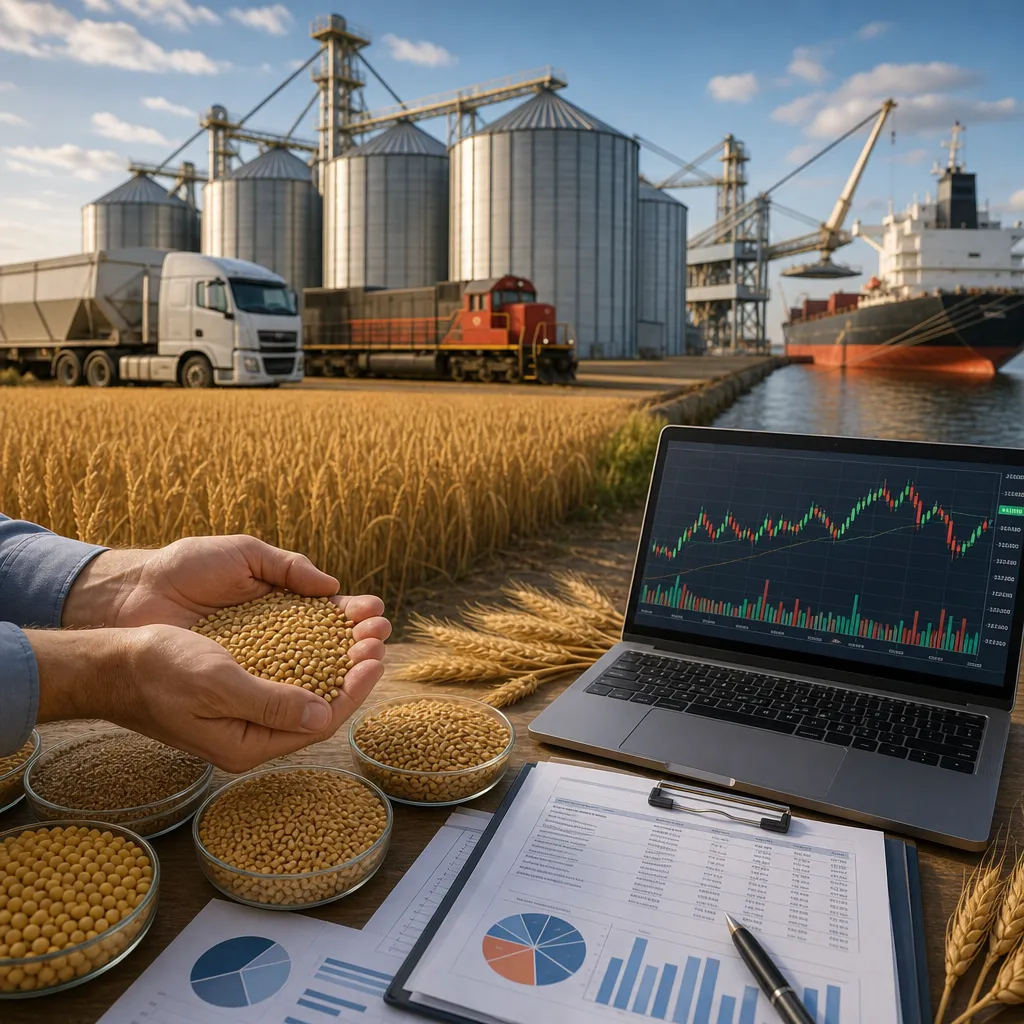






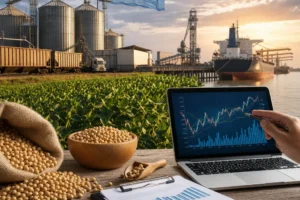

Grain prices per ton are quoted every day, but the number a buyer sees on an exchange screen is not the same as the amount a farmer receives at a local elevator. In practice, grain pricing works through two connected markets: the futures market, which provides a benchmark, and the cash market, where actual physical grain is bought and sold. To check a price accurately, you need to know the crop, quality, delivery location, unit of measure, currency, and whether the quote is a futures price or a local cash bid. For current prices, the most reliable approach is to combine exchange data from a regulated futures market with local bids from elevators, cooperatives, merchants, processors, or official market reporting services.
What “grain prices per ton” actually means
“Per ton” is a physical pricing expression. It usually refers to the value of one metric ton or one short ton of grain delivered or picked up at a specific location. The exact meaning depends on the country and market convention.
In international trade, grain is often quoted in metric tons. In the United States, futures contracts are commonly quoted in cents or dollars per bushel, while physical grain may be settled in dollars per bushel, dollars per short ton, or converted into dollars per metric ton for comparison. This matters because wheat, corn, soybeans, barley, sorghum, rice, canola, and sunflower seed may each be quoted differently depending on the market.
A useful way to think about grain prices per ton is that they are the final commercial expression of several components:
- benchmark market price, often a futures contract or export reference price,
- basis or local premium/discount,
- quality adjustments,
- freight and logistics,
- storage and handling,
- currency conversion where relevant.
Where grain prices are quoted
Grain prices exist in several places at the same time. A futures exchange may show a benchmark price for wheat or corn, while a local elevator shows a cash bid for nearby delivery. Exporters may quote FOB values at port, importers may negotiate CIF contracts, and feed mills or processors may post direct purchase bids.
| Market type | What the price represents | Where readers usually check it | Typical users |
|---|---|---|---|
| Futures market | Standardized exchange-traded benchmark for a contract month | Exchange websites, broker platforms, market-data terminals, financial data services | Traders, hedgers, analysts, merchants, processors |
| Local cash market | Actual bid or offer for physical grain at a named location | Elevators, cooperatives, merchants, processors, local bid sheets, agricultural reporting systems | Farmers, local buyers, feed mills, truckers |
| Export market | Price for grain loaded at port or sold under trade terms such as FOB or CIF | Merchants, trade houses, brokers, official market intelligence sources | Exporters, importers, originators, shipping participants |
| Processor direct bid | Bid from a mill, crusher, ethanol plant, maltster, or feed manufacturer | Processor bid pages, procurement teams, direct contracts | Farmers, merchants, commercial grain sellers |
For exchange-traded grain benchmarks, the main global reference point is CME Group for major U.S. grain and oilseed futures such as corn, wheat, soybeans, soybean meal, soybean oil, and oats. Other regional exchanges may matter depending on the crop and geography. These prices are financial benchmarks first; they are not automatically the local farmgate price.
For local cash grain, farmers and buyers normally check bids from country elevators, cooperatives, grain merchants, feed mills, flour mills, crushers, ethanol plants, livestock integrators, or exporters. In some countries, ministries of agriculture, market information services, or commodity boards also publish indicative prices or market reports.
Futures price versus local cash price
The core pricing difference is basis. Basis is the gap between the local cash price and the futures benchmark. It reflects local supply and demand, transport cost, quality, handling, and delivery urgency.
If a wheat futures contract rises, a local cash wheat bid may not rise by the same amount. A weak local basis can offset a stronger futures market. The reverse is also true: local shortages, plant demand, or export competition can strengthen cash prices even if futures are flat.
Local bids are usually built like this:
- futures reference price for a relevant month,
- plus or minus basis,
- plus or minus quality premiums or discounts,
- minus freight or drying if those costs are assigned to the seller.
This is why the same corn crop can have different prices per ton at two elevators only a short distance apart. One buyer may have stronger rail access, a processor nearby, lower drying needs, or more urgent nearby demand.
| Item | Futures market | Physical cash market |
|---|---|---|
| What is traded | Standardized contract | Actual grain |
| Where it trades | Regulated exchange through a futures broker | Elevator, cooperative, merchant, processor, brokered cash deal, export contract |
| Price unit | Usually bushel, ton, or exchange standard | Usually ton or local commercial unit |
| Delivery | Normally offset before delivery; delivery rules are standardized | Physical transfer, quality inspection, logistics, payment settlement |
| Main risk | Market volatility, leverage, margin calls | Basis, quality, counterparty, freight, storage, timing |
How farmers, buyers, and traders normally use grain prices per ton
Farmers use grain prices per ton to decide when to sell, whether to store grain, whether to hedge, and how expected revenue compares with production cost. Grain buyers use them to cover needs for feed, milling, crushing, or export commitments. Traders use them to manage price exposure across futures, basis, spreads, and physical movement.
A practical farm-level process often looks like this:
- Check nearby local bids from several elevators or processors.
- Compare those bids with exchange futures for the relevant delivery period.
- Review basis history if available.
- Assess grain quality, moisture, protein, test weight, foreign matter, and storage condition.
- Estimate freight, drying, shrink, and handling cost.
- Decide between spot sale, forward cash contract, hedge-to-arrive structure where available, storage, or a futures/options hedge.
For commercial buyers, the process is similar but starts with procurement needs. A feed mill may buy cash corn nearby while hedging input risk in futures. An exporter may bid against port replacement value, ocean freight, and destination demand. A crusher may build soybean bids around meal and oil margins.
Where and how physical grain is bought and sold
Physical grain transactions usually happen through established commercial channels rather than public retail-style online shopping. The most common participants are:
- grain elevators and country depots,
- agricultural cooperatives,
- grain merchants and trading houses,
- mills, feed manufacturers, crushers, maltsters, and ethanol plants,
- exporters and importers,
- brokers who match buyer and seller in the cash market,
- licensed warehouses and storage operators.
A basic physical sale involves a quantity, crop year, quality specification, delivery point, delivery period, price formula, and payment terms. The contract may be spot, forward, basis-fixed, or index-linked depending on the market structure.
Important commercial details include:
- Delivery point: farm pickup, elevator intake, processor gate, rail terminal, or port.
- Quality and grade: moisture, protein, damage, mycotoxins, oil content, test weight, broken kernels, or grade standard.
- Inspection: official grading or private inspection may be required.
- Freight: truck, rail, barge, or vessel cost can materially change net price.
- Payment terms: timing of payment, title transfer, and deductions must be clear.
- Counterparty risk: the reliability of the buyer matters, especially for forward contracts.
In export or import trade, Incoterms are often used to define responsibilities for freight, insurance, loading, and risk transfer. That is different from local elevator trade, where terms are usually simpler but still depend on weight, grade, and settlement rules.
Where and how grain futures and options are traded
Grain futures and options trade on regulated commodity exchanges through licensed futures brokers or intermediaries permitted in the user’s jurisdiction. This is a financial market, not the same as physically buying a truckload of wheat or corn.
A futures contract represents a standardized quantity and quality with exchange-defined delivery rules. Most hedgers and speculators do not make or take delivery; they close or roll positions before expiry. To trade, a participant normally needs an approved futures brokerage account, market access, and enough funds to meet initial and maintenance margin requirements.
Options on grain futures are used to manage price risk with defined premium cost, but they still require understanding of expiry, strike selection, time value, and volatility. Processors, elevators, farmers, and commercial buyers may use options to create minimum-price or maximum-price strategies, but basis risk still remains in the physical market.
Key risks in exchange trading include leverage, sudden price moves, margin calls, liquidity differences between contract months, and imperfect correlation between futures and local cash prices.
What moves grain prices per ton
Grain prices respond to supply, demand, and logistics, but the most important driver depends on the crop and region. Corn may react strongly to ethanol policy and feed demand, soybeans to crush margins and export demand, wheat to global weather and protein supply, and rice to domestic policy and export controls.
The main drivers include:
- planted area and harvested area,
- yield and weather during key growth stages,
- ending stocks and stocks-to-use,
- export pace and import demand,
- currency moves, especially for export origin competitiveness,
- energy and fertilizer costs,
- freight rates and port congestion,
- government policy, tariffs, quotas, and biofuel mandates,
- quality issues such as drought damage, disease, or mycotoxins.
Seasonality also matters. Harvest pressure often weakens local cash prices and basis if storage fills quickly. Later in the marketing year, basis can strengthen if commercial coverage is tight or freight is constrained.
Where to find reliable grain price data and market reports
Reliable grain pricing starts with official and exchange-based sources. For U.S.-linked futures benchmarks, CME Group provides contract specifications and market data references. USDA publishes some of the most widely used public grain market reports, and the CFTC provides positioning data for futures markets.
Useful official sources include:
- USDA WASDE: global and U.S. balance sheet outlooks for major crops.
- USDA Crop Progress: weekly U.S. crop condition and planting or harvest progress.
- USDA Export Sales: export commitments and shipment pace.
- USDA Grain Transportation or related logistics reporting: useful for freight and movement context.
- CFTC Commitments of Traders: shows categories of futures and options positioning.
- FAO: international market context and food commodity monitoring.
- National agriculture ministries and statistical agencies: local production, stocks, and market reports.
- Exchange websites: contract months, settlement references, expiry, delivery rules, and official specs.
Commercial market-data services, broker platforms, and agricultural software can add local bid comparisons, charting, basis history, alerts, and farm marketing tools. However, these are different from physical marketplaces. A data platform shows prices; a grain merchant or elevator actually buys the grain.
Storage, logistics, and quality effects on price per ton
Two identical futures quotes can produce very different net prices per ton once storage and logistics are considered. Grain stored on farm may gain flexibility, but it creates carrying costs and quality risk. Commercial storage provides market access and handling services, but storage, drying, and administrative fees can reduce returns.
Grain quality can change the final price significantly. High moisture corn may require drying deductions. Wheat protein can earn a premium or discount. Oilseed moisture, oil content, contamination, live insects, or mycotoxins can alter acceptability or trigger rejection.
Logistics matter just as much. A location with rail access, barge freight, or deep-water port access may show stronger bids than an inland market with expensive truck freight. During tight harvest windows, waiting time, fuel, truck availability, and lineups become part of the real transaction cost.
Practical mistakes to avoid when comparing grain prices per ton
- Comparing futures prices directly with local cash bids without adjusting for basis.
- Ignoring quality differences between quoted prices.
- Forgetting whether the quote is per metric ton, short ton, or bushel equivalent.
- Overlooking freight, drying, shrink, and storage costs.
- Using delayed market data when making time-sensitive trading decisions.
- Assuming export prices at port are available at farmgate.
- Entering leveraged futures positions without understanding margin risk.
- Accepting a contract without checking payment terms, grade standards, and delivery conditions.
Where can I check current grain prices per ton?
Check futures benchmarks on a regulated exchange data source or through a broker platform, then compare them with local cash bids from elevators, cooperatives, processors, or merchants. If you need the price for actual grain you can deliver, local bids matter more than futures alone.
Why is my local grain price different from the exchange price?
Because exchange prices are benchmark futures values, while local bids include basis, freight, handling, local supply and demand, delivery timing, and quality adjustments. The local cash market determines what a farmer or buyer actually pays or receives.
Can I buy grain online at the quoted futures price?
No, not in the normal physical commercial sense. A futures price lets you trade a standardized financial contract through a futures broker. Buying physical grain usually requires a cash contract with an elevator, merchant, processor, or exporter, with clear delivery and quality terms.
How do grain futures help with hedging?
They allow farmers, merchants, processors, and feed buyers to reduce exposure to adverse price moves by taking an offsetting futures position. However, a futures hedge does not eliminate basis risk, and margin requirements can create cash-flow pressure.
What unit should I use when comparing grain prices?
Use the unit common to your market and convert carefully if needed. International trade often uses metric tons, while some exchanges and domestic markets use bushels or short tons. Always confirm moisture and quality standards before comparing values.
Where are physical grain sales normally settled?
Most are settled through contracts with elevators, cooperatives, merchants, mills, crushers, feed companies, or exporters. Settlement terms usually depend on final weight, grade, quality test results, delivery point, and agreed payment timing.
Which reports matter most for grain price analysis?
For broad market direction, many participants follow USDA WASDE, Crop Progress, Export Sales, and CFTC Commitments of Traders, along with exchange contract information and national crop reports. For local pricing, elevator bids, processor bids, and regional logistics conditions are just as important.
Sources
- USDA World Agricultural Supply and Demand Estimates
- CME Group agricultural futures contract specifications and market information
- CFTC Commitments of Traders