


The global grain industry is an intricate web of producers, traders, consumers, and regulators whose interactions determine food availability and economic stability. To navigate this landscape, stakeholders must grasp the fundamentals of price elasticity—a measure of how much the quantity demanded or supplied of a commodity responds to changes in its prices. This article explores the key principles behind price elasticity in the context of major cereal crops, examines the factors that shape responsiveness, and highlights the strategic implications for farmers, traders, and governments operating within volatile commodity markets.
Price Elasticity of Demand for Grains
Price elasticity of demand quantifies the percentage change in quantity purchased when the selling price varies by one percent. A coefficient greater than one indicates that buyers are highly sensitive to price shifts, while a value below one denotes relative insensitivity. In the context of staple cereals such as wheat, corn, and rice, demand tends to be relatively inelastic in the short term. Consumers rely on these staples for basic nutrition, so even significant price increases may not cause proportionate consumption decreases.
- Calculation: Elasticity = (% Change in Quantity) / (% Change in Price)
- Interpretation: Coefficients < 1 describe inelastic demand; > 1 indicate elastic demand.
- Case Studies: Wheat in North America often shows elasticities between 0.2 and 0.5, while rice in Asia may range from 0.3 to 0.7.
On the supply side, price elasticity measures how quickly farmers can adjust planted acreage or post-harvest shipments in response to price movements. Crop biology, planting cycles, and capital constraints typically render supply fairly inelastic in the near term—producers cannot instantly expand production when prices spike. However, over multiple growing seasons, reallocations of land and investment in irrigation or improved seeds can raise supply responsiveness.
Factors Influencing Grain Price Elasticity
Income Levels and Consumption Patterns
Household budgets dictate how much additional spending on grains is possible when costs change. In higher-income regions, cereal price hikes may prompt shifts toward premium food items, increasing elasticity. Conversely, in low-income areas, grains represent a substantial share of caloric intake, so consumers absorb price increases through reduced savings or substitution of other essentials.
Availability of Substitutes and Complementary Products
When close alternatives exist—such as barley instead of wheat or cassava flour instead of cornmeal—consumers can switch more readily, raising demand elasticity. Likewise, complementary goods like cooking oil and meat influence grain consumption patterns. If rising cereal costs coincide with higher meat prices, total meal expenses escalate sharply, potentially dampening overall food intake.
Time Horizon and Market Adjustments
Short-term elasticity often underestimates longer-term flexibility. Within a single season, planting decisions are fixed and storage levels limited. Over years, however, farmers rotate crops, invest in technology, and respond to policy incentives, gradually increasing their ability to alter output. Traders may also adjust inventory strategies, impacting the speed at which supply can meet or resist price shifts.
- Short Run: Planting plans, storage, and transportation capacity constrain response.
- Medium Run: Crop rotation, contract farming, and credit access allow adjustments.
- Long Run: Technological innovation, land reallocation, and infrastructure development enhance elasticity.
Implications for Farmers and Policy Makers
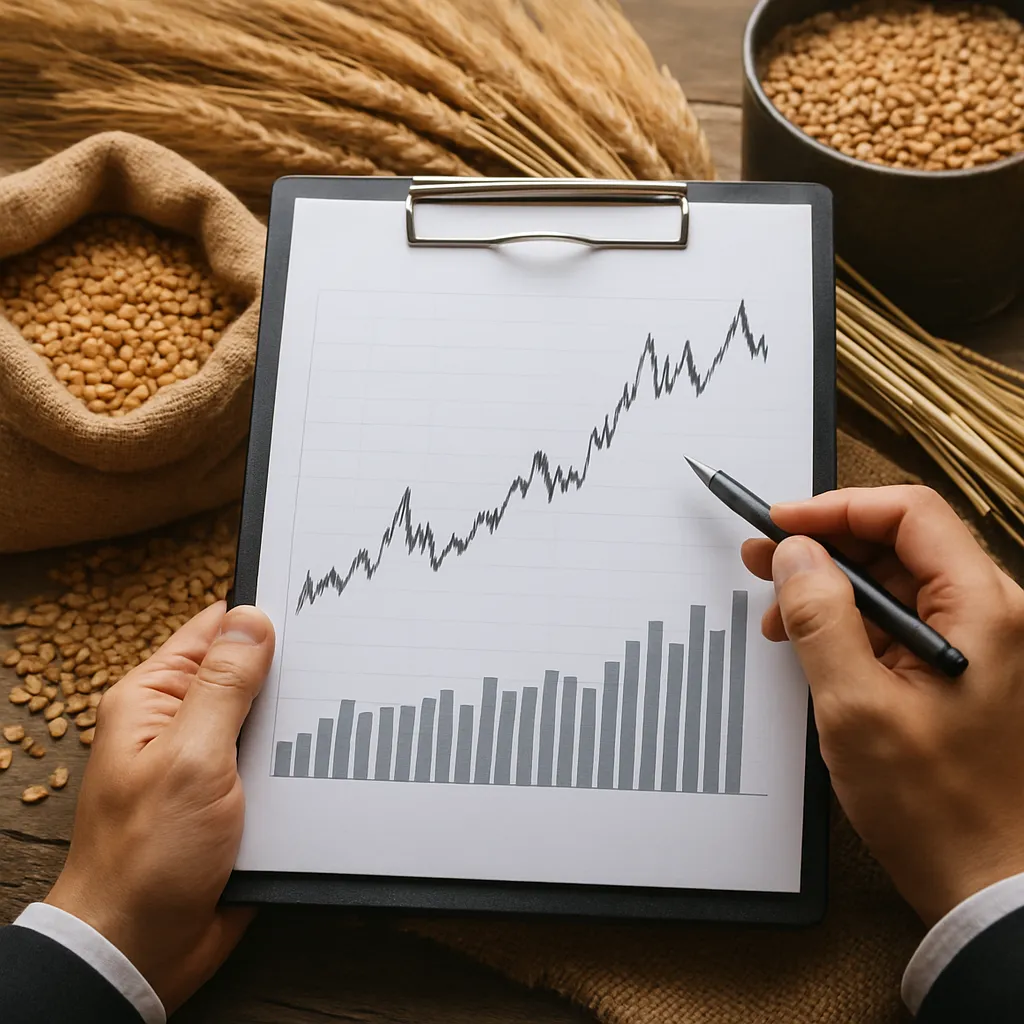
Understanding price elasticity helps farmers optimize cropping choices and hedge against unfavorable market swings. A crop with highly inelastic demand may yield steadier returns when prices drop, whereas those with elastic demand require careful timing and diversification to maintain revenue. Forward contracting, options markets, and futures trading enable producers to lock in prices and manage risk exposure.
- Hedging Strategies: Use of futures and options to secure target prices.
- Diversification: Balancing inelastic staples with more elastic specialty grains or oilseeds.
- Cost Management: Investing in input efficiency to protect profit margins during price downturns.
For policy makers, knowing elasticity parameters informs the design of subsidies, tariffs, and strategic reserves. When demand is highly inelastic, price supports can meaningfully alter consumption and welfare outcomes. In elastic markets, protectionist measures may encourage overproduction or distort trade flows. Governments also rely on elasticity estimates to anticipate the social impact of fuel-to-food competition, such as biofuel mandates diverting corn from feed or human consumption.
- Subsidies and Price Floors: Cushion producers against low-price shocks in inelastic markets.
- Trade Policy: Calibrating tariffs to balance domestic supply stability with global efficiency.
- Strategic Reserves: Using stockpiles to moderate extreme volatility and protect food security.
Risk Management and Market Adaptation
As climate variability, geopolitical tensions, and shifting demand patterns intensify, understanding elasticity allows all players to anticipate market movements. Traders can adjust inventory positions, processors fine-tune procurement strategies, and retailers manage shelf prices to maintain margins. Vertical integration and contract arrangements further dampen the impact of price swings across the value chain.
- Vertical Coordination: Long-term supply contracts reduce uncertainty for both growers and processors.
- Technological Tools: Data analytics and forecasting models improve price responsiveness.
- Insurance Products: Weather derivatives and revenue insurance protect against yield and market risks.
Ultimately, mastering the nuances of grain price elasticity equips industry participants and governments to make informed decisions about planting, marketing, and policy formulation. By considering the interplay between consumer behavior, production flexibility, and external shocks, stakeholders can foster stable, efficient, and food-secure policy environments that benefit global populations.