

Grain agriculture is the cultivation of crops that produce grain, the small hard seeds that have fed civilizations for thousands of years. From vast golden wheat fields to verdant rice paddies, grain farming forms the backbone of global food security and rural economies. This comprehensive guide explores what grain agriculture entails, its historical development, the variety of grain crops grown worldwide, and the practices that farmers use to grow, harvest, and store these essential crops. We will also discuss the importance of grains in our diets, the challenges modern grain farmers face, and how innovation is shaping the future of grain farming. Whether you are a student, an aspiring farmer, or simply curious about how our staple foods are produced, this guide will provide an in-depth look at grain agriculture in the modern world.
What Is Grain Agriculture?
Grain agriculture refers to the farming of plants that produce dry, edible seeds commonly known as grains. These seeds are harvested for food for humans and animals, and for various industrial uses. Most grains come from cereal crops—members of the grass family (Poaceae)—such as wheat, rice, corn (maize), barley, oats, sorghum, and millet. These cereal grains are rich in carbohydrates and form the staple foods of many cultures, providing a large portion of the world’s caloric intake. Other grain crops include legumes (or pulses) like soybeans, beans, lentils, chickpeas, and peas, which produce protein-rich seeds. Legume grains are often grown alongside cereals to diversify production and improve soil fertility. There are also pseudo-cereal grains like quinoa, buckwheat, amaranth, and teff. These are not grasses but their seeds resemble cereals in use and nutrition, so they are cultivated and consumed in similar ways.
A key characteristic of grain crops is that their seeds can be dried and stored for long periods without spoiling. Once harvested and properly dried, grains become durable food sources that can be transported and kept in storage bins or silos for months or even years. This durability and ease of storage distinguish grains from other staples like fruits or tubers and have made large-scale grain farming central to industrial agriculture. Because grains can be mechanically harvested and stored, they lend themselves well to cultivation on a massive scale using modern machinery. Grain agriculture today ranges from small family farms to expansive commercial operations covering thousands of hectares, all focusing on maximizing the yield of grain seeds.
In summary, when we talk about grain agriculture we mean the entire agricultural system dedicated to producing these dry seeds. It encompasses choosing appropriate grain crops for a region, preparing the land, planting and nurturing the crop through its growing season, harvesting the mature grain, and post-harvest handling such as cleaning and storing the grain. Grain farming is practiced worldwide, adapted to local climates and cultures, and is fundamental to feeding both people and livestock.
A Brief History of Grain Farming
Grain farming has a long and pivotal history in human civilization. The cultivation of grain crops began during the Neolithic Revolution roughly 10,000–12,000 years ago. During this period, humans transitioned from nomadic hunter-gatherer lifestyles to settled farming communities. Early people in the Fertile Crescent of the Middle East started domesticating wild grasses like einkorn and emmer wheat and barley. Similarly, ancient societies in other parts of the world domesticated their native grains: rice in East and Southeast Asia, sorghum and millet in Africa, and maize (corn) in the Americas. The ability to grow and harvest grains each season provided a stable, renewable food supply that could be stored, which was revolutionary for prehistoric communities.
The development of grain agriculture allowed humans to produce surplus food for the first time. Unlike fruits or tubers that spoiled quickly, harvested grains could be dried and kept in clay or woven storage containers for months. This reliable surplus enabled population growth and the establishment of permanent villages and cities. People no longer had to consume food immediately; they could store grain for the lean season or trade it. Many historians believe that grain surplus led to some of the first forms of wealth and economic exchange. It likely contributed to the division of labor and the rise of different social classes, as some people specialized in farming while others pursued different trades, all sustained by stored grain as a food reserve.
Archaeological evidence underscores the early importance of grain farming. Ancient granaries and clay silos discovered in the Middle East (such as those found at Dhra’ in modern-day Jordan) date back around 11,000 years and contained remnants of early domesticated barley and wheat. By 5,000–8,000 years ago, grain cultivation was widespread in Mesopotamia, the Nile Valley, the Indus Valley, China, and Mesoamerica, underpinning the world’s first civilizations. Grains also took on cultural and spiritual significance. For example, rice became deeply embedded in the cultures of Asia, and corn was sacred to many Native American societies. In ancient Egypt, workers were often paid in bread and beer (made from barley), demonstrating how grain was not just food but a form of currency and wealth.
Over millennia, farmers improved grain crops through selection and breeding. They saved seeds from the plants with desirable traits (like larger kernels or non-shattering seed heads that were easier to harvest) to plant the next season. This gradually increased yields and made domesticated grains quite different from their wild ancestors. Fast forward to the modern era: the 19th and 20th centuries saw scientific advances in plant breeding and genetics, leading to high-yield varieties of wheat, rice, and maize. During the mid-20th century, the Green Revolution introduced new hybrid grain varieties alongside fertilizers and irrigation techniques. This caused a dramatic rise in grain production worldwide, especially in developing countries, preventing famine and feeding the growing global population. For instance, improved dwarf wheat and rice varieties in the 1960s significantly boosted harvests in Asia and Latin America.
Throughout history, grain farming has continuously evolved with technology. Early farmers initially harvested with simple tools like sickles and threshed grain by hand or with animals. The invention of machines like the mechanical reaper in the 19th century, and later the combine harvester in the 20th century, transformed grain agriculture. Harvesting that once took many laborers many days can now be done by one person operating a machine. The combine harvester, so named because it combines three tasks (reaping or cutting, threshing to loosen the grain, and winnowing to remove chaff), revolutionized the harvest process. By the late 20th century, grain farming in much of the developed world had become heavily mechanized and industrialized, with enormous fields of uniform crops and specialized machinery for every stage of production.
Despite these advancements, grain agriculture also faced setbacks and challenges historically. Periodic crop failures due to droughts, floods, or pests (like locust plagues) have caused famines and hardships. Soil exhaustion from continuous planting of grains without replenishing nutrients led to declining yields in some eras, highlighting the need for crop rotation and soil management (a lesson learned in regions like Europe during the Middle Ages). However, farmers adapted by rotating grains with other crops, fallowing land, or using organic manures, and in modern times synthetic fertilizers.
In summary, grain farming’s history is deeply intertwined with human progress. By cultivating grains, humans secured reliable food sources, enabling settlements and civilizations to flourish. The humble grain field became an engine for population growth, economic trade, and technological innovation. Understanding this historical context helps us appreciate how central grain agriculture has been—and continues to be—to our society.
The Importance of Grains in the Modern World
Grains are often called the “staff of life,” and for good reason. In modern times, grain crops are fundamental to the global food supply and economy. Grains (also known as cereals) provide a huge share of the calories consumed by humanity. It’s estimated that nearly half of the calories people eat worldwide come from grains like wheat, rice, and corn. In many countries and regions, one of these grains is the primary staple food that people eat daily. For example, rice is the staple for much of Asia, maize for parts of Africa and Latin America, and wheat for many regions including Europe, North America, and the Middle East. These grains are consumed in forms like bread, rice dishes, pasta, tortillas, porridge, and numerous other food products that sustain billions of people.
Grains are nutritionally valuable mainly for their carbohydrates, which provide energy, but they also supply important vitamins, minerals, and fiber. However, cereals alone can lack some amino acids (building blocks of protein), which is why many traditional diets pair grains with legumes. Together they form a complete protein source (for instance, rice with soy/tofu, corn with beans, wheat bread with peanut butter, etc.). This complementarity is a crucial aspect of nutrition in regions where meat is scarce and people rely on plant sources for protein.
Beyond direct human consumption, grain agriculture underpins the livestock industry. A large portion of the world’s grain harvest, roughly one-third or more, is used to feed animals like cattle, pigs, and poultry. Corn and soybeans, in particular, are grown extensively to produce animal feed (such as corn grain and soybean meal). These feeds enable the mass production of meat, dairy, and eggs. For example, industrial poultry and pork operations rely on grain-based feeds to raise animals quickly. In this way, grains indirectly contribute to human diets by supporting the production of animal protein. Without abundant grain supplies, the cost of animal products would be much higher and global meat consumption might be limited.
Grains also find their way into industrial and non-food products. One significant use is in biofuel production: corn can be processed into ethanol, a renewable fuel mixed with gasoline for vehicles, and some grains or their residues can be used to produce biodiesel. Grain by-products are used in manufacturing goods such as biodegradable plastics and even cosmetics. Wheat straw (the dried stalks after threshing grain) can be used for animal bedding, straw bale construction, or as biomass for energy. The versatility of grains means they are not only food commodities but also raw materials for various industries.
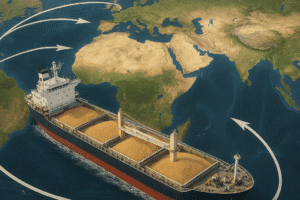
Economically, grains are among the most important global commodities. There is an extensive international trade in grain, connecting farmers with markets around the world. Countries that produce grain surplus export to those that cannot grow enough. For instance, major exporters like the United States, Canada, Russia, Ukraine, Brazil, and Australia ship wheat, corn, and soybeans worldwide. Importing nations rely on this trade to ensure food security for their populations. The grain market is affected by factors like weather (droughts or bumper crops can swing prices), oil prices (which influence fertilizer and transport costs), and geopolitical events. As a result, grain prices are closely watched indicators of food availability and inflation. Many governments maintain strategic grain reserves to guard against shortages and price spikes.
The sheer scale of grain agriculture today is impressive. The world produces billions of metric tons of grain each year. Corn, wheat, and rice are the top three cereals by volume. Corn has the highest production globally, much of it in the Americas and China, a significant portion going to animal feed and industrial uses. Rice is second, almost all of it grown and consumed in Asia (China and India are the largest producers and consumers of rice). Wheat is third, grown across a vast geography from Europe to North America to Asia; it is a principal food grain for many populations. Other grains like barley, sorghum, millet, and oats are also crucial regionally. Barley is important for animal feed and brewing beer. Sorghum and millet are vital in arid regions of Africa and Asia because of their drought tolerance. Oats are grown in cooler climates and often used for animal fodder and health foods.
In summary, grains hold a place of central importance in the modern world. They are the foundation of food security, the base of food pyramids in many cultures, and a key input for raising livestock. They contribute to industrial products and energy. Billions of people depend on affordable grain for their daily bread (or rice, or tortillas), making grain agriculture a sector with direct impact on hunger, health, and economic stability globally. The reliable production of abundant grain is therefore a continuous priority for farmers, scientists, and policymakers alike.
Common Types of Grain Crops
Grain agriculture encompasses a variety of crop species. These can be broadly divided into cereal grains and grain legumes (pulses), with a few pseudo-cereals also in the mix. Each type of grain has unique growing requirements, uses, and regional importance. Understanding the major grain crops is helpful for appreciating the diversity of grain farming.
Cereal Grains (True Grains)
Cereal grains are the seeds of cultivated grasses. They are called “true” grains because they come from the grass family, and they include many of the world’s most important crops. The most widely grown cereal grains are:
- Wheat – Wheat is grown on more land area worldwide than any other crop. It thrives in temperate climates and is a staple food from Europe to South Asia. Wheat grain is milled into flour to make bread, pasta, noodles, pastries, and many other foods. There are different classes of wheat (such as hard wheat for bread flour and soft wheat for pastries) and seasonal varieties (winter wheat planted in the fall and spring wheat planted in spring). Major producers include China, India, Russia, the United States, and France. Wheat’s importance in human diets and trade is immense, making it a cornerstone of grain agriculture.
- Rice – Rice is the primary food for over half of the world’s population, especially in Asia. It is unique among grains because it is often grown in flooded fields called rice paddies. Rice requires abundant water and is commonly cultivated in tropical and subtropical regions with high rainfall or irrigation. There are upland rice varieties as well (grown in non-flooded fields), but lowland paddy rice is most common. Countries like China, India, Indonesia, Bangladesh, Vietnam, and Thailand are leading rice producers. Rice grains are usually consumed whole (as steamed or boiled rice) or ground into rice flour; they are the basis of countless dishes and cuisines.
- Corn (Maize) – Maize, known commonly as corn, originated in the Americas and is now one of the globe’s largest grain crops by volume. Corn is highly versatile: it is a staple food in some places (e.g., eaten as cornmeal, tortillas, polenta), but even more is used as animal feed and industrial raw material. Corn grows in a range of climates but prefers warm weather and fertile soils. The United States is the top corn producer (often with large-scale, mechanized farms in the Midwest “Corn Belt”). China and Brazil also grow enormous quantities. Modern hybrid corn varieties and intensive farming methods make it one of the highest-yielding grains. Corn kernels can be processed into starch, sweeteners (high-fructose corn syrup), ethanol fuel, corn oil, and many other products.
- Barley – Barley is a hearty cereal adapted to cooler climates and shorter growing seasons. It was one of the first grains domesticated in the Fertile Crescent. Today it’s grown widely in Europe, North America, and Asia. Barley is used for malting (to make beer and whiskey), as well as for animal feed and health food (e.g., barley flakes, barley flour). It’s somewhat less used for direct human food than wheat or rice, but barley porridge and breads are traditional in some cultures. Barley’s resilience makes it valuable in marginal environments where other grains might fail.
- Sorghum – Sorghum is a cereal that resembles corn in appearance (tall stalks with grain clusters on top) but is extremely drought-tolerant. It is a staple in parts of Africa and South Asia. Sorghum grain can be ground into porridge, flatbreads, or used in beverages. It’s also grown in the United States and elsewhere as livestock feed and for biofuel production. Because it endures high heat and low water, sorghum is important for food security in arid regions. Varieties of sorghum include grain sorghum for seeds and sweet sorghum for syrup (similar to molasses).
- Millet – Millet refers to a group of small-seeded cereals, including pearl millet, finger millet, foxtail millet, and others. These are ancient grains still widely cultivated in India, China, and many African countries. Millets are valued for their short growing season and ability to thrive in hot, dry conditions where other crops may not survive. They are used for making flatbreads, porridge, and beer. Millet grains are highly nutritious, often rich in minerals and fiber, and have gained popularity in health food markets around the world as gluten-free grains.
- Oats – Oats grow well in temperate zones with moderate rainfall. Historically, oats were used both as livestock feed (particularly for horses) and human food. Today, oatmeal (rolled or crushed oats) is a popular breakfast cereal in many countries, and oats are used in baked goods and increasingly in plant-based milk alternatives (oat milk). Major producers of oats include Russia, Canada, and Europe (especially Scandinavia and Eastern Europe). Oats are known for their heart-healthy soluble fiber content (beta-glucans) and often marketed for their health benefits.
- Rye – Rye is a cereal grain that tolerates cold and poor soils better than most grains. It has been a traditional bread grain in regions like Eastern Europe and Russia, where it’s used to make dense, dark rye bread. Rye is also used in distilled spirits (like some whiskeys) and as a cover crop or forage. While not as widely grown as wheat or corn, rye remains important in specific locales and is valued by farmers as a hardy crop.
These cereal grains are usually annual plants (completing their life cycle in one growing season). They can be categorized further into cool-season vs. warm-season cereals. Cool-season cereals (like wheat, barley, oats, rye) can tolerate or prefer cooler weather and are often planted in fall or early spring. Warm-season cereals (like corn, sorghum, certain millets) require warm soil and are planted in late spring in temperate areas. Farmers choose grain types and varieties based on climate and season to optimize yields.
Legume Grains (Pulses)
Grain legumes, commonly called pulses, are a different family of crops (Fabaceae, the legume family) that produce grain-like seeds in pods. These seeds are high in protein and have a significant role in both human diets and farming systems. Key grain legumes include:
- Soybeans – Soybeans are one of the most globally significant legume crops. Grown extensively in the United States, Brazil, Argentina, China, and India, soybeans produce protein-rich beans used for oil and meal. Soybean oil is a major cooking oil worldwide, and soy meal is a critical high-protein feed for livestock and aquaculture. Soy is also directly consumed in products like tofu, soymilk, miso, and soy flour. The plants enrich the soil by fixing nitrogen (as many legumes do in symbiosis with soil bacteria), which can benefit subsequent crops.
- Beans (such as kidney beans, black beans, pinto beans, navy beans, etc.) – There are many varieties of common beans (Phaseolus vulgaris) originally domesticated in the Americas. They are a staple protein source in Latin America, Africa, and parts of Asia. Dried beans are harvested from pods and can be stored easily like other grains. Beans are often intercropped or rotated with cereals by smallholder farmers to maintain soil fertility and provide dietary balance.
- Lentils – Lentils are small, lens-shaped legumes that have been cultivated in the Middle East and Asia since ancient times. They are extremely rich in protein and iron. Lentils grow on relatively short plants and are well-suited to drier climates. Major producers include Canada (particularly a leading exporter), India, Turkey, and Nepal. Lentils cook quickly and are used in soups, stews, and curries across South Asia and the Mediterranean region.
- Chickpeas (Garbanzo beans) – Chickpeas are another ancient pulse, widely eaten in India, the Middle East, and the Mediterranean. They are the main ingredient in foods like hummus and falafel and are also used in stews and salads. Two types are grown: desi (small, dark, hulled chickpeas common in India) and kabuli (larger, light-colored, common in the Mediterranean). India grows and consumes the most chickpeas, but they are also grown in countries like Australia, Turkey, and Mexico. Chickpeas, like other legumes, improve soil nitrogen and are often rotated with grains like wheat.
- Peas – Field peas (dry peas) are legumes closely related to fresh green peas but are grown to maturity and dried. They are common in cooler climates (Canada, northern US, Europe, Russia) and are used for split pea soup, pea flour, or livestock feed. Peas are often planted early in the spring and can help fix nitrogen in the soil before a subsequent grain crop.
Pulses generally enrich cropping systems and diets by providing protein and improving soil health. In terms of grain agriculture, pulses are sometimes grown in the same fields in rotation with cereals. For example, a farmer might alternate wheat one season and a legume like soy or lentils the next. This not only gives a different product to sell but also naturally adds nitrogen to the soil (reducing fertilizer needs) and breaks pest and disease cycles that affect a single crop. While cereals dominate the tonnage of global grain output, grain legumes are indispensable for sustainable agriculture and nutrition.
Pseudo-Cereals
It’s worth noting pseudo-cereals, which are non-grassy plants that produce seeds used like grains:
- Quinoa – Native to the Andes in South America, quinoa has gained worldwide popularity as a nutritious “superfood” grain alternative. It’s actually a seed of a broadleaf plant related to spinach. Quinoa is high in protein and contains all essential amino acids, which is unusual for plant foods. It’s cooked and eaten similarly to rice or used in salads, cereals, and baked goods. Quinoa farming has expanded from Andean countries (Peru, Bolivia) to include the United States, Canada, and Europe due to its high demand.
- Buckwheat – Originally from Asia, buckwheat is not a wheat at all, but the seed of a flowering plant related to rhubarb. It grows well in poor soils and cool climates, and has been traditionally grown in Russia, China, and Eastern Europe. Buckwheat flour is used in pancakes, noodles (like Japanese soba noodles), and porridge. The whole groats are also cooked or added to cereals. Buckwheat is valued for being gluten-free and rich in nutrients.
- Amaranth – Once a staple grain of the Aztec civilization, amaranth seeds are very small and high in calcium, iron, and protein. The plant is a broadleaf annual with striking flowers. Amaranth grain can be popped like popcorn or ground into flour. It’s grown on a small scale in parts of Latin America, Africa, and the US, and often promoted for its nutritional benefits.
These pseudo-cereals often find a niche in health-conscious markets and gluten-free diets. While they are minor in global production compared to true cereals, they contribute to the diversity of grain agriculture.
In summary, farmers engaged in grain agriculture have a wide array of crops to choose from. The choice depends on climate, soil, market demand, and cultural preferences. Many farms specialize in a few major grains (like a corn-soy rotation common in American Midwest, or a rice-wheat rotation common in parts of Asia). Others may cultivate a variety of grains to spread risk and tap into different markets. Each grain type has its own best practices for cultivation, which we will explore next.
Grain Cultivation: From Planting to Harvest
Growing grain crops successfully requires careful planning and execution of several stages of work. It’s a season-long process that can be broken down into key phases: selecting the right crop and variety, preparing the land, planting, managing the crop as it grows, and finally harvesting at the right time. Each step is crucial to achieving a good yield of high-quality grain. In this section, we detail the grain farming process from field preparation to harvest.
Planning and Crop Selection
Choosing the right grain crop and variety is the first step in grain agriculture. A farmer must consider the local climate, soil conditions, water availability, and market demand when deciding what to plant. Different grain species (and even different varieties within a species) have varying requirements and tolerances:
- Climate and Season: Some grains do well in cool seasons (like oats, rye, and winter wheat which can sprout before winter and resume growth in early spring), whereas others need warm growing conditions (like corn, rice, sorghum). Farmers plan their planting schedule so the crop’s growth cycle matches the local seasons. For example, in temperate regions, winter wheat is planted in fall to establish before frost, then harvested in early summer; corn is planted in spring after the last frost and harvested in the fall. Understanding whether a grain is a “winter crop” or “spring crop” helps in scheduling.
- Soil Type: Soils can range from sandy to clayey, acidic to alkaline, rich to deficient in nutrients. Grain varieties may be better adapted to certain soil types. For instance, barley and rye can tolerate poorer or drier soils than wheat can. Rice often grows in heavy clay soils that hold water for paddies. A farmer might conduct a soil test to check pH and fertility. If the soil is lacking in certain nutrients (like nitrogen, phosphorus, potassium), they might plan to amend the soil with fertilizers or compost before planting. Some grains, such as legumes, can fix their own nitrogen and thus need less nitrogen fertilizer.
- Water Needs: Irrigation availability can influence crop choice. Rice absolutely requires abundant water or irrigation, while sorghum and millet can produce under drier, rain-fed conditions. Corn yields are much higher with sufficient water and will suffer in drought, whereas a crop like cowpea (a legume) might tolerate drought better. Farmers in arid or rain-limited regions lean towards drought-tolerant grains or manage planting dates to coincide with rainy seasons.
- Disease and Pest Resistance: Within each grain type, there are numerous cultivars (varieties) bred for different traits. Modern plant breeding has developed varieties resistant to certain diseases (such as rust-resistant wheat or blight-resistant rice) or pests. Selecting a variety with built-in resistance can reduce the need for chemical controls later and improve chances of a healthy crop. Similarly, farmers consider varieties with stress tolerance—for example, heat-tolerant or flood-tolerant rice strains for areas prone to such conditions.
- Maturity Duration: Some varieties mature faster than others. Short-duration grain varieties might be chosen if the growing season is short or if a farmer wants to fit in multiple crops (double-cropping). Longer-duration varieties might yield more but only if climate allows. For example, in some tropical areas, farmers can plant quick-maturing rice multiple times a year, whereas in colder climates only one crop per year is possible.
- Market and End Use: The intended use of the grain also matters. A farmer growing malting barley for breweries must choose varieties with specific grain quality that maltsters require, which differ from feed barley. Wheat farmers might choose between hard red wheat (for bread flour), soft wheat (for pastries), or durum wheat (for pasta) depending on market demand and local suitability. If prices for a certain grain are high, that might encourage planting more of it, provided it grows well in that region.
In summary, planning what grain to grow is a strategic decision. Farmers often rotate grains with other crops year to year to maintain soil health and break disease cycles (for example, alternating a cereal grain one year with a legume or another crop the next). Before the planting season, successful grain producers line up their seed supply of the chosen variety, often purchasing certified seeds that have high germination rates and are free of disease. Using quality seed of an appropriate variety sets the stage for a productive harvest.
Land Preparation and Soil Health
Once the crop is chosen, preparing the land is the next major task. Soil preparation creates the conditions that will help seeds germinate and seedlings establish strong roots. The traditional method of land prep in grain farming is tillage – plowing or turning over the soil. Tillage breaks up compacted ground, buries crop residues and weeds, and loosens the soil for planting. However, modern grain agriculture has developed a range of approaches to soil preparation, including reduced tillage systems, to balance productivity with soil conservation.
Key steps and practices in land preparation include:
- Clearing and Residue Management: If the field has remains of a previous crop, farmers may need to manage that residue. Sometimes the stubble from the last harvest is plowed under to decompose and return organic matter to the soil. In other cases, farmers leave the residue on the surface (as in no-till systems) to protect against erosion and preserve moisture.
- Tillage vs. No-Till: In a conventional approach, a farmer might plow (using a moldboard plow or disc plow) to a certain depth, then harrow or disc the field to break clods and create a fine seedbed. This can control weeds and mix in any soil amendments like manure or fertilizer. However, plowing can also lead to soil erosion and loss of soil moisture. No-till or low-till farming is increasingly popular in grain agriculture. In no-till, the farmer does not plow at all; instead, they use special planters that can insert seeds into the ground through the residue. This method helps maintain soil structure, reduces erosion, and improves water retention because the soil is not repeatedly disturbed. Over time, no-till can increase organic matter in the soil and promote a healthier soil microbiome (like earthworms and beneficial microbes). Many grain farmers choose a middle ground: reduced tillage such as using a chisel plow or strip-till (tilling only narrow strips where seeds will be planted) to minimally disturb the soil while still creating a good seedbed.
- Soil Amendments and Fertility: Before planting, farmers often incorporate fertilizers or soil amendments if needed. This could include spreading manure, compost, or synthetic fertilizers to provide nutrients like nitrogen (N), phosphorus (P), and potassium (K) that grains need in large amounts. If a soil test indicates deficiencies (say low phosphorus or very low pH), the farmer can address these now by adding fertilizer or lime (to raise pH) or gypsum (to improve soil structure). Cover crops grown in the off-season (like clover or other legumes) might have been planted previously to add nitrogen naturally and improve soil tilth; these cover crops can be tilled under (a practice known as “green manuring”) or terminated and left on the surface in no-till systems.
- Leveling and Irrigation Prep: In irrigated regions, fields—especially rice paddies—may need leveling to ensure even water distribution. For rice, farmers create levees and flood the fields. In other grain fields, farmers check or install irrigation equipment (like center pivot sprinklers or drip lines) before planting.
- Seedbed Preparation: The final stage of prep is creating a seedbed – soil that is loose enough for seed placement and root growth but not so fluffy that seeds sink too deep. Implements like harrows or cultivators might be used to break soil into smaller particles and firm it slightly. The ideal seedbed holds moisture near the surface and covers seeds lightly after planting.
Soil health is a critical long-term consideration. Practices like crop rotation (not growing the same grain in the same field every season) help prevent the build-up of crop-specific pests and diseases and can reduce the depletion of certain nutrients. For example, rotating a nitrogen-fixing crop (like soybeans or another legume) with a nitrogen-demanding crop (like corn) can naturally balance nitrogen levels. Planting cover crops during the off-season (such as planting a rye cover after harvesting corn) protects the soil from erosion and can suppress weeds. Over years, a soil that is managed with organic matter additions and protected from erosion will remain fertile and productive for grain farming.
In essence, land preparation in grain farming is about setting the stage for the crop’s success. It involves a mix of mechanical work (tillage or its alternatives), chemical or organic fertilization to ensure soil fertility, and strategic decisions to maintain or improve soil quality. A well-prepared field gives seeds the best chance to germinate uniformly and develop into a healthy stand of grain.
Planting and Establishing the Crop
With the field ready, the next phase is planting the grain crop. Planting needs to be timed correctly and executed with precision to ensure good germination and crop stand. Different grain crops have varying planting methods – some are sown by broadcasting seed, others by drilling rows – but the goal is the same: place the seeds at the right depth and spacing so they can sprout and grow optimally.
Important considerations and steps for planting include:
- Planting Time: Timing is crucial. If planted too early, seeds might fail if the soil is too cold or wet; too late, and the growing season may be too short for full maturation. Farmers often monitor soil temperature in spring to decide when to sow. For instance, corn typically requires soil temperatures above ~10°C (50°F) to germinate well. Small grains like wheat or barley can germinate in cooler soil. Many farmers follow a planting calendar based on historical frost dates and climate patterns, but they also consider current weather conditions.
- Seeding Method: Most large-scale grain farming uses mechanical seeders. For cereals like wheat, barley, or rice (in dryland conditions), a grain drill or seeder is used to plant in rows at a consistent depth. Corn and soybeans are often planted with precision planters that space individual seeds at set intervals in each row, as proper spacing is important for these crops. Broadcast seeding (scattering seeds evenly over the soil) is another method, more common in small-scale plots or certain cover crops; after broadcasting, the seeds might be lightly covered by raking or harrowing. In flooded rice cultivation, farmers sometimes sow pre-germinated rice seed into the water or transplant young rice seedlings that were started in a nursery into the paddies by hand or machine.
- Seed Depth and Density: Each grain has an optimal planting depth. Small seeds like millet or some grasses need to be very shallow (just under the soil surface), while larger seeds like corn or beans are planted a few centimeters deep to ensure good soil contact and moisture access. If seeds are too deep, they may not emerge; if too shallow, they could dry out or be eaten by birds. Modern planters allow adjustments to control depth precisely. Similarly, planting density (seeds per area) affects the final crop stand. Farmers aim for a target number of plants per acre/hectare that maximizes yield without overcrowding. For example, corn might be planted at around 20,000 to 35,000 seeds per acre depending on conditions, whereas wheat could be drilled at 1 to 2 million seeds per acre (since wheat seeds are small and the plants tiller out). Using the correct seeding rate is important: too sparse can waste field potential and invite weeds, too dense can cause competition among plants and lead to disease.
- Moisture and Germination: After planting, seeds need moisture to germinate. Many farmers try to time planting just before a good rain or irrigate soon after planting if possible. In some regions, soil moisture is sufficient at planting time (like after snow melt in spring for some wheat areas). If the topsoil is dry, farmers may plant a bit deeper to reach moisture, or they might delay planting or water the field. Keeping the seedbed moist is critical until seedlings emerge. Some practices like covering the soil with a light mulch of straw (as mentioned in certain small-scale methods) can help retain moisture and protect seeds from being washed away or eaten.
- Protection of Seeds: Seeds and young sprouts are vulnerable to birds, rodents, and other pests. Scare tactics (like bird scarers) or seed treatments can be used to protect them. Many commercial seeds come pre-treated with fungicides or insecticides to prevent soil-borne diseases and insect damage during germination. Additionally, farmers ensure that the planter equipment is well calibrated to drop seeds evenly; skips or doubles in planting can affect the yield later.
- Emergence and Early Growth: A successful planting is confirmed when the field shows even, consistent emergence of seedlings. Within a week or two (depending on the crop and weather), the field should turn green as sprouts break through the soil. Uneven emergence can signal issues like poor seed quality, variable planting depth, or pest problems. If patches of a field did not germinate due to, say, standing water or bad seed, sometimes farmers will re-seed those areas if it’s early enough in the season.
In many cases, planting grain today is a high-tech operation. GPS-guided tractors and planters ensure straight rows and minimize overlap or gaps. Farmers can use precision planting technology that varies seeding rate on the go based on soil fertility maps (planting more seeds in richer soil, fewer in poorer soil, for instance). Some tractors have auto-steer and can plant day and night to make the most of ideal weather windows. These technologies improve efficiency and yield potential.
To summarize, planting is where the preparation meets execution in grain farming. It is a relatively short window of intense activity that sets the potential yield for the season. Attention to detail at this stage—getting the timing, depth, spacing, and seed handling right—pays off with a uniform crop that can be efficiently managed afterward.
Nurturing the Growing Crop
Once the grain seedlings have emerged and covered the field in green, the focus shifts to crop management during the growing season. Farmers must nurture their grain crop through various stages of development, from early vegetative growth through flowering and grain formation, up until maturity. This period can span a few months to over half a year, depending on the crop and climate. Effective management involves providing the crop with adequate water and nutrients, protecting it from weeds, pests, and diseases, and monitoring its progress closely.
Key aspects of managing a growing grain crop include:
- Irrigation and Water Management: Water is vital for crop growth. In regions with sufficient rainfall, farmers rely on natural precipitation to water their grain fields. However, if rains are inadequate or irregular, irrigation is used to supplement. Different grains have different water needs and tolerance. Rice, as an example, is often grown in standing water; in contrast, too much water can harm wheat or corn by promoting disease or nutrient loss. Farmers use various irrigation methods: surface flooding (common in rice paddies), sprinkler systems like center pivots that water large circles of crops, or drip irrigation lines that conserve water by targeting the base of plants. Proper water management means giving enough water to avoid drought stress (which can severely reduce yield) but not so much as to waterlog the roots or waste water. Overwatering can also leach nutrients from the soil and create runoff. Timing of irrigation is planned according to crop growth stages; for instance, corn needs ample moisture during its pollination and kernel-filling stages, while wheat is sensitive to drought during flowering and grain filling. In water-scarce areas, farmers schedule irrigations carefully and may use moisture sensors or weather data to decide when to water. Efficient water use is increasingly important, so techniques like scheduling irrigation at night (to reduce evaporation) or using technology to detect crop water stress are employed to optimize water use.
- Fertilization and Nutrient Management: Grains extract a lot of nutrients from the soil to build their stems, leaves, and grain kernels. Nitrogen is often the most critical nutrient for high grain yields, as it directly influences plant growth and grain protein content. Phosphorus and potassium are also needed in large amounts, along with secondary nutrients and micronutrients (like sulfur, zinc, etc.). Farmers develop a nutrient management plan to feed their crops. Some fertilization is often done at planting or before (as described in land preparation), but additional side-dress fertilization may occur during the growing season. For example, a corn farmer might apply a dose of nitrogen fertilizer when the corn is knee-high to ensure sufficient nutrition through the growth spurt. Wheat farmers might apply nitrogen in early spring for winter wheat as it greens up, to boost tillering and head formation. The form of fertilizer can be granular, liquid, or even foliar feeding (spraying nutrients on leaves) in some cases. Importantly, modern practices encourage matching fertilizer application to crop needs to prevent waste and environmental issues. Soil tests or even tissue tests (analyzing plant leaves for nutrient content) inform if additional feeding is needed. Some farmers employ variable-rate technology (VRT) which uses GPS and field maps to apply more fertilizer on areas that need it and less where the soil is already rich, thus optimizing input use and minimizing runoff. Over-fertilization is avoided because it can cause lodging (plants falling over from excessive growth) or runoff that pollutes waterways.
- Weed Control: Weeds compete with grain crops for sunlight, nutrients, and water. Early in the season, it’s critical to control weeds so the crop can establish a canopy and outcompete the invaders. There are several methods:
- Mechanical cultivation: Before the crop canopy closes, farmers can run cultivators between the rows (for row crops like corn or soybeans) to uproot weeds. For small grains like wheat or barley that are drilled in continuous rows, mechanical weed control is less common after planting, but sometimes rotary hoes or harrows are used right after planting or just as seedlings emerge, to disrupt tiny weeds.
- Herbicides: Chemical weed killers are widely used in conventional grain farming. For instance, many corn and soybean farmers use herbicide-tolerant crop varieties (like glyphosate-tolerant “Roundup Ready” seeds) and then spray broad-spectrum herbicides to kill all weeds without harming the crop. In wheat and other cereals, selective herbicides can target broadleaf weeds or grasses that would otherwise choke the crop. Timing of herbicide application is important — often done when weeds are small and before they set seed. Farmers must follow regulations and safety guidelines when using chemicals, and avoid drift that could damage neighboring crops.
- Integrated Weed Management: Beyond just spraying, farmers might use crop rotation to manage weeds (different crops disrupt weed life cycles), plant cover crops in off-season to suppress weeds, or use new techniques like cover mulches. Some organic grain farmers rely on cover cropping, mechanical weeding, and crop competition instead of herbicides.
- Pest and Disease Protection: A standing grain field can be vulnerable to various pests (insects, birds, rodents) and diseases (fungal, bacterial, viral). Protecting the crop typically involves:
- Monitoring: Regular scouting of fields to detect early signs of pest infestations or disease outbreaks. Farmers or crop consultants walk fields or even use drones and sensors to observe issues like insect feeding, spots on leaves (which might indicate disease), or other anomalies.
- Preventive measures: Planting disease-resistant varieties, treating seeds, and rotating crops help reduce the incidence of problems. Some farmers also use trap crops or natural predators (beneficial insects) as biological control measures.
- Pesticides and Fungicides: If pest populations exceed certain thresholds, farmers may resort to spraying insecticides to control insects such as aphids, caterpillars, or beetles that can damage grain crops. For diseases like rusts in wheat or blights in rice, fungicide sprays may be applied, especially if weather conditions favor disease (like extended leaf wetness, humidity). The goal is to apply only when necessary to avoid undue costs and environmental impact — this approach is known as Integrated Pest Management (IPM). IPM combines different methods (cultural, biological, chemical) and emphasizes careful monitoring. For example, a farmer might tolerate a low level of aphids if natural ladybug populations are keeping them in check, but will spray if the aphids start to spread viruses or reach a population that threatens yield.
- Birds and Wildlife: In some cases, birds can attack grain (like flocks eating ripening sorghum or rice). Farmers may use netting (in small plots), scarecrows, noise cannons, or reflective tape to deter them. Large wildlife like deer or wild boars can also trample or eat crops; fencing or other deterrents might be used if this is a major issue.
- Thinning and Reseeding: Generally in grain farming, replanting or thinning (removing some plants) is not common except in specific scenarios. For instance, if a rice paddy was transplanted with seedlings, farmers ensure the spacing is correct by removing extras if clumped. For things like sorghum or millet, usually the seeding rate is set to avoid needing thinning. If a large section of a field failed to germinate or got flooded out, a farmer might decide to re-seed that patch early on. But once the crop is a certain age, focus shifts to maximizing what’s there.
- Growth Stages and Special Care: Grain crops go through stages such as tillering (for wheat, rice – when they produce side shoots), elongation, flowering, and grain filling. At flowering (pollination), the crops can be particularly sensitive to stress (drought or heat can cause kernel abortion or poor seed set). Farmers pay attention to weather forecasts during these critical periods. For example, extreme heat during corn pollination can greatly reduce yields, so if irrigation is available, ensuring adequate water at that time can alleviate heat stress. In rice, maintaining proper water level at flowering is important. For wheat and small grains, late frosts around flowering can damage the developing grain heads.
Throughout the growing season, monitoring is a continuous task. Many modern grain farmers embrace technology for this. Remote sensing via satellites or drones can detect variations in crop health by observing color changes or thermal signatures, often before the human eye can see issues. Precision agriculture tools may provide real-time data on soil moisture, nutrient status, or pest alerts. For instance, soil moisture sensors placed in fields send data to a farmer’s smartphone, indicating if parts of the field are getting too dry. There are also smartphone apps and programs that use weather data to predict disease risk (like wheat rust or corn blight forecast models) so farmers can proactively spray if needed.
The goal of all these efforts is to ensure the crop reaches its potential: healthy plants with maximum grain set. Every weed pulled, pest controlled, and nutrient provided translates to more kernels per head or more bushels per acre at harvest. However, farmers also have to consider cost-effectiveness — there is a balance between chasing every last bit of yield and the cost of additional inputs. Skilled farmers optimize inputs so the marginal gains outweigh the costs, thereby maintaining profitability while caring for the crop.
By the end of the growing period, if all goes well, the grain plants have flowered and pollinated (most cereals are self-pollinating, though corn is wind-pollinated and needs proper pollen distribution), and the kernels have filled out and matured. The fields start to change color: for many grains, green fields turn into seas of gold or tan as plants dry down and grain reaches physiological maturity. At this stage, the grain contains its maximum starch or oil content and is ready for harvest. The final field management decision is often to stop irrigation (if it was used) to let fields dry out for harvest operations, and sometimes to apply a desiccant or harvest aid in certain crops to even out maturation (though this is more common in legumes like soybeans or in pulses where uniform drying is an issue).
Harvesting: Timing and Methods
Harvest time is the culmination of the grain farmer’s efforts. It’s when the mature crop is gathered from the field. Successful harvesting requires proper timing, suitable weather, and the right equipment to efficiently collect the grain with minimal losses and damage. For many farmers, harvest is a period of long days and intense work, as they often have a narrow window to get the crop in at peak condition.
Key considerations for harvesting grain include:
- Timing the Harvest: Determining the optimal moment to harvest is critical. If you harvest too early, the grain may not be fully mature or dry, resulting in lower weight and possibly poorer quality (unripe grain can be soft or have higher moisture that makes it spoil or require more drying). If you harvest too late, you risk losses from grain shattering (when over-ripe grain heads break and drop seeds to the ground), from birds or pests eating the grain, or from weather events (rain and wind can lodge crops or sprout grains in the head, and early snow or storms can destroy a standing crop). Farmers monitor the crop’s maturity indicators: for cereals like wheat, rice, or barley, the grain changes from green and milky inside to hard and golden; the moisture content of the grain also drops. Many grains are ready when their moisture content falls to around 15-20%. For corn, the ears dry and the kernels dent or harden. Combines often have moisture sensors, or farmers take samples of grain to test moisture with a handheld meter. The target is often to harvest at a moisture where grain is dry enough to store with minimal extra drying, but not so dry that field losses increase. In practice, farmers usually aim to start harvest when grain is slightly above the safe storage moisture and then use dryers if needed, especially if weather might deteriorate.
- Weather Conditions: Harvest ideally happens during a spell of dry weather. Wet conditions can halt combining because the machines struggle with damp crop (it clogs and won’t thresh well), and grain can’t be stored at high moisture without drying. Harvesting in rain is usually avoided. A sunny, dry day helps grain dry further and makes it easier to thresh and separate. On the other hand, extremely hot, dry, and windy conditions can cause increased shattering losses or even pose fire risks (dry crop and hot machinery is a dangerous combination). Farmers keep an eye on forecasts and often try to “beat the weather”, speeding up harvest if a big storm or early freeze is predicted. In some regions, monsoon or hurricane seasons force farmers to harvest a bit early to avoid total loss from floods or winds.
- Harvesting Equipment and Techniques: The primary machine for harvesting grain is the combine harvester, commonly just called a combine. This single machine cuts the crop, threshes (separates the grain kernels from the seed heads or cob), and winnows (blows out the lighter chaff and leaves the clean grain). Combines have different headers (front attachments) depending on the crop: a grain platform header with a reciprocating cutter bar for wheat, barley, soybeans, etc., or a corn header with snapping rolls for corn, or specialized headers for rice (to handle muddy paddies or lodged crops). As the combine moves through the field, it literally combines cutting, threshing, and cleaning: the cut plants are fed into a threshing drum or rotor that beats the grain out, sieves and fans inside separate the grain from husks and straw, and the grain is collected in a tank on the machine. The straw either gets chopped and spread back on the field or is ejected in a windrow to be baled later (some farmers bale straw for animal bedding or feed). For crops like corn, the cobs are snapped off and pulled into the combine, and kernels are shelled from the cob inside the machine. In smaller-scale or developing regions, not everyone has access to a combine. Some farmers use simpler mechanical harvesters or even do it manually:
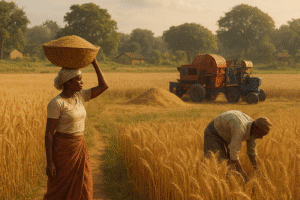
- Manual Harvesting: Using hand tools like sickles or machetes to cut grain stalks is labor-intensive but still practiced in many areas for rice, wheat, etc. After cutting, the plants must be threshed (beaten or trampled to knock out grains) and then winnowed (tossing in the air or using a fan to blow away chaff). This is very time-consuming and generally yields less grain per area per hour, but it requires minimal equipment.
- Small Machinery: There are small-scale harvesters and stationary threshers. For example, a farmer might cut rice with a sickle then feed the stalks into a small threshing machine to remove the grain. Or use a small, walk-behind combine in a rice paddy that does one row at a time.
- Custom Harvesting: In many farming communities, if a farmer doesn’t own a combine, they may hire custom harvesters – crews that travel with combines, or neighbors who share equipment, to get the job done.
- Grain Handling at Harvest: As grain is harvested, it needs to be moved and stored. Combines unload grain into wagons or trucks. Those then ferry the grain either directly to on-farm storage (silos or grain bins) or to a processing facility or elevator. At harvest, grain is usually handled in bulk. Augers (spiral conveyors) or belts might be used to move grain from the truck into a bin. If the grain is too wet for safe storage, it may first go through a grain dryer – a machine that blows heated air through the grain to reduce moisture. Drying is especially common for corn and rice, which are often harvested at higher moisture and then dried to ~13-15% for storage.
- Harvest Losses: Despite best efforts, some grain inevitably doesn’t make it into the bin. Harvest losses can come from grain left on the field (ears that fell off, pods not collected, scattered kernels). Combines need to be well-adjusted: if the settings are wrong, grain could be thrown out with the chaff or straw. Farmers often check behind the combine to see if many kernels are on the ground; if so, they adjust the machine’s settings (fan speed, sieve openings, threshing speed, etc.). Losses also occur from something called shattering – for example, in soybeans or rice, if the pods or panicles are overripe, they may burst and drop seeds when disturbed. Therefore, timely harvest reduces shattering. Additionally, weather can cause losses; high winds might knock down grain stalks (lodging) making them harder to pick up, or heavy rain can cause seeds to sprout on the plant (premature germination which ruins their value). Harvest is a race to gather the grain when it’s ready and before any such issues reduce yield or quality.
- Safety: Harvest time can be dangerous due to large machinery and long hours. Farmers take care to avoid accidents with tractors, combines, and trucks. Grain dust is also a hazard – it can cause respiratory problems or even explosions in enclosed spaces if it builds up. Modern combines have cabs with air filters to protect the operators. It’s also a time of fatigue, so managing work hours and being cautious is important.
When a harvest is successful, it is a rewarding sight: fields that were golden with ripe grain become cleanly cut stubble, and the results of the year’s labor are measured in truckloads or grain bin levels. Many farming communities celebrate harvest’s end because it represents the completion of the yearly growing cycle and the securing of food and income.
Post-Harvest Handling and Storage
Getting grain out of the field is only part of the journey; once harvested, post-harvest handling is crucial to preserve the grain’s quality and value. Grains are living seeds, and if not stored correctly, they can spoil, become infested with pests, or lose quality. Post-harvest practices involve cleaning the grain, drying it to safe moisture, and storing it properly until it’s sold or used. For a “comprehensive guide,” understanding grain storage and handling is key, since poor storage can waste the fruits of all the farming effort.
Important aspects of post-harvest handling and storage include:
- Cleaning the Grain: Harvested grain often contains more than just the kernels. There can be bits of stalk, chaff, weed seeds, or other debris mixed in. While the combine does a primary cleaning, many farmers or grain buyers will further clean the grain. This can be done with screens and sieves, gravity separators, or air blowers that remove light material. Cleaning improves storability (less chaff means fewer hiding spots for insects and less chance of mold on non-grain material) and may fetch a better price if sold, as most buyers pay more for clean, high-purity grain. Some modern grain bins even have built-in cleaners or farmers might use a portable grain cleaner when transferring grain into storage.
- Drying: Proper drying of grain is arguably the most critical step to prevent spoilage. Grains need to be at a low moisture content to store for extended periods. If grain is stored with too high moisture, it creates an environment where mold can grow and produce toxins, or where grain can overheat from microbial activity (sometimes leading to a condition called “hot spots” in the bin, which can result in ruined grain or even fires). Each grain has a typical safe storage moisture: for example, around 13-14% for wheat and corn, slightly lower for long-term storage; rice might be stored at 12-14% but needs careful drying to avoid cracking the grains; oilseeds like soybeans often need to be around 11% or less to prevent oil rancidity. If the harvested grain isn’t already at a safe moisture, farmers use grain dryers. These dryers pass heated air through the grain to evaporate excess water. There are large commercial grain drying systems at elevators and smaller batch or continuous-flow dryers on farms. A common setup on a farm is a drying bin or a dedicated dryer unit that can take corn from, say, 25% moisture down to 15% in a few hours by blowing warm air (perhaps heated by propane or natural gas) through the grain. Care must be taken not to overdry (wasting energy and potentially causing grains to crack) or to dry too fast (which can also crack grains, especially rice). Sometimes farmers will use ambient air drying for small reductions: for example, blowing unheated air on a dry, breezy day through bins can take a point or two of moisture out if initial moisture is only slightly high. In dry climates or during dry seasons, harvested grain might naturally be at safe moisture by the time combining is done. But in humid or rainy harvest seasons, drying is essential.
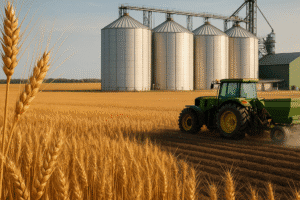
- Storage Facilities: Grains are typically stored in bulk in structures like silos or grain bins. Silos can be vertical towers (concrete or metal) often seen on farms or at grain elevators. Grain bins are usually large corrugated metal cylinders with peaked roofs found on many farms; they range in size from a few tons capacity to thousands of tons. These bins often have systems like:
- Aeration systems: small fans that can circulate air through the grain to cool it and equalize moisture. Aeration is used to cool grain after drying or during winter to keep it in good condition. Cool, dry grain is less prone to pests or mold.
- Temperature cables: many bins have hanging cables with sensors that allow farmers to monitor the temperature inside the grain mass at various points. A rising temperature can signal trouble (like insect activity or moisture causing respiration heat) so it’s an alert to take action.
- Level monitors: to know how much grain is in the bin or to avoid overfilling.
- Pest Control in Storage: Insects like weevils, grain borers, and moths can infest stored grain. Additionally, rodents like mice and rats will happily chew into bins or bags to eat grain. To manage these, farmers adopt several strategies:
- Sanitation: Keeping storage sites clean. Spilled grain around bins should be cleaned up as it attracts pests. Bins are often cleaned out between seasons to remove any residues where insects could harbor.
- Chemical treatments: Sometimes grain is treated with protectant insecticides as it goes into storage, or fumigants are used if an infestation is detected. Fumigation (using gases like phosphine) can kill insect pests in a sealed silo, but it’s dangerous and typically done by licensed professionals.
- Natural methods: Aeration and cooling can slow insect reproduction because many insects in grain thrive in warm conditions. By keeping grain cool (especially during winter, letting cold air in), farmers can reduce pest problems. Some also use biological control like introducing natural enemies or using diatomaceous earth (a powder that damages insects’ exoskeletons) as a mix in stored grain for organic operations.
- Rodent proofing: Ensuring bins are well sealed, using traps or bait stations around storage areas, and keeping weeds/grass trimmed to reduce hiding spots helps keep rodents away.
- Maintaining Grain Quality: Over time, even dry, stored grain can degrade. Grains are often sold by grade (especially for human consumption markets). Factors like broken kernels, foreign material, color, and odor can affect grade. So maintaining quality means:
- Monitoring moisture and temperature regularly.
- Running aeration fans if certain parts of the bin get too warm or moist (for example, moisture can migrate in a bin – as outside temperatures change, moisture can accumulate at the top or in pockets).
- Moving grain if needed: sometimes farmers will transfer grain from one bin to another (turning the grain) to break up hot spots or just to ship out portions. Frequent movement can also help cool and mix the grain but is labor-intensive.
- Avoiding long storage beyond the safe period. Even dry grain can only be stored so long before quality slowly decreases. For instance, grain destined for seed use (to plant next season) has to be stored very carefully to keep germination rates high.
- Grain Handling and Transport: Once grain is stored, it will eventually be moved to where it’s needed – whether that’s a local mill, an export terminal, or a food processing plant. Handling equipment like augers, conveyor belts, or pneumatic grain vacuums are used to load grain from bins into trucks, railcars, or barges. It’s important to handle grain gently if it’s intended for food, as cracking kernels can reduce quality or cause spoilage. For example, malting barley needs to be intact and not skinned or broken, so special care in handling is taken. Similarly, milling wheat benefits from minimal damage. During transport, grain is typically hauled in bulk in covered trucks or rail hopper cars to keep it dry.
- Traceability and Record-Keeping: Modern operations also keep records of grain lots: which field and variety it came from, any treatments it had, moisture at storage, etc. This is important for quality assurance and for meeting any market specifications (like non-GMO, or specific protein content for wheat). Some use software to manage inventory across multiple bins.
In the context of a guide, the takeaway is that after the hard work of growing a crop, ensuring it is safely stored and maintained is essential to actually realizing the profit and food value from it. Neglecting post-harvest can turn a bumper crop into a bin full of moldy or infested grain that might only be fit for animal feed or need to be thrown away. Thus, grain farmers devote considerable attention to storage management. Often, a farming year doesn’t truly end at harvest – farmers might be drying and monitoring their stored grain for months until it’s sold. Only once the grain is sold and delivered does that chapter close.
Sustainable Practices in Grain Farming
Modern grain agriculture faces the challenge of producing high yields while also preserving the environment and soil for the future. Over decades, intensive grain farming—especially continuous monoculture with heavy tillage and chemical use—has led to issues like soil erosion, loss of fertility, water pollution from runoff, and declines in biodiversity. As a result, many farmers and researchers are promoting sustainable and regenerative practices in grain farming. These methods aim to maintain or even improve the land and resources, so that farming can continue productively for generations to come.
Some key sustainable practices and concepts in grain agriculture include:
- Crop Rotation: Rather than growing the same grain on the same field year after year, rotating with other crops is a classic and highly effective practice. For example, a rotation might include corn one year, soybeans the next, then wheat, then maybe a cover crop or a forage. Rotations help break pest and disease cycles (many pests are crop-specific, so they starve when their host isn’t present for a season). Rotations also balance nutrient demands; a legume can add nitrogen that a subsequent grain will use, or a deep-rooted crop can bring up nutrients from deeper soil layers for the next shallow-rooted crop. In regions where it’s feasible, including a sod or pasture phase (grasses and legumes for a couple years) can greatly restore soil structure. Overall, rotation is like giving the land a varied diet, which keeps it healthier than a single-crop regime.
- Conservation Tillage: As discussed earlier, reducing tillage is beneficial for soil conservation. No-till farming keeps the soil intact and covered with crop residue. This dramatically reduces erosion caused by wind and rain, which is especially vital in areas prone to topsoil loss. It also helps build up organic matter, as plant residues decompose slowly on the surface and feed soil biota. Over time, no-till soil can become more porous (thanks to earthworms and root channels) and better at holding water, reducing flooding and runoff. Conservation tillage can also save fuel and labor since farmers make fewer passes over the field with machinery. However, it often requires more careful management of weeds (since you’re not plowing them under) and might rely on herbicides or integrated weed management methods.
- Cover Crops: Planting cover crops in the off-season or alongside main crops is a cornerstone of regenerative agriculture. Cover crops like clover, vetch, rye, or radishes are grown not for harvest, but to cover the soil and improve it. They prevent erosion, add organic matter, and some (particularly legumes) add nitrogen naturally via nitrogen-fixing bacteria on their roots. Cover crops can also suppress weeds by outcompeting them and can break up soil compaction (for example, daikon radish covers drill down and create channels in hard soil). In grain systems, a farmer might plant a cover crop immediately after harvesting a main crop. For instance, after winter wheat harvest in early summer, they might seed a mix of legumes and grasses to grow over late summer and fall. That cover can then be killed by frost or terminated before the next spring planting, leaving a healthier soil. Increasingly, farmers even experiment with interseeding covers into standing crops (like sowing clover into standing corn mid-season, so it’s ready to grow after harvest).
- Integrated Pest Management (IPM): In sustainable grain farming, the idea is to minimize reliance on chemical pesticides by combining different strategies to manage pests and diseases. This can involve:
- Selecting resistant varieties (less disease pressure means fewer fungicides needed).
- Monitoring pests closely and only spraying when absolutely necessary (economic thresholds).
- Encouraging beneficial insects (like ladybugs, lacewings, spiders) by maintaining field borders or habitats, which can keep pest populations in check naturally.
- Crop rotation and residue management to reduce pathogen carryover.
- If spraying is needed, using targeted pesticides that affect the pest but spare beneficials as much as possible, and rotating modes of action to avoid resistance.
- In some cases, using biological controls or biopesticides (e.g., BT sprays, pheromone traps for moth pests, etc.).
By reducing indiscriminate pesticide use, IPM fosters a more balanced ecosystem in and around grain fields and prevents pests from developing resistance. It also can save money and reduce environmental contamination.
- Precision Agriculture: Precision farming techniques not only improve efficiency and yield, but they also help sustainability by reducing waste. For example, variable-rate technology allows precise application of fertilizers and lime only where needed, preventing over-fertilization and subsequent nutrient runoff into waterways. Precision irrigation (using soil moisture data to irrigate only when necessary, or drip irrigation to target water) conserves water. Yield monitors and mapping can help identify areas of the field that are consistently low-performing; those might be managed differently or even taken out of production and turned into conservation areas if farming them is uneconomical and wasteful. Guidance systems also minimize overlapping fertilizer or pesticide applications, which is both economic and environmental win. Precision ag, in essence, means treating different parts of the field according to their specific needs rather than blanket treating everything the same. This fine-tuned approach typically reduces input use and the associated ecological footprint.
- Soil Testing and Nutrient Management Plans: Regular soil testing allows farmers to tailor their fertilizer applications more precisely, which avoids the common problem of over-application “just to be sure.” Overuse of fertilizers, especially nitrogen and phosphorus, can lead to water pollution (algal blooms, dead zones in water bodies) and also wastes energy (manufacturing fertilizer is energy-intensive). A good nutrient plan might also incorporate organic sources of nutrients like manure or compost, recycling nutrients and building soil health while reducing the need for synthetic fertilizers. Some farmers also plant nutrient catch crops (a type of cover crop) to capture leftover nitrogen after a grain harvest so it doesn’t leach into groundwater; that nitrogen is then reused when the cover is plowed in.
- Water Conservation: For farmers in irrigated areas, sustainable practice means using water efficiently. This could be by using advanced irrigation systems (like converting from flood irrigation to drip or pivot systems that use water more sparingly), scheduling irrigation based on real crop needs (using evapotranspiration models or sensors), and capturing or recycling runoff where possible. In rice cultivation, methods like alternate wetting and drying (AWD) have been developed to use less water than continuous flooding, without sacrificing yield. AWD involves letting the water level drop for a few days before re-flooding, which also cuts methane emissions from rice paddies (an environmental benefit, since continuous flooding in rice produces a lot of methane, a potent greenhouse gas).
- Agroecosystem Diversity: Incorporating diversity in the farm ecosystem can enhance resilience. For example, having field margins with grass or trees can reduce erosion and provide habitat for pollinators and predators of pests. Some grain farmers practice agroforestry, like windbreaks or alley cropping where strips of grains are alternated with rows of trees or shrubs, which can improve microclimates and provide additional products (fruit, timber). Though not very common in large-scale grain operations, these ideas are gaining interest for their environmental benefits.
- Perennial Grains: One frontier of sustainable grain agriculture is the development of perennial grain crops. Most grains are annuals, meaning you have to till and replant every year, which is disruptive to soil. Perennial grains like Kernza (a type of intermediate wheatgrass being bred for grain use) can regrow year after year from the same roots, which means the field doesn’t need annual plowing or planting. Perennial grains could drastically reduce erosion and improve soil structure since their roots stay in the ground year-round, and they often root deeper than annuals, accessing more water and nutrients. This is still an emerging area of research – yields of perennial grains are not yet on par with annual staples, but ongoing breeding aims to improve that. If successful, a shift to even partially perennial grain systems could be revolutionary for sustainability.
- Reducing Greenhouse Gas Emissions: Agriculture is both impacted by and a contributor to climate change. Sustainable grain farming looks to reduce carbon footprint. Practices like no-till and cover cropping help sequester carbon in the soil (capturing CO₂ from the atmosphere and storing it as soil organic matter). Efficient fertilizer use and using inhibitors can reduce nitrous oxide emissions (a potent greenhouse gas that comes from nitrogen fertilizers in soil). Managing rice paddies with intermittent flooding reduces methane emissions. Some farmers are also exploring the use of renewable energy (like solar panels on the farm, or biofuels produced from ag waste) to power farm operations. There is growing interest in carbon credits for farming practices – essentially paying farmers for implementing methods that capture carbon or reduce emissions, thus incentivizing sustainable choices.
- Community and Knowledge Sharing: Sustainability often involves learning and adapting new techniques. Many grain farmers participate in extension programs, farmer networks, or research trials to share knowledge on what works best in their local conditions. This communal approach to evolving farming methods is crucial, as practices may need to be tailored to specific climates and soils. It’s not one-size-fits-all; what’s sustainable in one context might not be in another, but the principles (protect the soil, use resources wisely, work with natural processes) guide local innovations.
Adopting sustainable practices doesn’t mean sacrificing productivity. In fact, many of these practices—like improving soil health—can maintain or even boost yields in the long run, especially by preventing the degradation of the land. There may be short-term adjustments or costs, but the long-term payoff is a more resilient farm. For example, a field that consistently had erosion gullies and yield loss might, after a few years of no-till and cover cropping, stabilize and yield better because it retains water and nutrients better. The move towards sustainability in grain agriculture is about balancing the need to feed a growing population with the responsibility of stewardship for the land and environment.
Challenges in Modern Grain Agriculture
Despite advances in technology and agronomy, grain farmers today face a host of challenges that can threaten their productivity and livelihoods. These challenges come from environmental, economic, and social domains. Understanding these issues is part of a comprehensive view of grain agriculture, as it not only highlights why certain practices are changing but also sheds light on the future direction of farming. Here we outline some of the major challenges:
- Climate Change and Weather Extremes: One of the most pressing issues is the increasing variability of weather due to climate change. Grain crops are highly dependent on specific weather patterns (timely rains, moderate temperatures during key growth stages, absence of extreme events like hailstorms). Changes such as shifting rainfall patterns, more frequent droughts, intense heat waves, or unseasonal frosts can significantly impact grain yields. For instance, a severe drought can wither crops or prompt governments to restrict water for irrigation. Excessive heat during critical phases like flowering can reduce grain set (e.g., heat stress can cause corn pollen to die or wheat flowers to abort). Heavy rains or floods can destroy fields or delay planting and harvest. Moreover, climate change is believed to contribute to more volatile swings—one year a bumper crop, the next year a failure—making farm income and global grain supply less predictable. Farmers are having to adapt by shifting planting dates, trying more resilient crop varieties, or investing in irrigation and drainage. Crop insurance and disaster relief programs have also become integral to help manage the risk of weather disasters.
- Soil Degradation: Decades of intensive farming in some areas have led to soil health issues. Erosion has stripped away fertile topsoil in parts of the world, meaning lower natural fertility and poorer water-holding capacity. Continuous cropping without sufficient organic matter return or fallow periods has caused organic matter depletion. Overuse of chemical fertilizers without attention to soil biology can cause micronutrient imbalances or soil structure decline. In some regions, salinization (buildup of salts) from irrigation or alkalization has made soils less productive. Soil degradation presents a slow, chronic challenge: yields might gradually stagnate or decline if soil issues aren’t addressed. Rebuilding soil health is possible (through aforementioned sustainable practices), but it takes time and sometimes investment that farmers might find hard to afford if profit margins are thin.
- Pest and Disease Evolution: Pests (weeds, insects) and diseases are not static problems; they evolve. Herbicide resistance is a major challenge: weeds like certain amaranth species or ryegrass have developed resistance to common herbicides after years of exposure. This makes them harder to control and can require new strategies or more expensive alternatives. Similarly, insect pests can develop resistance to insecticides or even genetically modified (GM) crop traits that were designed to control them (for example, some corn rootworms have shown resistance to the Bt toxin in GM corn). Plant diseases can also evolve new strains that overcome resistant crop varieties. A notable concern is wheat stem rust UG99, a strain of rust fungus that emerged in East Africa and has virulence against many wheat resistance genes; scientists are racing to breed new resistant wheat varieties. The arms race between pests and control measures is continuous. Farmers and researchers must constantly adapt integrated pest management strategies to stay ahead, which can drive up research and production costs.
- Dependency on Inputs and Rising Costs: Modern grain farming often relies on purchased inputs – seeds (especially hybrid or GM seeds that must be bought each year), fertilizers, pesticides, fuel, and machinery. The cost of these inputs can be a burden, especially if market prices for grain are low. For example, fertilizer prices are tied to energy prices and global supply; a spike in oil or natural gas can make fertilizer suddenly much more expensive, squeezing farmers. Similarly, if a farmer is in debt for machinery or land, financial pressures mount when commodity prices drop or weather causes a bad harvest. The capital-intensive nature of modern grain farming means that small changes in cost or price can narrow profit margins severely. There’s also a dependency aspect: if a certain herbicide or seed is the only effective solution for a region, farmers are vulnerable if something happens to that supply (like regulatory bans or corporate pricing changes). This is one reason some are exploring more self-reliant practices like saving seeds (though not possible with hybrids), using on-farm manure to reduce fertilizer needs, etc., but at scale many still rely on global input supply chains.
- Market Volatility and Economic Pressures: Grain prices on the global market can be highly volatile. A farmer plants a crop months before knowing what price they’ll get at harvest. Global factors influence this: a drought in a major producing country can drive prices up, while a bumper crop or trade barriers can drive them down. Many grain farmers operate on thin margins and depend on yield plus price to make a profit; a dip in either can mean losses. Trade policies and tariffs also affect grain agriculture – for example, if a major importer imposes tariffs or bans (like at times some countries ban grain exports to protect their domestic supply), it shifts market dynamics. Additionally, grain farmers compete in a global market, so a small farmer might feel at the mercy of international events and large corporations. Consolidation in the industry (fewer, larger grain buyers or processors) can also reduce competition and price options for farmers in some regions. These economic challenges mean that risk management (like futures contracts, crop insurance, diversification of crops, or value-added ventures) is as much a part of farming as the growing itself.
- Labor Shortages and Demographics: In many developed countries, fewer young people are choosing farming as a career, and rural populations are shrinking. Grain farming has mechanized heavily, so it generally doesn’t require as much labor per acre as in the past, but skilled labor (operating complex machinery, managing large farms) is still needed, especially during planting and harvest seasons. Labor shortages can be acute in certain areas and seasons. In some cases, farmers rely on seasonal migrant labor (for tasks like detasseling corn for seed production or working in rice fields) and changes in immigration policy or labor availability can pose a problem. In developing countries, urban migration can leave fewer farmers to tend the land, sometimes resulting in abandoned fields or less careful cultivation. The aging farmer population is a concern; as farmers retire, will there be a next generation to continue grain farming? This has led to increased interest in farm succession planning, incentives for young farmers, and even the development of more autonomous machinery (robotics) to reduce dependence on manual labor.
- Environmental Regulations and Public Perception: Grain farmers also navigate an environment of increasing regulation related to environmental protection. There may be rules on fertilizer usage (to prevent water pollution), on pesticide applications (to protect pollinators and human health), or on land use (like wetland preservation reducing available field area). While these regulations serve larger societal goals, they can sometimes add compliance costs or limit farming practices. For instance, restrictions on a particular effective pesticide might force a switch to a more expensive or less effective one. Additionally, the public is more aware and concerned about how food is produced. Issues like the use of GMOs, pesticide residues, and sustainability of farming are common topics. Farmers often feel pressure to demonstrate environmental stewardship and may engage in certification programs or adapt to meet market preferences (like non-GMO or organic grain markets) which can be both a challenge and an opportunity. Communication with the public about why certain practices are used (like GM crops or necessary chemical sprays) can be challenging but increasingly important to maintain a good relationship with consumers.
- Infrastructure and Storage: In some regions, farmers struggle with insufficient infrastructure to support their grain production. This is more of a challenge in developing countries where roads, storage facilities, and market access may be limited. A farmer might grow a great crop but then face losses because they can’t quickly get it to market or properly store it. Even in developed areas, occasional bottlenecks (like not enough local grain elevator capacity in a record harvest year, or rail transport issues) can pose problems. Efficient storage and transportation are critical for grain, and any weakness in the chain can affect farmers’ bottom lines.
- Disease Pandemics and Global Disruptions: Though not a frequent issue historically, events like global pandemics or conflicts can disrupt supply chains for inputs and markets for outputs. The COVID-19 pandemic, for example, caused labor disruptions in some places, and shifts in demand (like less demand from restaurants, more for home cooking, affecting certain grain product demand differently). It also highlighted how long supply chains can be vulnerable. While grain as a commodity continued to flow, farmers had to adjust to new safety protocols and market fluctuations. Geopolitical events can similarly alter trade flows (for instance, if major exporters or importers are in conflict or sanction situations, it changes who buys from whom).
Despite all these challenges, grain farmers are known for their resilience and adaptability. Many incorporate risk management by diversifying their operations (growing multiple crops, or adding livestock, or off-farm income). Support systems like extension services, crop insurance, cooperatives, and technological innovation all help farmers face these challenges. Moreover, challenges often spur innovation – for example, water scarcity drives the adoption of drought-tolerant crop varieties or water-saving technology; labor shortages push development of automation; climate threats encourage breeding of heat-resistant or early-maturing crops.
Understanding these challenges gives context to why grain agriculture is always evolving. It’s not a static practice handed down unchanged; each generation of farmers faces new hurdles and must problem-solve to overcome them. This continuous adaptation is a key part of the story of grain agriculture, showing how it sustains itself under changing conditions.
The Role of Technology and Innovation in Grain Farming
Technology has always been a driving force in improving grain agriculture, but the past few decades have seen an acceleration of innovation that is transforming how grain farms operate. Embracing new technologies can help farmers increase efficiency, reduce waste, and make better decisions, which is especially important in tackling some of the challenges discussed earlier. Here we highlight some of the ways modern technology is shaping grain farming:
- Precision Agriculture and Digital Farming: This term encompasses a suite of technologies that allow farmers to manage their fields on a more precise, granular level rather than treating the whole field uniformly. Key components include:
- Global Positioning System (GPS): Most modern tractors and combines are equipped with GPS and auto-steering systems. This enables extremely straight and precise rows during planting and efficient passes during harvesting, minimizing overlap or missed spots. GPS guidance reduces fuel usage and input overlap (e.g., preventing double fertilizing areas).
- Geographic Information Systems (GIS) and Mapping: Farmers can create yield maps as the combine harvests (yield monitors measure how much grain is coming in at each point in the field). They can also use soil maps (soil type, nutrient maps from soil samples) and other data layers like elevation or drainage patterns. These maps allow analysis of field variability.
- Variable Rate Technology (VRT): Using the data and maps, equipment can automatically vary the rate of seed, fertilizer, or pesticide application as it moves through different field zones. For example, a fertile area might get more seeds planted per acre to maximize yield, and a poorer area fewer seeds to avoid waste. Or nitrogen fertilizer could be applied heavily where deficiency is noted, and lightly where soil shows adequate nitrogen. This optimizes inputs, saving money and reducing environmental impact.
- Precision Spraying: Advanced sprayers now have sensors that can detect green weeds in fallow or even within crops and only spray herbicide where a weed is present (spot-spraying), drastically cutting herbicide use. Some systems use cameras and AI to distinguish weeds from crops in real time.
- Data Analytics and Farm Management Software: Many farmers use computer software or mobile apps to record everything from planting dates to fertilizer applied to yields. These digital platforms (often cloud-based) help manage operations, analyze what practices work best, and even handle logistics like inventory and contract management. They essentially act as the farm’s digital brain, helping with decision support.
- Drones and Remote Sensing: Unmanned Aerial Vehicles (drones) and satellite imagery have become more accessible tools for crop monitoring. A drone can be flown over a field to take high-resolution images that reveal issues like pest damage, nutrient deficiencies (through specialized cameras that capture near-infrared light, indicating plant health), or water stress. Drones can scout areas far faster than a person on foot, and they can reach parts of fields that might be hard to walk (such as very muddy fields). Satellite images, while lower resolution than drones, cover large areas and are frequently updated, allowing farmers to see crop development and problems over time. Some services provide normalized difference vegetation index (NDVI) maps or other indices that help pinpoint trouble spots. Using these tools, a farmer might discover a section of the field that isn’t performing well, then go ground-truth it to identify the cause (maybe a pest infestation or a clogged irrigation nozzle, etc.). Drones can also be used for precision spraying of small areas or for spreading cover crop seeds in areas hard to reach with tractors.
- Smart Sensors and Internet of Things (IoT): Sensors placed in fields and storage facilities give farmers real-time information. Examples include:
- Soil moisture sensors: These are buried in the soil at different depths and report how much water is available to plants. They help schedule irrigation more precisely, ensuring crops get water when they need it and avoiding overwatering.
- Weather stations: On-farm weather monitors can provide hyper-local data on rainfall, temperature, humidity, and wind. This is useful not just for daily decisions but also for building a historical record for that specific location, which might differ from the nearest official weather station by significant amounts. Such stations can also feed into disease prediction models (for instance, certain fungal diseases need specific humidity and leaf wetness duration to infect).
- Grain bin sensors: As mentioned earlier, temperature or even CO₂ sensors in grain storage can alert to potential spoilage. Some advanced systems can automatically kick on fans or dryers if conditions start to slip outside the desired range.
- Livestock integration sensors: If a farmer integrates livestock with grain (like cattle grazing corn stalks after harvest or chickens in a rotation), sensors like GPS collars on cattle or smart fencing can help manage them.
- Many of these devices connect via cellular networks or farm Wi-Fi to send data to the farmer’s phone or computer. The Internet of Things concept basically means a network of connected devices that collect and exchange data, giving the farmer an information-rich picture of their farm operations.
- Biotechnology and Genetics: On the biological side, innovation in grain farming includes the development of improved crop varieties. This includes both conventional breeding and biotechnology:
- Hybrid Crops: Hybrids (especially in corn, sorghum, and sunflowers) have been a staple of high-yield agriculture for decades. Breeders continuously develop hybrids that yield more or resist diseases better. Hybrid vigor often gives these crops an edge in performance.
- Genetically Modified Organisms (GMOs): Several grain crops have GMO versions that provide traits like insect resistance (e.g., Bt corn produces a protein that is toxic to certain pests, reducing the need for chemical insecticides) or herbicide tolerance (e.g., Roundup Ready crops allow easier weed control). GM technology can also improve disease resistance or drought tolerance, although those traits are more complex. While GMOs are widely used in some countries (like the US, Brazil, Argentina for soy, corn, cotton), they face regulatory or market restrictions in others (like much of Europe). The debate aside, where they are used, they’ve significantly changed management practices and have often increased yields or simplified pest control, albeit with concerns about resistance developing.
- Gene Editing: Newer tools like CRISPR allow for precise editing of plant genes without necessarily introducing foreign DNA. This could accelerate development of grain varieties with improved traits, such as rice that doesn’t accumulate arsenic or wheat with higher nutritional value. Because gene-edited plants can sometimes be indistinguishable from conventionally bred ones (no “transgene” from a different species, just edited existing genes), they might face less regulatory hurdles.
- Disease diagnostics: There are now quick DNA-based tests that farmers or labs can use to identify plant diseases or soil pathogens early, enabling targeted action.
- Automation and Robotics: Beyond the large, traditional machinery, automation is filtering into other tasks:
- Autonomous tractors and machinery: Several companies are testing or have introduced autonomous grain carts or small tractors that can operate without a driver, guided by GPS and sensors. Imagine a fleet of small robotic planters or weeders working a field 24/7; that could be on the horizon. Autonomous combines or tractors could help mitigate labor issues.
- Robotic weeders: Particularly in specialty crops but also being tested in row crops, robots equipped with cameras and AI can patrol fields to identify and destroy weeds either mechanically or with targeted lasers or micro-doses of herbicide.
- Drones (for actual field work): Besides scouting, larger drones are being used to spray crops, sow seeds (especially cover crops or re-seeding tricky spots), or apply fertilizers in places hard to reach by land vehicles.
- AI and Decision Support: Artificial intelligence is being applied to agriculture data to provide recommendations. AI can analyze weather patterns, soil data, and historical yields to suggest the best planting dates or which hybrids might perform best on a particular field. It can help diagnose problems from images (like an app where a farmer uploads a photo of a sick plant and an AI identifies the disease). These decision support systems aim to leverage the vast data available to fine-tune farm management.
- Communication and Connectivity: Rural broadband and internet connectivity on farms have become increasingly important to take advantage of many technologies. Many tractors upload data to the cloud, and many farmers consult internet resources and communicate with advisors digitally. Social media and farming forums also allow farmers to share experiences and tips widely, spreading innovation faster. A farmer in one part of the world can learn about a technique from another and try it, accelerating the exchange of ideas.
- Economic and Market Tech: Innovation isn’t just in production; grain marketing has seen technology influences too. Farmers can use apps to monitor commodity prices, sell their grain to buyers online, or even engage in emerging things like blockchain-based traceability (where a crop’s origin and journey are recorded digitally for end consumers who want proof of sustainable or specific origin). Some startups are offering ways to connect farmers directly with end-users or smaller grain processors, bypassing some traditional middlemen – potentially giving farmers better prices and consumers more specialized choices (like identity-preserved grains or specific varieties).
The role of technology in grain farming essentially is about increasing precision, efficiency, and knowledge. It allows farmers to do more with less: less land, less water, less labor, less fertilizer, and yet achieve equal or greater yields. It also can make farming more sustainable by pinpointing problems and solutions. However, it comes with a learning curve and often additional costs, and there can be disparities (large, well-capitalized farms can adopt expensive tech faster than small farms). Over time, though, many technologies become more affordable and user-friendly, eventually becoming standard practice.
One thing to note is that technology in grain farming is not a silver bullet; it complements good agronomic practices and farmer expertise. A poorly managed farm won’t magically become high yielding just by adding gadgets. But a knowledgeable farmer can leverage technology to refine their management and overcome limitations. For example, a sensor might tell you there’s a moisture issue, but the farmer’s knowledge is needed to figure out whether to irrigate more or improve drainage. So it’s the combination of farmer skill and high-tech tools that leads to the best outcomes.
The Future of Grain Agriculture
Looking ahead, grain agriculture will continue to evolve to meet the needs of a growing global population and to respond to environmental pressures. The future promises both exciting innovations and significant challenges that will require adaptation. Here are some trends and possibilities that define the future of grain farming:
- Sustainable Intensification: The world’s population is still increasing, and diets in many developing countries are shifting towards more grain-intensive products (like meat and dairy, which require grain for feed). However, arable land is limited and in some places shrinking due to urbanization or degradation. The concept of sustainable intensification is to produce more on the same land area but with reduced environmental impact. This will likely involve a mix of technology (precision ag, better genetics) and ecology (soil health, water management) to raise yields in a way that conserves resources. For instance, new grain varieties that yield more with less fertilizer or water would be a boon. Also, improving yields in regions where current practices are low-yielding (like some parts of Sub-Saharan Africa) through knowledge transfer and infrastructure could significantly boost global grain supply without expanding farmland.
- Climate-Resilient Crops: Plant breeders and biotechnologists are increasingly focusing on traits that will help grains cope with climate change. This includes developing heat-tolerant varieties of wheat or corn that can maintain yields under higher temperatures, drought-tolerant crops that can survive with less rainfall, and even flood-tolerant rice that can withstand periods of submergence (some of these exist, such as „scuba rice” varieties for flood-prone areas). Genetic diversity from wild relatives of grains or ancient varieties is being tapped to find resilient traits. Genome editing may accelerate the incorporation of these traits. Additionally, more research is going into pest and disease resistance as new threats emerge with shifting climates and global trade (for example, the spread of certain wheat rust fungi or corn pests to new areas). The future might see grains that are not only higher yielding but essentially “hardened” against stresses that today cause crop failures.
- Perennial and Regenerative Systems: We touched on perennial grains earlier. In the future, if breeding efforts succeed, we might see some grain production moving to perennial systems. Imagine fields of wheatgrass that you don’t plow or replant every year, but still harvest grain from annually. These could dramatically reduce erosion and input needs. Even if yields are somewhat lower initially, the benefits to soil and reduced cost of replanting might make them appealing. Likewise, regenerative agriculture principles (like integrating livestock to graze cover crops, using no-till and cover crops to build soil) might become more mainstream if they are shown to maintain yields and profits. Consumers and food companies are increasingly interested in crops produced in ways that sequester carbon or improve soil health, which could create market incentives (like premiums) for grain grown under regenerative practices. For example, some large food corporations have started pilot programs with farmers to source grains grown with specific sustainability metrics, signaling that the market may reward such methods.
- Automation and AI on a New Level: The coming decades could see fully autonomous grain farms where most operations are handled by machines with minimal human intervention. Already, prototypes of swarm farming exist: multiple small robotic machines that plant, weed, and harvest with coordination. AI may handle much of the decision-making by processing massive data sets far beyond human capacity, continuously learning and optimizing. A farm of the future might have solar-powered sensors and robots running 24/7, tending crops almost plant-by-plant. While large human-driven tractors have economies of scale, small robots could enable a kind of precision and flexibility (like treating a weed right next to a crop plant without harming the crop) that was previously impossible. In parallel, human labor may shift more to supervisory, technical, and analytical roles on farms – managing the systems and making high-level strategic decisions or handling things that still need a human touch.
- Circular Agriculture and Waste Reduction: There’s likely to be more emphasis on closing loops and reducing waste in the agricultural system. For example, better use of crop residues – rather than burning straw in fields (which is common in some rice-growing regions and causes pollution), future systems might collect it for bioenergy or mushroom production or turn it into biochar to enrich soil. Or crop residues might be grazed or composted more systematically. Nutrient recycling will also be a focus: capturing nutrients from animal manure or even human waste (after proper treatment) and returning them to croplands, effectively recycling what was once grain nutrients back to the next grain crop. Some advanced ideas include farm designs where fish, livestock, and grain production are integrated to use each other’s by-products (for instance, manure fertilizing crops, crop waste feeding animals or fish). Such integrated systems mimic ecosystems and can be efficient if managed well.
- New Grain Uses and Value Addition: The future might also expand how grains are used. Beyond existing uses (food, feed, fuel), grains could be a source of bioplastics or other bio-based materials as society tries to move away from petroleum-based products. For instance, cornstarch and other grain components are already used to make biodegradable plastics, and advances in biotechnology could produce new materials or chemicals from grain. If farmers can tap into these value-added markets, they might get better returns. Additionally, there’s growing interest in nutrition and specialty grains – such as ancient grain varieties or biofortified grains (like high-vitamin or mineral-enriched grains). One example is “golden rice,” a rice engineered to produce beta-carotene to fight vitamin A deficiency. Though its adoption has been slow due to regulatory hurdles and debate, it represents a trend of using grain as a vehicle for nutrition enhancement. As consumers seek different kinds of grains (gluten-free, heirloom varieties with unique flavors, etc.), some farmers might grow niche grain crops for premium markets rather than only commodity grain for bulk sale.
- Global Collaboration and Knowledge Sharing: The challenge of feeding humanity sustainably is a global one, and the future will likely see increased collaboration in research and farming practices. International research centers and networks already work on improving major grains (like IRRI for rice, CIMMYT for wheat and maize, etc.), and these will continue to be important for developing nations. But also, farmers worldwide are sharing ideas more directly through social media and exchange programs. A no-till technique perfected in Brazil might be adopted in Africa; a rice intensification method from Madagascar might spread to Asia. This cross-pollination of ideas can accelerate progress. Furthermore, open-source approaches to agriculture tech might grow – where farm data and software are shared openly to benefit all, rather than proprietary systems that only big companies control. That could democratize tech adoption.
- Policy and Economic Changes: Government policies will continue to shape grain agriculture’s future. There may be more incentives for conservation practices (like payments for carbon sequestration or for buffer strips that protect water). Conversely, policies around things like water usage rights will affect grain farming in water-limited areas. If carbon pricing becomes standard, farming operations might be credited or debited for their greenhouse gas emissions, affecting costs and returns. Trade policies will evolve; hopefully, global efforts will aim to make grain markets stable and fair, but protectionism or trade wars can also disrupt things. Many foresee the need for a new green revolution that is not just about yield, but about sustainability – and that might involve coordinated efforts similar to the mid-20th century but with an environmental and social lens.
- Consumer Awareness and Traceability: With more emphasis on where food comes from, grain farmers might increasingly engage in traceability systems. For example, a farmer might use blockchain or other certification to show that their wheat was grown with certain sustainable practices, and the end consumer scanning a bread loaf in the store could see that information. This could potentially create market segmentation where sustainably produced grain sells at a premium. On the other hand, it also means farmers will be under more scrutiny to provide data on how they farm (for those who opt into such systems). Adapting to a more transparent supply chain can be empowering (if it earns premiums) but might also require more record-keeping and proof of practices.
In conclusion, the future of grain agriculture is poised to be innovative, data-driven, and increasingly sustainable. Farmers will likely combine time-tested practices (like rotation and judicious management) with cutting-edge technology (like AI and robotics). They will also have to be agile in responding to global trends – whether it’s climate shifts or changing dietary preferences. The thread that ties the future together is the recognition that grain farming must not only produce abundantly, but also preserve the ecological foundation on which it stands. Balancing productivity with stewardship will be the defining challenge and hopefully the defining achievement of the next era of grain agriculture.