

The global grain market is undergoing profound shifts driven by intersecting economic, environmental, and technological factors. As consumers, processors, and policy makers navigate this complex terrain, a nuanced understanding of emerging patterns is essential. This article explores key forces redefining grain supply chains, from price volatility and evolving trade landscapes to breakthroughs in technology and mounting pressure for sustainability. By dissecting the interplay of these dynamics, stakeholders can better anticipate risks, seize opportunities, and bolster food security in 2025 and beyond.
Market Dynamics and Price Volatility
Global grain prices have long been subject to unpredictable swings, yet recent years have amplified the amplitude of these fluctuations. Several factors contribute to this phenomenon. First, geopolitical tensions in major producing regions can disrupt export flows and elevate the risk premium embedded in commodity prices. Second, shifting dietary patterns—driven by rising incomes and urbanization in developing economies—alter demand trajectories for staples like corn, wheat, and rice. A sudden change in consumption can trigger rapid realignment of futures markets, testing the capacity of traders and investors to respond swiftly.
Third, input costs such as fertilizer and energy directly influence production expenses. Spike in oil prices tends to ripple across the agricultural sector, affecting both field operations and logistics. When transport costs surge, freight rates for bulk grains climb, further fueling market volatility. Market participants are increasingly using advanced risk management tools, including sophisticated hedging strategies and dynamic contract structures, to navigate these uncertain waters.
Despite these challenges, the grain sector demonstrates remarkable adaptability. Large trading houses leverage finely tuned analytics to adjust positions in real time, while producers explore alternative cropping sequences or rotational schemes to mitigate exposure to price swings. Governments, too, play a role: by maintaining strategic reserves, adjusting export tariffs, or tapping into international emergency mechanisms, they seek to cushion domestic consumers against external shocks.
- Trade policy shifts and tariff adjustments
- Currency fluctuations affecting export competitiveness
- Seasonal anomalies triggered by climatic variations
- Structural changes in consumer preferences
- Speculative trading in derivative markets
Technological Innovations and Digitalization
Advances in digitalization are revolutionizing every stage of the grain value chain, from planting to final delivery. The rise of precision agriculture tools—such as satellite imagery, drones, and IoT-enabled soil sensors—empowers farmers to optimize inputs, boost yields, and minimize environmental impact. By fine-tuning fertilizer application and irrigation schedules based on real-time data, producers can achieve better cost efficiency and resource conservation simultaneously.
On the trading floor, algorithmic platforms leverage machine learning to forecast price trends and trading volumes with unprecedented accuracy. These systems integrate diverse data sources—weather models, crop reports, transportation statuses, and social media sentiment—to generate predictive signals that guide purchasing or hedging decisions. Grain elevators and port terminals are adopting blockchain-based solutions to enhance transparency and traceability, addressing growing consumer and regulatory demands for verifiable origin information.
Machinery manufacturers are introducing combine harvesters equipped with onboard analytics, capable of mapping yield variations as crops are gathered. This granular yield data informs future planting plans and risk assessments. Meanwhile, mobile applications are bridging information gaps for smallholders by providing market price updates, pest alerts, and best practice recommendations. As digital platforms proliferate, the grain market becomes more interconnected, data-driven, and responsive to emerging challenges.
Sustainability and Climate Resilience
The imperative for sustainability has never been more pronounced, as rising temperatures, water scarcity, and extreme weather events threaten crop productivity. Grain producers are increasingly adopting conservation tillage, cover cropping, and agroforestry practices to enhance soil health and sequester carbon. Such regenerative approaches not only strengthen environmental outcomes but also contribute to long-term yield stability.
Corporate buyers and institutional investors are incorporating climate risk metrics into procurement policies, rewarding suppliers who demonstrate measurable reductions in greenhouse gas emissions. Voluntary offset programs, carbon farming initiatives, and certification schemes underscore the growing emphasis on transparent measurement and reporting. Governments are concurrently rolling out incentive structures—such as tax credits, grants, or low-interest loans—to expedite the transition toward resilient farming systems.
Beyond production, attention to sustainable distribution has intensified. Cold chain improvements, fuel-efficient shipping practices, and modal shifts from road to rail or inland waterways all contribute to lower the carbon footprint of grain logistics. At the consumer end, enhanced packaging solutions and waste reduction campaigns aim to curtail post-harvest losses, ensuring that more of the harvested grain reaches its intended market.
Trade Policies and Global Supply Chains
Emerging trade frameworks are reshaping the flow of grains across continents. New bilateral agreements, regional trade blocs, and digital customs platforms are reducing administrative burdens, shortening transit times, and streamlining tariff management. For instance, some nations are experimenting with electronic certificates for phytosanitary compliance, cutting border delays and enhancing supply chain resilience.
Concurrently, geopolitical alignments influence strategic stockpiling decisions. Countries facing potential export embargoes are diversifying import sources, forging partnerships with nontraditional suppliers to safeguard food security. These shifts can redirect cargo routes and redefine maritime chokepoints, with implications for global freight rates and port utilization.
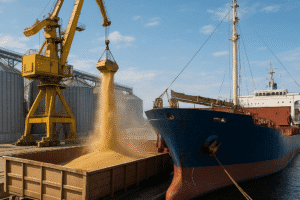
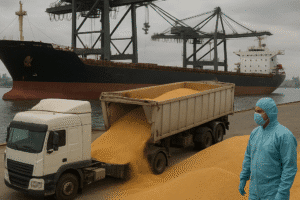
Investments in port infrastructure and inland terminals are rising, particularly in regions seeking to emerge as competitive grain hubs. Enhanced grain handling capacity, modern storage facilities, and integrated rail links attract exporters keen to capitalize on efficient corridors. As policy environments evolve, stakeholders must stay alert to regulatory revisions, subsidy realignments, and sanitary and phytosanitary (SPS) standard updates that could trigger market recalibrations.
- Expansion of digital customs and cross-border data exchange
- Shifts in export duty regimes to stabilize domestic prices
- Development of transcontinental rail corridors
- Emergence of bulk carrier alliances for optimized shipping
- Regional efforts to fortify grain storage networks
Future Outlook and Strategic Imperatives
Looking ahead, the grain market in 2025 will be defined by its capacity to integrate cutting-edge innovation with robust risk management and a firm commitment to environmental and social priorities. Embracing digital transformation, fostering cross-sector collaboration, and aligning incentives for sustainable practices are essential for ensuring that the world’s growing population can access affordable, nutritious grain supplies. By anticipating evolving demand patterns and proactively adapting to climatic and policy shifts, the grain industry can build resilience into every layer of the supply chain, securing both profitability and planetary well-being.