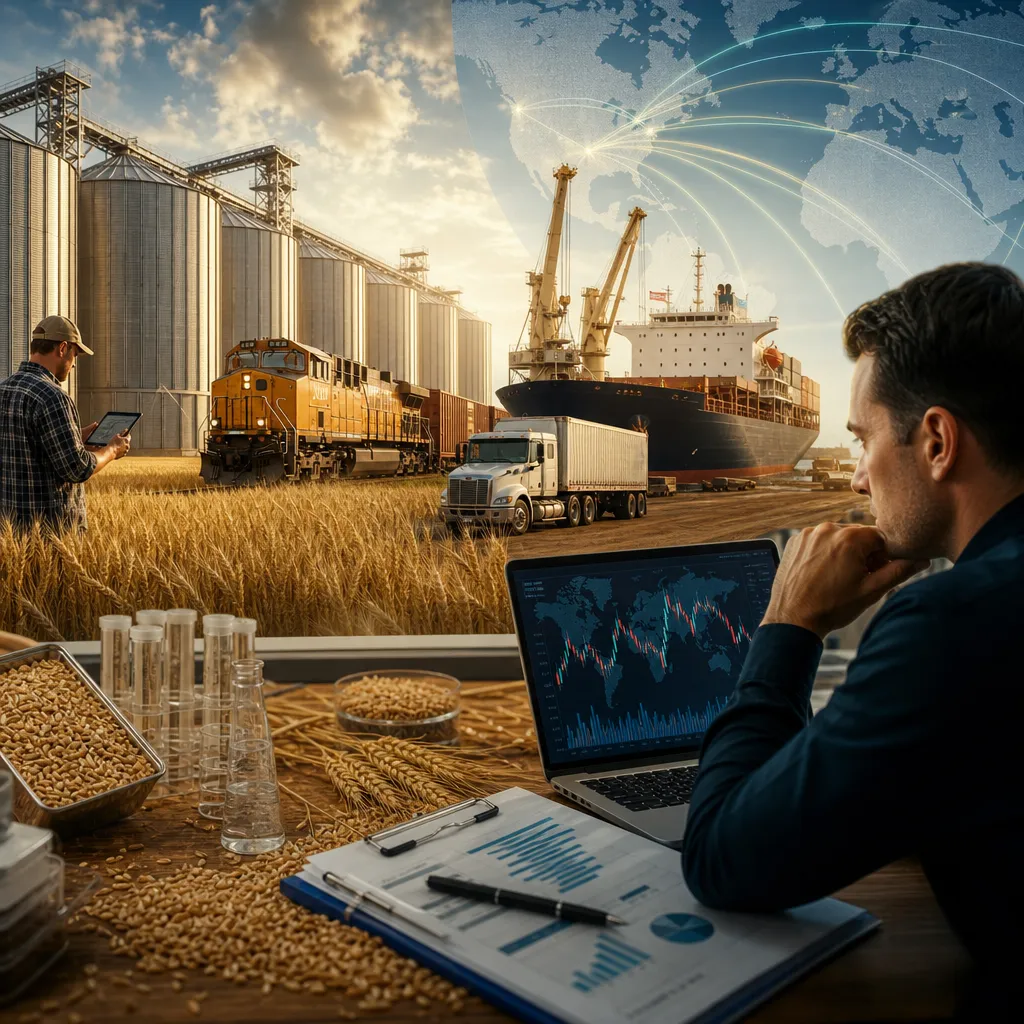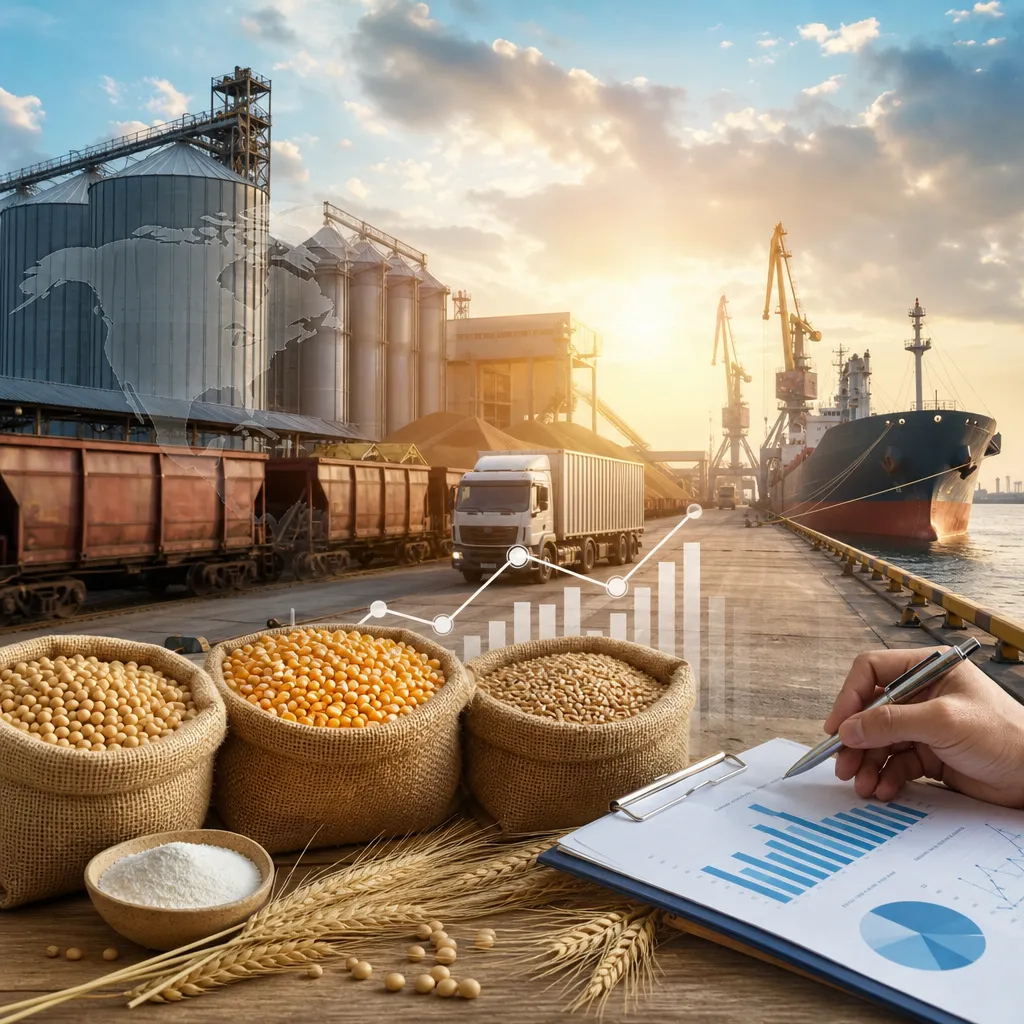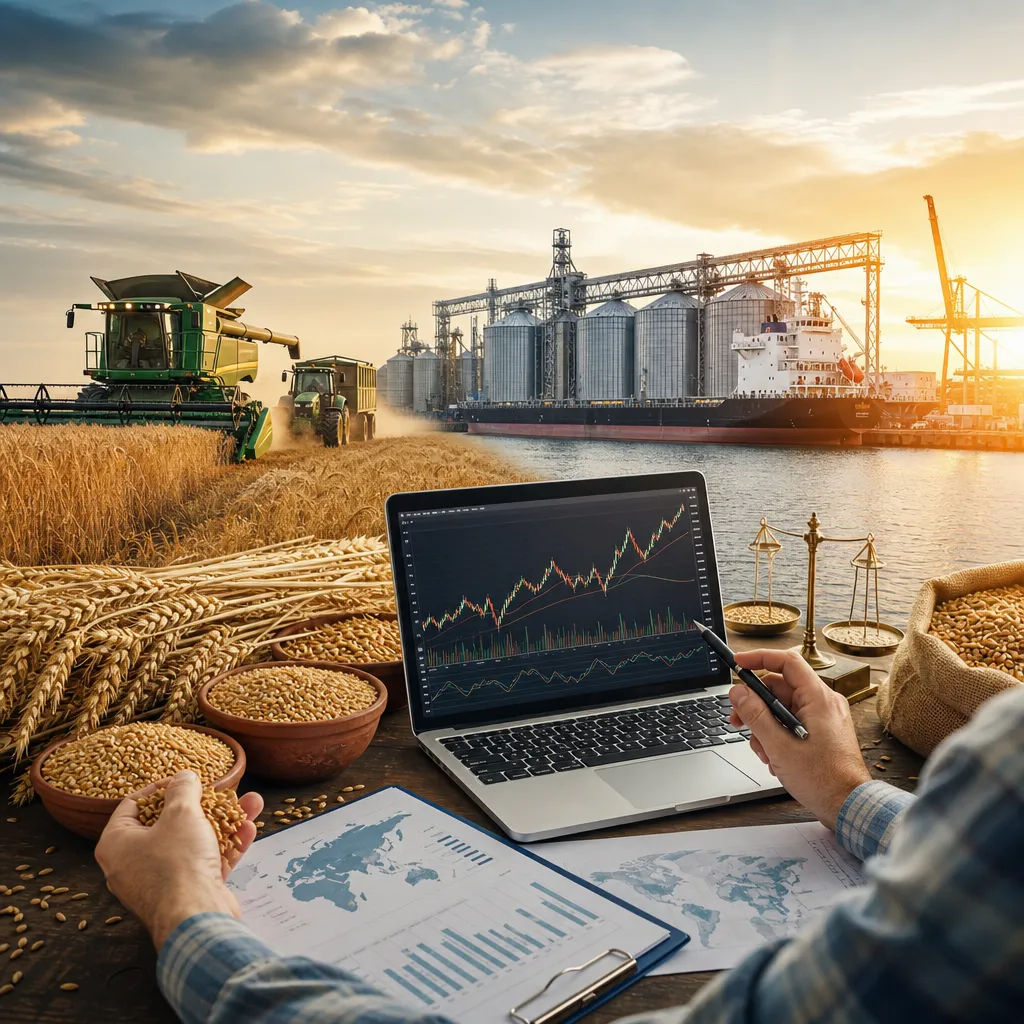
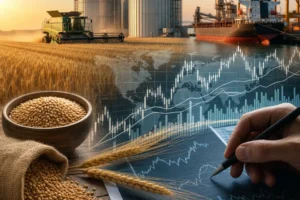
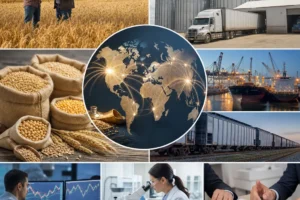
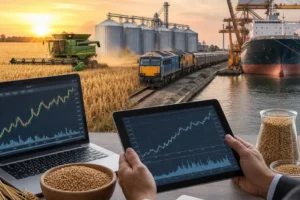
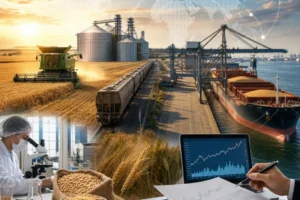
The top grain exporting countries are not just the biggest growers. They are the countries that consistently produce exportable surpluses, connect farms to ports and rail networks, meet buyer quality requirements, and compete in global pricing against major benchmarks in wheat, corn, soybeans, rice, barley, canola, and other grains and oilseeds. In practice, the leaders change by crop and by season, because weather, policy, currency moves, and logistics can shift trade flows quickly. For anyone buying, selling, hedging, or analyzing grain, the key is to know which countries dominate each commodity, where their prices are discovered, and how grain moves from inland storage to export channels.
In broad terms, the United States, Brazil, Argentina, Russia, Ukraine, Canada, Australia, the European Union, and India are among the most important grain and oilseed exporters, although their role differs sharply by crop. Russia is central in wheat, Brazil and the United States in soybeans and corn, Canada in canola and wheat, Australia in wheat and barley, and India in rice. These countries influence global cash trade, futures markets, freight spreads, and import buying programs.
Which countries lead global grain exports?
There is no single ranking that applies to all grains. “Grain” in everyday market language may include cereals such as wheat, corn, barley, oats, rye, sorghum, and rice, and many market participants also follow oilseeds such as soybeans, rapeseed, canola, and sunflower seed because they compete for acreage, freight, crushing capacity, and feed demand.
The most important exporting countries usually include:
- United States for corn, soybeans, wheat, sorghum, and some rice.
- Brazil for soybeans, corn, and growing wheat influence in some years.
- Argentina for corn, soybean products, wheat, and barley.
- Russia for wheat and barley.
- Ukraine for corn, wheat, barley, and sunflower-related exports when logistics permit.
- Canada for wheat, canola, barley, oats, and pulses.
- Australia for wheat, barley, and canola.
- European Union for wheat, barley, and some corn trade depending on harvest and internal demand.
- India for rice, with exports shaped heavily by policy decisions.
- Thailand, Vietnam, and Pakistan for rice.
Leadership is crop-specific. A country may be a top exporter in one year and a more modest shipper the next if drought, export controls, conflict, currency changes, or domestic policy intervene.
| Commodity | Key exporting countries | Main market relevance |
|---|---|---|
| Wheat | Russia, European Union, Canada, United States, Australia, Ukraine, Argentina | Food security, flour milling, feed substitution, benchmark export competition |
| Corn | United States, Brazil, Argentina, Ukraine | Feed demand, ethanol, global freight and seasonal supply shifts |
| Soybeans | Brazil, United States, Argentina, Paraguay, Canada | Crushing, vegetable oil, meal trade, China import demand |
| Rice | India, Thailand, Vietnam, Pakistan, United States | Food staple trade, government policy sensitivity, quality segmentation |
| Barley | Australia, European Union, Russia, Ukraine, Canada, Argentina | Feed and malting demand, substitution with corn and wheat |
| Canola/Rapeseed | Canada, Australia, European Union, Ukraine | Oilseed crushing, biodiesel demand, vegetable oil market linkage |
How grain exports actually work
Exporting grain is a physical supply-chain business first and a price-discovery business second. Grain is grown on farms, delivered to local elevators, cooperatives, private merchants, or processors, then assembled into larger export lots that can move by truck, rail, barge, or vessel to port terminals.
A typical export flow looks like this:
- Farmers harvest and store grain on-farm or deliver to an elevator.
- An elevator, cooperative, merchant, or processor buys grain on a cash basis, forward contract, or later-pricing arrangement depending on local practice.
- The buyer aggregates sufficient volume and manages quality specifications such as moisture, protein, test weight, foreign material, or dockage.
- Grain moves inland by rail, truck, or barge to a domestic processor or export terminal.
- An exporter sells to an overseas buyer such as a mill, feed compounder, state buyer, or trading company.
- The final trade is often written under standard commercial terms covering quality, shipment window, loading port, payment terms, and delivery basis.
In many countries, exporters are large grain merchants, cooperatives, integrated processors, or state-linked trading organizations. They may use futures and OTC hedging tools to manage flat price risk while negotiating basis, freight, and quality premiums in the physical market.
Where prices are discovered: futures, cash bids, and export values
Anyone studying top exporting countries must separate three different price layers.
- Futures prices are exchange-traded benchmark prices. They are used for hedging and financial trading, but they are not the exact physical price paid everywhere.
- Cash prices or local bids are what elevators, cooperatives, crushers, feed mills, or merchants offer at a specific location for a specific quality and delivery period.
- Export prices reflect cargo values at ports, often adjusted for freight, quality, load timing, and destination.
For wheat, corn, and soybeans, benchmark futures are commonly watched on CME Group markets. For canola, market participants often follow ICE Futures Canada. In Europe, milling wheat and rapeseed participants often follow Euronext futures. These exchanges provide benchmark contracts, settlement data, and contract specifications.
But a farmer in Kansas, Saskatchewan, Mato Grosso, or New South Wales is not automatically paid the futures price. The local bid depends on basis, transport cost, storage demand, quality, and local competition among buyers. Basis is the difference between a local cash bid and a futures reference. Export countries with congested logistics or weak local demand can show wide basis swings even when futures are stable.
To check prices in practice:
- Farmers often use local elevator bid sheets, cooperative websites, merchant bid apps, or direct communication with grain buyers.
- Traders and analysts monitor exchange data, export offers, broker indications, shipping markets, and official report releases.
- Importers compare offers by origin, usually on a delivered port basis or under recognized trade terms.
What makes a country a major grain exporter?
Export leadership is built on more than acreage. The strongest exporting countries usually combine large production with repeatable logistics and trade infrastructure.
| Factor | Why it matters | Practical impact |
|---|---|---|
| Exportable surplus | Domestic use must be lower than production over time | Creates regular availability for international buyers |
| Port and rail logistics | Grain must move efficiently from interior regions to vessel loading points | Affects basis, freight spreads, and shipment reliability |
| Quality consistency | Importers buy to specific milling, feed, or crushing needs | Supports premiums and repeat business |
| Competitive currency | Exchange rates affect export offers in world markets | Can improve or reduce price competitiveness |
| Trade policy | Taxes, quotas, bans, and inspections can alter sales flow | Changes buyer confidence and nearby availability |
| Storage capacity | Allows grain to be held and shipped across the marketing year | Reduces harvest pressure and supports export timing |
Weather remains the biggest variable. Drought in a large wheat exporter, excessive rain during soybean harvest, or low river levels affecting barge traffic can all shift global trade flows fast. That is why crop reports, port lineups, vessel loadings, and weather models are watched as closely as futures charts.
Where to find reliable export and market data
The best public sources depend on what the reader needs.
USDA is one of the most widely used sources for global grain analysis. Its World Agricultural Supply and Demand Estimates, often called WASDE, provides monthly global balance sheets for major crops. USDA also publishes Crop Progress, Grain Transportation, and Export Sales reports that help users assess U.S. supply, logistics, and demand. These reports are widely used by farmers, merchandisers, brokers, importers, and analysts worldwide.
FAO is useful for broad international context, food balance analysis, and global market monitoring, especially for grains tied closely to food security such as rice and wheat.
CME Group provides contract specifications and futures market data for benchmark U.S. grain contracts. Traders use it to understand lot size, delivery terms, trading months, and settlement conventions.
CFTC publishes Commitments of Traders reports, which show how different trader categories are positioned in regulated U.S. futures markets. This does not tell you physical export demand directly, but it helps interpret speculative positioning and hedging activity.
Other useful official sources include national agriculture ministries, customs and statistical agencies, and exchange or port authorities where available. In practice, commercial traders often combine public data with paid market intelligence, freight reports, satellite weather analytics, and private crop surveys.
Top exporters by commodity: how buyers and sellers use this information
Knowing the main exporters matters because each origin has its own seasonality, quality profile, logistics pattern, and pricing relationship to futures benchmarks.
Wheat
Global wheat buyers often compare Black Sea, North American, European, and Australian origin. Protein, milling quality, and freight can matter as much as headline price. Exporters, mills, and traders follow crop size, government policy, and port capacity closely. Wheat prices may reference CME wheat contracts or Euronext milling wheat, but export cargoes are negotiated physically and can differ materially from futures values.
Corn
The United States and Brazil are especially important, with Argentina and Ukraine also influential. Seasonal competition is strong. Importers often switch origin based on harvest timing, freight spreads, and quality needs. Feed users also compare corn against wheat, barley, and sorghum. U.S. corn futures at CME are a central benchmark, but local export offers depend on basis and logistics.
Soybeans
Brazil and the United States dominate global whole soybean trade, while Argentina is especially important in soybean meal and oil. China’s import behavior can heavily influence global soybean pricing and spreads between South American and U.S. origin. Buyers watch port premiums, crushing margins, weather in Brazil and Argentina, and river or trucking logistics.
Rice
Rice trade is more segmented by quality, grain length, destination preference, and policy than corn or soybeans. Government restrictions can change export availability quickly. Physical rice trade is often less futures-centered and more dependent on negotiated export offers, quality standards, and destination-specific demand.
How exporters, farmers, and traders hedge price risk
Top exporting countries matter in hedging because they influence the global benchmark markets that many participants use.
Hedging usually takes place through regulated futures exchanges or, in some commercial settings, through OTC contracts with merchants or banks. A futures hedge requires a brokerage account, margin funding, and understanding of contract size, expiry, and delivery terms. Most hedgers offset positions before delivery, using futures as a financial risk tool rather than making or taking exchange delivery.
Common users include:
- Farmers hedging expected production while selling later in the cash market.
- Elevators and cooperatives hedging inventory and forward purchase commitments.
- Processors and feed mills protecting input costs.
- Exporters and merchants managing flat price exposure while negotiating basis and freight.
The main risk is basis risk. A futures hedge can reduce exposure to broad market moves, but it does not remove local cash-market differences caused by quality, transport bottlenecks, currency, or regional supply-demand imbalance. Margin calls are another practical issue, especially during volatile weather or policy-driven moves.
Physical trade versus online trading
This distinction is essential. Buying a grain futures contract online does not mean buying a shipload of grain. Futures trading is financial exposure to a standardized contract on an exchange. Physical trade is the purchase or sale of actual grain under commercial terms between real market participants.
Physical grain is normally bought and sold through:
- grain elevators and cooperatives,
- local or multinational grain merchants,
- mills and feed manufacturers,
- crushers and processors,
- export houses and importers,
- brokers arranging OTC physical trades.
Key physical trade details include delivery point, loading terms, moisture, protein, foreign material limits, inspection rights, freight responsibility, payment terms, and counterparty risk. In export trade, contract wording and documentation matter as much as price.
Online market data can help compare origins, but actual physical deals depend on negotiation, available logistics, and cargo quality. A trader can see benchmark futures on exchange websites or through a broker platform, but a real export booking requires a commercial counterparty and a deliverable supply chain.
Practical ways to analyze the top grain exporting countries
A practical export-country analysis usually starts with four questions:
- What is the crop outlook? Check acreage, weather, yield prospects, and production reports.
- What is the exportable surplus? Compare production against domestic feed, food, crush, and industrial demand.
- Can the country ship efficiently? Watch rail movement, river conditions, port congestion, labor issues, and vessel lineups.
- Is the origin price-competitive? Compare currency moves, export basis, freight, and destination demand.
For farmers and merchandisers, this helps with storage and sales timing. For buyers, it helps origin selection. For futures traders, it provides context for whether a rally or selloff reflects a real change in export competition or only short-term fund positioning.
Which country is the biggest grain exporter?
There is no single answer for all grains. Brazil is dominant in soybeans, Russia is a major wheat exporter, and the United States remains one of the top exporters across corn, soybeans, wheat, and sorghum. The leading country depends on the commodity and marketing year.
Where can I check grain export prices?
Benchmark futures can be checked on exchange websites such as CME Group and, for some crops, Euronext or ICE-related markets. Actual export values are usually assessed through merchants, brokers, market reporting services, or trade publications. Local cash bids are typically posted by elevators, cooperatives, processors, and grain buyers.
Are futures prices the same as export prices?
No. Futures are standardized exchange prices used for hedging and price discovery. Export prices are physical cargo values that include basis, quality, shipment timing, and freight considerations. A local cash bid may differ substantially from both.
How do farmers in exporting countries usually sell grain?
They commonly sell to elevators, cooperatives, merchants, feed mills, crushers, or processors. Sales may be spot cash, forward contracts, hedge-to-arrive style contracts where available, or storage followed by later pricing. Terms depend on local market structure.
Where does physical grain trading take place?
Physical trading usually takes place through commercial contracts between farmers, elevators, merchants, processors, exporters, and importers. It may be negotiated by phone, email, trading desk, broker, or merchant platform, but it is not the same as clicking a futures order on an exchange screen.
What reports matter most for export analysis?
USDA WASDE, USDA Export Sales, USDA Crop Progress, and official national crop reports are among the most used. Traders also follow customs data, port shipment reports, and exchange data. For futures positioning, CFTC Commitments of Traders is relevant.
What is the biggest risk when comparing exporting countries?
Assuming that production alone determines exports. In reality, logistics, policy, currency, quality, and domestic demand can be just as important. A large harvest does not always translate into smooth export flow.
Sources
- USDA Foreign Agricultural Service
- CME Group
- Food and Agriculture Organization of the United Nations