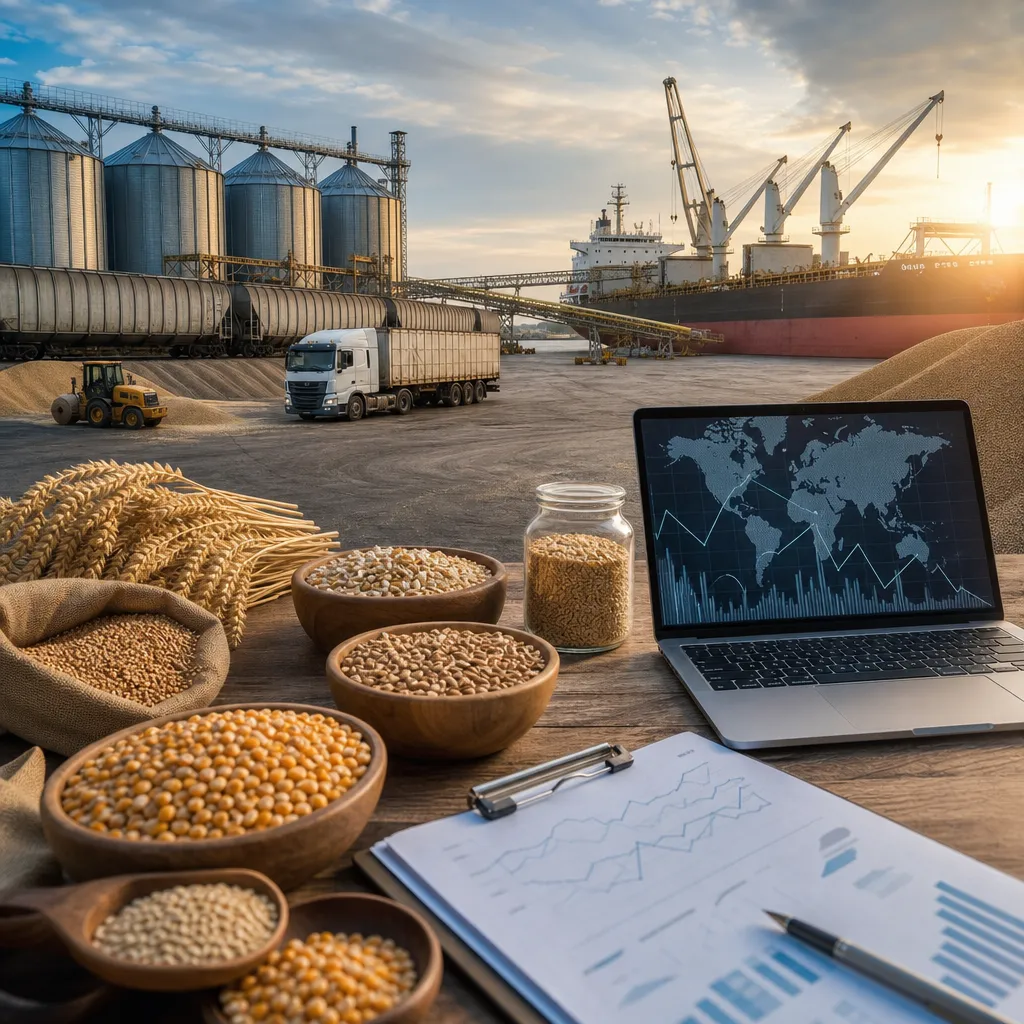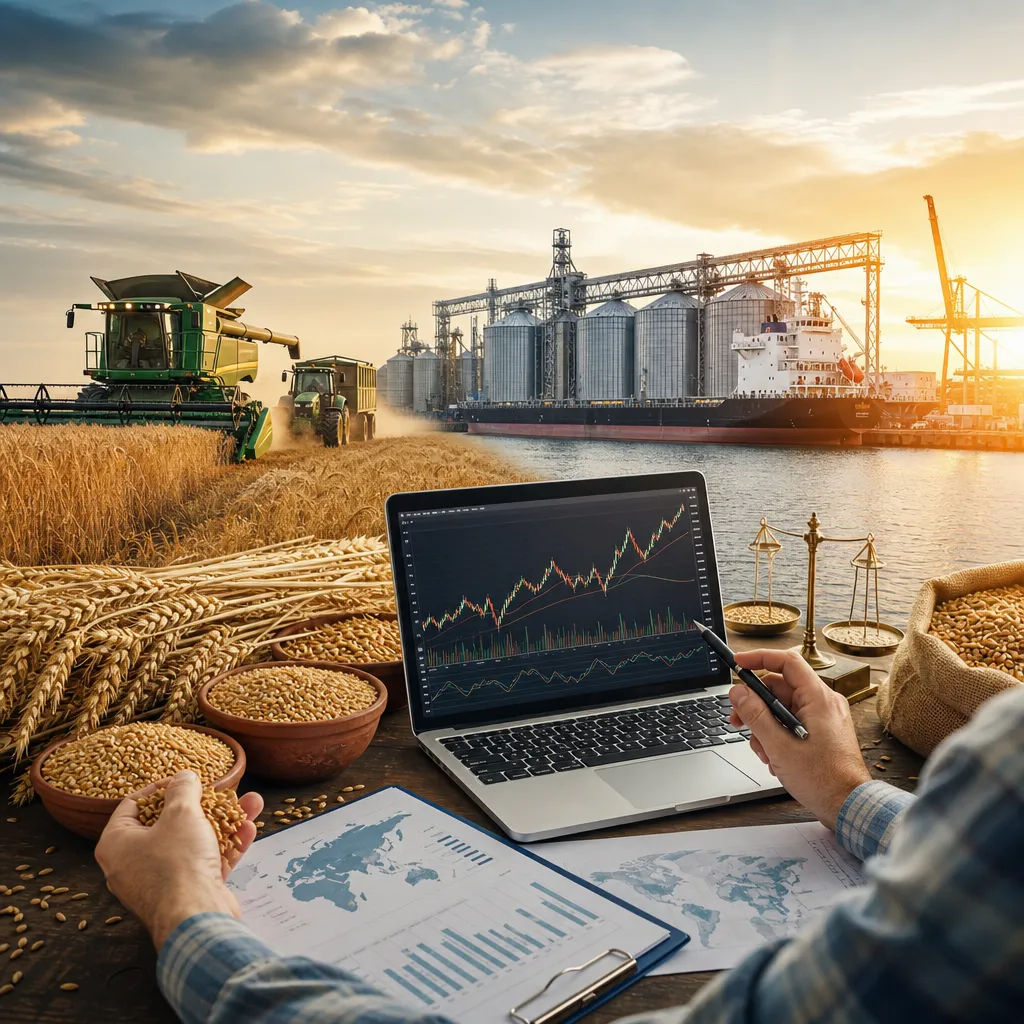


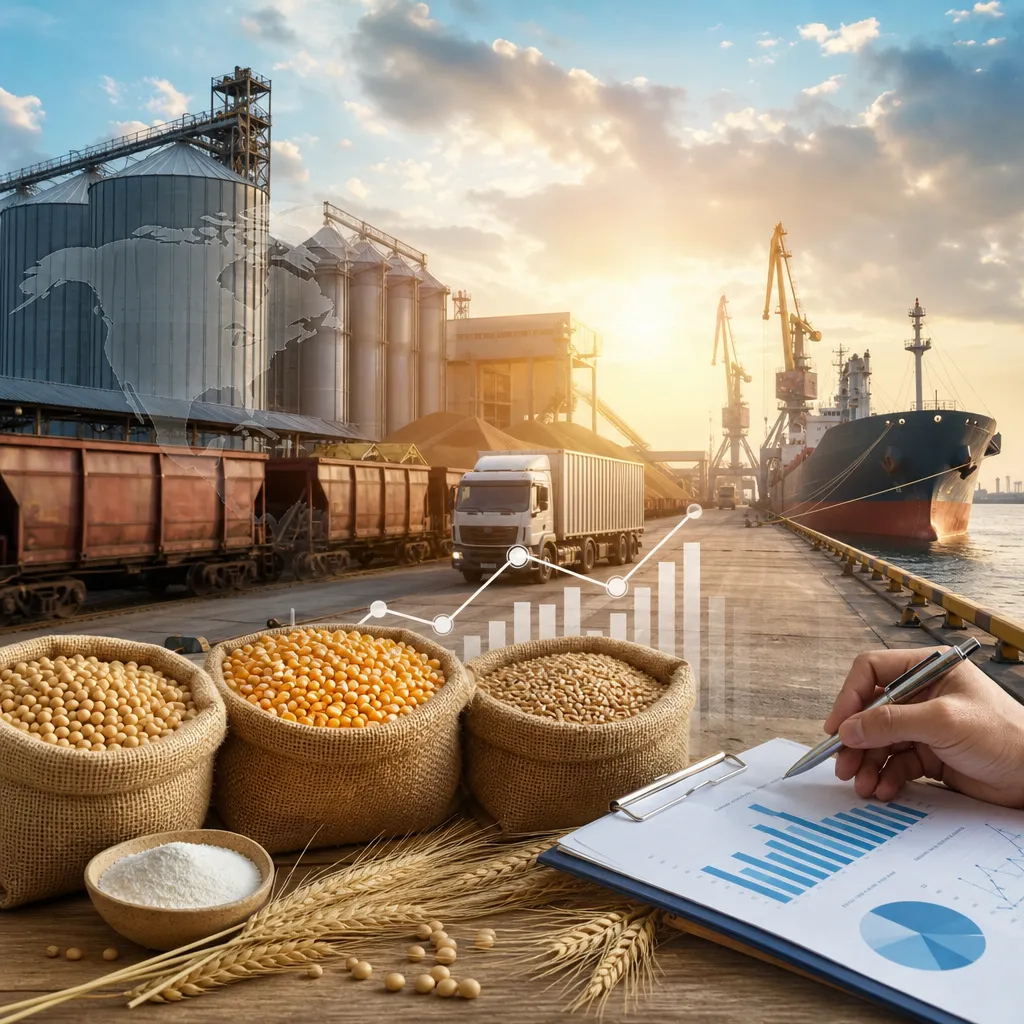
Grain export trends are best understood as a combination of supply, demand, logistics, policy, and price relationships between exporting and importing regions. In practice, exports do not move simply because a country harvested a large crop; grain must also be competitively priced, physically available at the right quality, and capable of moving through elevators, rail, barge, truck, and port systems without major disruption. For farmers, merchants, processors, and analysts, the key is to track both the paper market and the physical market, because futures prices can rise while exports slow, or export demand can improve without an equal move in local cash bids. The most useful approach is to follow official export data, local basis and freight conditions, and the global balance sheet at the same time.
What grain export trends actually measure
A grain export trend is the direction and pace of outbound movement of crops such as wheat, corn, soybeans, rice, barley, sorghum, canola, rapeseed, oats, rye, and sunflower seed from one country or region to another. It includes not only total export volume, but also destination shifts, seasonal timing, competitiveness versus rival origins, and the margin between international benchmark prices and local farm-level cash markets.
Export trends are usually discussed in several layers:
- National export pace: how much grain has been shipped or sold compared with last year or the seasonal average.
- Crop-specific competitiveness: whether one origin is cheaper or more available than another.
- Logistics flow: whether railways, inland elevators, ports, barges, or vessels can move grain efficiently.
- Commercial behavior: whether exporters, merchants, feed buyers, and importers are booking business aggressively or waiting.
- Price transmission: whether stronger exports improve local cash prices, basis, and spreads.
These trends matter because exports often determine whether surplus grain clears the market. In major exporting countries, export demand can be a decisive factor in local bids, storage returns, and hedge effectiveness.
How grain export flows work in the real market
Physical grain exports move through a chain of participants rather than a single marketplace. A farmer normally sells to a local elevator, cooperative, merchant, processor, or feed buyer. That grain may then be assembled, dried, stored, blended, inspected, and shipped inland to a rail terminal, river terminal, crush plant, flour mill, feed mill, or export terminal. Exporters then sell to overseas buyers such as importers, state purchasing agencies, millers, feed manufacturers, or trading houses.
The practical flow often looks like this:
- Grain is produced on farm and either stored on farm or delivered at harvest.
- A local buyer posts a cash bid, usually based on a futures reference plus or minus local basis.
- The grain is delivered to an elevator, cooperative, processor, or warehouse under specified quality terms.
- The buyer aggregates enough volume to load railcars, barges, containers, or vessels.
- Export merchants negotiate FOB, CIF, or other shipment terms with foreign buyers, depending on the trade route and contract structure.
- Inspection, weighing, phytosanitary documentation, and shipping arrangements are completed before export loading.
Where this occurs physically depends on the crop and country. Wheat may move through country elevators to export terminals at deep-water ports. Corn and soybeans may move by truck to elevator, then by rail or barge to port. Canola and rapeseed may be sold for crushing domestically or exported depending on relative margins. Rice often requires stricter quality and milling specifications than bulk feed grains.
Export trends therefore depend not only on production, but also on storage capacity, handling infrastructure, certification, vessel lineups, inland freight, and port efficiency.
What drives grain export trends
The biggest export shifts usually come from changes in relative competitiveness. A country can have ample supplies and still lose business if another origin is cheaper once freight and quality are included. Currency moves are especially important because grain is often priced in U.S. dollars internationally, while producers and local handlers operate in domestic currency.
| Driver | Effect on exports | How market participants check it |
|---|---|---|
| Crop size and yield | Larger harvests can create exportable surplus; short crops can restrict sales | USDA balance sheets, national crop agencies, field reports, satellite and weather analysis |
| Currency moves | A weaker local currency can improve export competitiveness | FX markets, central bank information, exporter pricing |
| Freight and logistics | High rail, barge, truck, or ocean freight can reduce export margins | Cash basis, terminal bids, shipping market commentary, port lineups |
| Government policy | Export taxes, quotas, sanctions, tenders, and quality rules can redirect trade | Official government notices, customs releases, trade ministry updates |
| Importer demand | Feed demand, milling demand, biofuel demand, and stock rebuilding change buying pace | Import tenders, customs trade data, USDA Export Sales, market intelligence |
| Quality and grade | Protein, moisture, test weight, damage, oil content, and contamination can expand or limit market access | Inspection certificates, elevator grading, official standards, buyer specifications |
Weather remains one of the most important variables because it affects both exporting and importing countries. Drought in a major exporter can tighten supply, while drought in an importing region can increase buying demand. Weather can also affect river levels, harvest timing, grain quality, and shipping efficiency.
Where to find and check grain export data
The best export trend analysis starts with official reports rather than social media commentary or delayed summaries. Different sources answer different questions, so users usually combine several datasets.
USDA is one of the most widely used public sources. Its relevant reports include:
- WASDE: global and U.S. supply and demand estimates for major grains and oilseeds.
- Export Sales: weekly U.S. export commitments and shipments for crops such as corn, soybeans, wheat, and others.
- Crop Progress: planting, condition, and harvest progress, useful for estimating supply and timing.
- Grain Transportation Report: logistics context, including freight and movement conditions.
FAO is useful for broad global food and grain market context, especially for international users who want trade and food security perspectives rather than only one-country data.
National agriculture ministries and statistical agencies provide official production, trade, customs, and shipment data in many exporting and importing countries. These sources are often essential for regional detail, port-by-port activity, or crop-specific inspection data.
Customs and trade databases are used by analysts to confirm actual movement by destination and product code. These can be more detailed than high-level market commentary, although they may be published with a lag.
Exchange websites such as CME Group provide futures prices and contract specifications. These are important for benchmarking market expectations and hedging, but they do not by themselves show whether physical export business has been concluded.
Futures prices versus physical export markets
A common mistake is to assume that a futures rally automatically means export demand is strong or that a farmer’s local bid should rise by the same amount. Futures markets and physical export markets are connected, but they are not the same thing.
Futures trade on regulated exchanges through brokerage accounts. They are standardized contracts used for hedging and speculation. Physical grain exports are negotiated transactions involving specific quality, shipment period, delivery point, inspection terms, and freight assumptions.
| Market type | What it shows | Where it exists | Main limitation |
|---|---|---|---|
| Futures market | Benchmark price for a standardized contract month | Regulated exchanges such as CME Group, accessed through futures brokers | Does not equal a local cash bid or an export sale price |
| Local cash market | Actual bid at a delivery location, usually futures plus or minus basis | Elevators, cooperatives, processors, merchants, feed mills | Highly location-specific and affected by freight, storage, and quality |
| Export market | Price and demand for shipment to overseas buyers | Trading houses, exporters, port terminals, tenders, OTC trade negotiations | Terms vary by shipment window, quality, Incoterms, and destination |
| Broker platform | Access to trade futures or options electronically | Online through a regulated brokerage relationship | It does not itself buy or store physical grain for farm delivery |
For hedging export exposure, merchants and some farmers may use futures or options to manage flat-price risk while still facing basis risk. Basis is the difference between the local cash price and the futures price. Export trends often influence basis at river terminals, port locations, and interior elevators.
Where farmers, traders, and buyers monitor export trends in practice
Farmers usually start with local bids from elevators, cooperatives, processors, or merchants. These buyers often publish cash bids by location and delivery period. This is the most practical place to see whether export demand is improving local market conditions.
Commercial traders and analysts use a broader set of tools:
- Exchange data: futures prices, volume, open interest, and contract specs from exchanges such as CME Group.
- Government reports: export sales, shipment data, crop reports, and balance sheets.
- CFTC data: Commitments of Traders reports to gauge speculative and commercial positioning in U.S. futures markets.
- Merchant and elevator bid sheets: local basis and nearby demand signals.
- Port and freight intelligence: vessel loading pace, rail performance, barge movement, and congestion.
- Customs data: destination-level import and export patterns, usually with some reporting lag.
If a reader wants to trade export-related price moves financially, this is normally done through a futures broker offering access to regulated grain and oilseed contracts. If the reader wants to buy or sell physical grain, that is normally done through cash contracts with elevators, cooperatives, processors, merchants, or exporters, not through a retail futures platform.
How export trends affect farm economics, storage, and selling decisions
Export trends matter most when they influence basis, carry, and cash-flow timing. A stronger export program can tighten nearby supplies at terminals and improve basis in connected inland areas. A weaker export pace can pressure basis, increase storage burdens, and widen the gap between futures and local bids.
Farmers and commercial grain holders typically evaluate three connected decisions:
- Sell now or store: If export demand is weak and storage is available, some may wait for basis improvement. This only works if storage losses, financing cost, shrink, and quality risk do not exceed potential gain.
- Cash sale or hedge first: Some sellers use futures or options to manage price risk while delaying basis decisions. This requires understanding margin calls and basis exposure.
- Nearby movement or deferred contract: In some markets, buyers may offer deferred delivery contracts if they expect better export execution later in the season.
Storage decisions are especially sensitive to grain quality. Wheat protein, corn moisture, soybean damage, canola oil content, mycotoxin risk, and insect activity can all reduce marketability. Grain intended for export often faces stricter tolerance limits than domestic feed use. Before storing in expectation of stronger exports, sellers should check aeration, moisture, spoilage risk, and whether the intended buyer has grade or residue requirements.
Key risks and limitations when reading export trends
Export numbers can be misread if the user does not know what is being measured. Sales, inspections, shipments, customs clearances, and vessel loadings are related but not identical. A large sales week does not guarantee immediate physical movement, and a short-term shipment slowdown may reflect port timing rather than lost demand.
Main risks include:
- Overreliance on futures: futures may react to macro factors that do not improve local cash markets.
- Ignoring logistics: strong demand on paper may not convert into exports if river levels, rail service, or port capacity fail.
- Misunderstanding basis: even bullish export news can be offset by weak local basis or high freight.
- Policy shocks: export restrictions, tariffs, inspections, or sanctions can quickly redirect trade flows.
- Counterparty and contract risk: in physical trade, payment terms, quality claims, and delivery conditions matter as much as headline prices.
For international trade, users should also distinguish between FOB prices, which refer to grain loaded at the port of export, and CIF or other destination-based terms that include freight or insurance assumptions. These are not interchangeable with inland farm bids.
How to analyze grain export trends efficiently
A practical workflow is to combine one benchmark price source, one official export source, one crop-balance source, and local physical market information.
- Check benchmark futures for wheat, corn, soybeans, or other relevant crops on an exchange data source.
- Compare that with local elevator, cooperative, processor, or merchant bids to see basis behavior.
- Read official export sales or shipment data to assess pace versus seasonal expectations.
- Review the latest supply and demand report to see whether exports are tightening ending stocks or merely offsetting slower domestic use.
- Monitor freight and logistics conditions, especially during harvest or peak shipping seasons.
- Confirm whether quality, grade, protein, oil content, or moisture conditions support exportability.
This approach works better than relying on a single number because export trends are rarely pure price stories. They are usually margin-and-logistics stories that only become visible when futures, basis, freight, and official trade data are viewed together.
Where can I check current grain export-related prices?
Use exchange websites for futures benchmarks and local elevator, cooperative, processor, or merchant bid sheets for actual cash bids. For export relevance, compare those cash bids with official export reports and port-region basis levels. A futures quote alone is not the farm gate price.
Where does physical grain export trading actually happen?
Usually through merchants, exporters, grain houses, cooperatives, processors, and importers negotiating OTC physical contracts. The grain then moves through warehouses, inland terminals, rail or barge systems, and export ports. This is separate from retail online futures trading.
Can a farmer sell directly into the export market?
Sometimes, but most farmers sell first to a local buyer such as an elevator, cooperative, or processor. Direct export sales usually require larger volume, documented quality, logistics capability, contract expertise, and a qualified buyer willing to take delivery on those terms.
What is the difference between export sales and export shipments?
Export sales are commitments booked with buyers, while shipments are physical movement already executed. Sales can be large before the grain actually loads, and shipment timing depends on logistics, contract windows, and port operations.
How do export trends affect basis?
When exporters need grain, bids at terminals and connected interior locations may strengthen relative to futures. If export demand slows or logistics back up, basis can weaken even if futures remain firm.
Which reports are most useful for following grain export trends?
USDA Export Sales, USDA WASDE, USDA Grain Transportation Report, national crop and customs statistics, and exchange benchmark pricing are among the most practical starting points. For positioning in U.S. futures markets, CFTC Commitments of Traders can add context.
Is trading grain futures the same as exporting grain?
No. Futures trading is financial trading in standardized exchange contracts and requires a brokerage account, margin, and risk management. Exporting grain is a physical commercial activity involving quality specs, freight, shipment timing, documentation, and counterparties.
Why can exports improve while local farm prices do not?
Because local prices also depend on harvest pressure, storage availability, local oversupply, freight costs, basis, and quality discounts. A country may export well overall while some inland areas still face weak local cash markets.
Sources
- USDA Foreign Agricultural Service
- USDA World Agricultural Supply and Demand Estimates
- CME Group