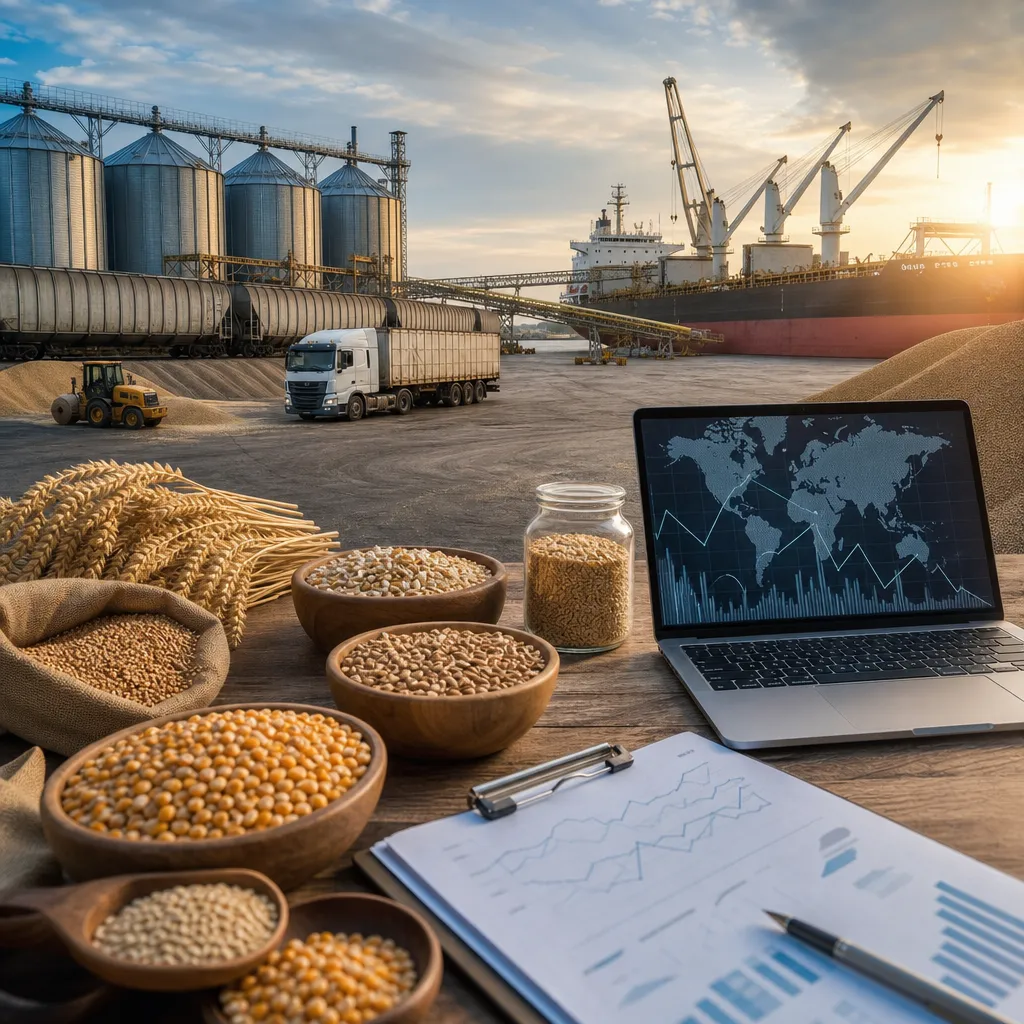








The United States wheat market is one of the world’s most important grain trading systems, linking farm production across the Plains, Midwest, and Pacific Northwest with domestic mills, feed users, and export buyers around the world. In practice, “US wheat trading” can mean two different things: trading futures and options on regulated exchanges, or buying and selling physical wheat in local cash markets, rail markets, river terminals, and export channels. Understanding the difference between these markets is essential, because a Chicago futures price is not the same thing as a country elevator cash bid in Kansas or a Pacific Northwest export bid. A practical trading guide therefore starts with geography, benchmark contracts, basis, logistics, and the institutions that publish reliable market information.
What the US wheat market is and where it operates
The US wheat market operates across a large and regionally specialized production system. Wheat is grown in many states, but the market is usually discussed by class rather than by a single national price. The main classes include Hard Red Winter, Soft Red Winter, Hard Red Spring, and White wheat. Each class serves different end uses such as bread flour, all-purpose flour, pastries, noodles, or export blending.
Geographically, the key producing and trading regions include:
- Hard Red Winter: Kansas, Oklahoma, Texas, Colorado, and nearby Plains states.
- Soft Red Winter: Midwest and eastern states, often moving through river and Great Lakes systems.
- Hard Red Spring: North Dakota, Minnesota, Montana, and surrounding northern areas.
- White wheat: Pacific Northwest, especially Washington, Oregon, and Idaho.
The United States uses US dollars as the trading currency. Futures are commonly quoted in cents per bushel, while physical grain may be priced in dollars per bushel or dollars per short ton or metric ton, depending on the transaction and buyer. Export business is often discussed in FOB terms at Gulf or Pacific Northwest ports, usually in dollars per metric ton.
The market matters because the US is both a major producer and a major wheat exporter, while also having a large domestic milling, food, and feed sector. This creates several overlapping price centers rather than one single national wheat price.
Main US wheat benchmarks and exchanges
US wheat price discovery is centered on regulated futures markets. The most widely referenced wheat-related benchmarks are:
- CBOT Soft Red Winter wheat, traded through CME Group.
- Kansas City Hard Red Winter wheat, also within CME Group’s US wheat complex.
- Minneapolis Hard Red Spring wheat, traded on Minneapolis Grain Exchange markets within the broader exchange structure.
These futures contracts are not identical products. They reflect different wheat classes, delivery systems, protein expectations, and regional supply conditions. That is why a milling company in the Plains may watch Kansas City wheat futures more closely than CBOT wheat, while a spring wheat merchant in the northern Plains may focus on Minneapolis spring wheat futures.
Futures markets are used by:
- Farmers and grain elevators managing downside price risk
- Flour millers and commercial users managing input costs
- Merchants and exporters hedging physical positions
- Funds and speculators seeking financial exposure
- Brokers and spread traders managing relative value between wheat classes, months, or regions
Access to these futures markets normally happens through a licensed futures broker or trading platform offering CME Group products. Most participants do not intend to make or take delivery through the exchange. They use futures primarily for hedging or speculation, then offset positions before expiry.
| Market | What it represents | Typical users | Usual quotation |
|---|---|---|---|
| CBOT wheat | Soft Red Winter wheat benchmark | Traders, elevators, millers, funds | US cents per bushel |
| Kansas City wheat | Hard Red Winter wheat benchmark | Plains hedgers, millers, merchants | US cents per bushel |
| Minneapolis wheat | Hard Red Spring wheat benchmark | Spring wheat trade, protein-focused buyers | US cents per bushel |
How US wheat prices are formed
US wheat prices are formed through a combination of benchmark futures and local cash basis. This is the core concept of practical wheat trading in the United States.
Futures price is the exchange-traded benchmark for a standardized contract month. It reflects broad expectations for supply, demand, macro sentiment, and speculative positioning.
Cash price is the physical bid or offer in a real location such as a country elevator, flour mill, feed mill, rail loader, river terminal, or export terminal.
Basis is the difference between the local cash price and the relevant futures contract. Basis can be positive or negative. It reflects local supply and demand, freight costs, storage pressure, protein and quality premiums or discounts, and buyer competition.
Delivered price usually means grain delivered to a specified destination, such as a mill or terminal, with transport included in the transaction structure.
FOB price means free on board at an export point, where the seller delivers the grain onto the vessel or at the designated export loading point under the contract terms.
CIF price includes cost, insurance, and freight to the destination and is usually more relevant to importers than to farm-level US pricing.
Local wheat prices can differ sharply from the futures screen because physical trade is location-specific. A wheat surplus in one Plains state may weaken basis there even if futures rise. Conversely, tight nearby mill demand or export loading demand can strengthen basis even when futures are flat or lower.
| Price type | Where it is quoted | What it means in practice |
|---|---|---|
| Futures price | Exchange market | Standardized benchmark, not a farm-gate bid |
| Cash bid | Elevator, cooperative, processor, merchant | Actual local buying price for physical wheat |
| Basis | Cash market relative to futures | Local premium or discount versus benchmark futures |
| Delivered price | Buyer contract | Price including movement to a named destination |
| FOB export price | Export terminal market | Export sale value at the loading point |
Where to check US wheat prices and market information
If you need current US wheat prices, the safest approach is to separate futures quotations from local physical bids.
For futures prices, market participants commonly monitor CME Group contract pages and broker trading platforms. These show benchmark futures for Chicago, Kansas City, and Minneapolis wheat markets. A brokerage platform may provide more detailed intraday quotes, spreads, and options data.
For local cash prices, farmers and grain buyers usually check:
- Country elevator and cooperative bid sheets
- Merchant and processor bid postings
- Flour mill or feed mill buying indications where available
- Regional grain market services and state extension commentary
For export and broader market intelligence, the most important official source is the US Department of Agriculture. In particular, traders follow USDA reports covering production, stocks, crop conditions, export sales, inspections, transportation, and world balance sheets. Export-focused participants also watch Gulf and Pacific Northwest market tone through trade channels and shipping market reports.
Useful official information sources include:
- CME Group for benchmark futures market information
- USDA Agricultural Marketing Service for cash market, transportation, and market reporting
- USDA Foreign Agricultural Service for export sales and global trade context
- USDA National Agricultural Statistics Service for crop progress, acreage, and production reporting
- USDA WASDE framework for overall US and world supply-demand balance interpretation
A practical point: if you compare a futures quote on a screen with a local elevator bid, the difference is not necessarily an error. It may simply reflect basis, freight, protein premium structure, moisture discounts, dockage, timing, and delivery terms.
How physical wheat is actually bought and sold in the United States
Physical wheat trading in the US usually starts with direct commercial relationships rather than an exchange screen. Farmers typically sell to local elevators, cooperatives, processors, feed manufacturers, or merchants. Larger volumes may then move by rail, truck, or barge into milling markets, domestic consumption areas, or export terminals.
Common physical transaction structures include:
- Spot cash sale: immediate or nearby delivery at the buyer’s posted bid.
- Forward contract: future delivery with a price fixed now.
- Basis contract: basis fixed now, futures price fixed later.
- Hedge-to-arrive style arrangements: futures component fixed first, local basis set later where offered by buyers.
- Storage and delayed pricing arrangements: grain delivered under terms that allow later pricing, subject to contract conditions.
Commercial wheat sales depend heavily on grade and quality. Factors may include test weight, moisture, foreign material, falling number, damage, and especially protein for some classes. Two truckloads of wheat in the same county may not receive the same net price if quality differs.
Before selling physical wheat, commercial participants typically confirm:
- Class of wheat and intended end use
- Quality specifications and discount schedule
- Delivery point and transport responsibility
- Pricing formula or fixed price
- Payment timing and title transfer terms
- Counterparty reliability and contract language
Export wheat is generally assembled by merchants and trading houses through inland origination networks, then shipped through major export corridors such as the Gulf, Pacific Northwest, and in some cases other coastal or Great Lakes outlets depending on destination and season. Inland basis often responds to demand from these channels.
How futures and options are used for hedging
Futures and options are financial tools, not the same as owning physical wheat. A producer can sell wheat to a local elevator while separately using futures to hedge price risk. A flour mill can buy physical wheat from suppliers while using futures to reduce exposure to rising benchmark prices. A speculator can trade wheat futures without handling grain at all.
In a simple hedge, a wheat seller may sell futures against expected production. If market prices fall, losses in the cash market may be partly offset by gains in the futures hedge, subject to basis movement. A buyer may do the opposite by buying futures to protect against higher prices.
Options add flexibility. For example, a put option may help a producer establish downside protection while preserving some upside if prices rise. But options involve premiums, time decay, and strategy complexity.
Anyone using futures or options must understand:
- Margin: futures require performance bond and can trigger margin calls.
- Leverage: small market moves can create large gains or losses.
- Expiry: contracts have delivery months and do not last forever.
- Basis risk: the hedge may not perfectly match local cash price behavior.
- Contract fit: the wheat class traded locally may not match the chosen benchmark exactly.
This is why many commercial users hedge benchmark risk with futures but still manage local basis risk separately through physical contracting.
US export channels and why logistics matter
The US wheat export market is strongly shaped by geography. Wheat from different regions does not all move to the same destination or port system.
- Gulf export route: important for wheat moving from interior production zones through river and rail-linked systems toward global buyers.
- Pacific Northwest route: especially important for western and northern wheat movement, including white wheat and some spring wheat exports to Asian markets.
- Rail and domestic mill routes: important for high-protein wheat and identity-sensitive movement to interior users.
Logistics affect price because freight costs, rail availability, barge conditions, terminal capacity, and loading demand all influence basis. A strong export program can tighten interior supplies and lift bids in origin areas. Transport disruption can do the opposite, weakening local cash prices even if futures remain firm.
For traders, the practical lesson is that wheat is never priced only by national supply and demand. It is also priced by the cost and speed of moving the right class and quality to the buyer who needs it.
Key drivers of US wheat market trends and forecasts
Any US wheat outlook should be treated as a set of scenarios rather than a certain forecast. Prices can react quickly to weather, global competition, and policy shifts.
The main market drivers include:
- Weather: drought, winterkill, spring planting conditions, heat during grain fill, and harvest rain all matter.
- Acreage: shifts between wheat and competing crops influence supply expectations.
- Yield and quality: a large crop is not always a high-quality crop.
- US ending stocks: tighter stocks usually support prices, all else equal.
- Export competitiveness: US prices are constantly compared with Black Sea, EU, Canadian, Australian, and Argentine offers.
- Currency movement: a stronger US dollar can reduce export competitiveness.
- Freight and logistics: inland transportation issues can affect local and export pricing.
- Food and feed demand: domestic milling and feed substitution patterns influence regional balance sheets.
A practical forecast framework is to ask three questions: Is the US crop getting bigger or smaller? Is US wheat becoming more or less competitive in export channels? Is basis strengthening or weakening in the local market you actually trade? Those three questions often matter more than a single headline futures move.
Practical trading guide for different users
For farmers and grain originators: watch the relevant wheat class benchmark, compare several local bids, understand your basis, and read contract terms carefully before committing bushels. Protein premiums, freight deductions, and delivery timing can change the true net price.
For commercial buyers: separate flat price risk from basis risk. A benchmark hedge may reduce futures exposure, but procurement still depends on local supply, quality, and logistics.
For financial traders: know which wheat contract you are trading and why. Chicago, Kansas City, and Minneapolis wheat do not always move together. Spreads between wheat classes can be as important as outright direction.
For export-focused participants: follow US origin values, export basis, competitor origin offers, vessel lineups where available through trade channels, and freight conditions. Export margins depend on more than outright futures.
For international observers: the US market is transparent, but not simple. USDA reporting is extensive, yet meaningful trading decisions still require regional understanding of basis, class, and transport.
What is the main benchmark for US wheat prices?
There is no single benchmark for all US wheat. The main exchange references are CBOT Soft Red Winter wheat, Kansas City Hard Red Winter wheat, and Minneapolis Hard Red Spring wheat.
Where can I check current US wheat prices?
For futures, check CME Group market data or a futures broker platform. For actual local buying prices, check elevator, cooperative, processor, or merchant bids. For broader cash and export context, use USDA market reporting.
Why is the local cash wheat price different from the futures price?
Because local cash price includes basis. Basis reflects location, freight, storage, quality, protein, nearby buyer demand, and local supply conditions. Futures are only the benchmark component.
How is wheat usually sold physically in the United States?
Most physical wheat is sold through elevators, cooperatives, merchants, processors, or mills using spot, forward, basis, or other commercial contracts. It is not usually sold by placing a futures order on an exchange.
Can I trade US wheat online without buying actual grain?
Yes. Futures and options can be traded through a licensed broker for financial exposure or hedging. This is separate from owning, storing, or delivering physical wheat.
What units are used in US wheat trading?
US futures are commonly quoted in cents per bushel. Physical trade may use dollars per bushel, and export trade may use dollars per metric ton depending on the contract and destination.
Which US regions matter most for wheat exports?
The Gulf and the Pacific Northwest are the main export corridors to watch, though inland rail and river systems are crucial because they connect producing regions to export terminals and domestic users.
What should I watch most closely when forming a wheat market view?
Watch wheat class-specific futures, local basis, crop weather, USDA reports, export competitiveness, and logistics. A strong market view usually combines exchange direction with local physical conditions.
Sources
- CME Group
- USDA Agricultural Marketing Service
- USDA National Agricultural Statistics Service